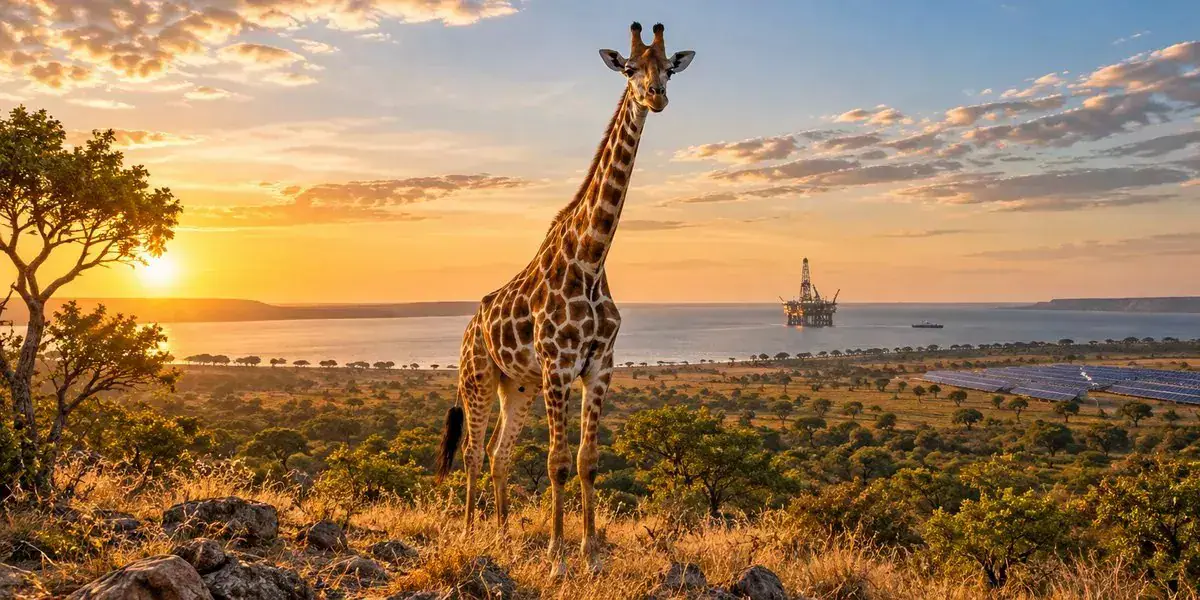
Angola has reaffirmed its commitment to biodiversity conservation at the highest level, with the country's environment minister, Ana Paula Chantre Luna de Carvalho Pereira, describing it as a matter of sovereignty and justice. This commitment was highlighted at the inaugural Africa Biodiversity Summit in Gaborone in November 2025, where Angola's position was placed firmly in a continental context. The summit called for biodiversity to be embedded in development and economic policy, not confined to conservation agencies alone.
Angola's National Biodiversity Strategy and Action Plan, covering 2019–2025, set the foundation for conservation and sustainable use of biodiversity. The plan aimed to expand protected areas, fund scientific research, and rebuild degraded ecosystems. Building on this, a new National Biodiversity Plan for 2026–2030 has been approved, with a funding requirement of 208.46 billion kwanzas, as stated in a government gazette document published on 5 November 2026.
The Angolan government has also issued Presidential Decree No. 101/26, approving a National Action Plan for the Conservation of Giraffes in Angola for 2026–2030. These regulatory instruments, listed on the FAO legal database, demonstrate the country's commitment to concrete action rather than aspirational targets. As a result, companies in sectors such as mining, energy, agriculture, forestry, and infrastructure can expect closer review of land use and environmental impact.
The clearer conservation framework in Angola enables investors to more effectively price biodiversity risk into project assessments. By aligning with national objectives early, sponsors can better meet permit conditions and sector requirements. The policy direction also opens financing opportunities for protected-area management, ecological restoration, and sustainable natural-resource projects.
Conservation-linked instruments, including green bonds and blended-finance structures, may find a more receptive regulatory environment as national plans become operational. Early engagement with regulators and local stakeholders is likely to reduce approval risk and project timelines for companies. This shift in project finance is expected to have a significant impact on the way investors and companies approach biodiversity conservation in Angola.
The Angola biodiversity commitment functions primarily as a project-screening signal, allowing investors to assess and manage biodiversity risk more effectively. By integrating biodiversity considerations into mainstream capital allocation, Angola is setting a precedent for sustainable development in Africa. The country's commitment to biodiversity conservation is now an integral part of its economic policy.
As Angola continues to implement its National Biodiversity Plan and other conservation initiatives, investors and companies must adapt to the new regulatory environment. By understanding and aligning with Angola's biodiversity commitment, stakeholders can capitalize on emerging opportunities in sustainable natural-resource projects and conservation-linked instruments, ultimately contributing to the country's sustainable development goals.
Key points
- The Angolan government's commitment to biodiversity conservation is now a key factor in project approvals and capital planning.
- A new National Biodiversity Plan for 2026–2030 has been approved, with a funding requirement of 208.46 billion kwanzas.
- Conservation-linked instruments, including green bonds and blended-finance structures, may find a more receptive regulatory environment as national plans become operational.
Reporting sources
- Angola biodiversity commitment reshapes project finance · FurtherAfrica