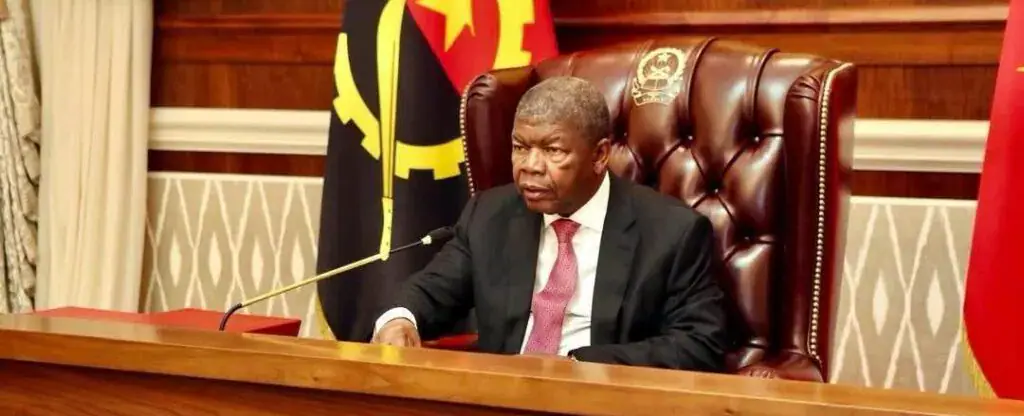
The Angolan Ministry of Finance has made the proposed 2027 budget available on its website in a transparent and technically sound manner. The budget, valued at 37.34 trillion kwanzas, was submitted to the National Assembly on October 30. According to the proposal, the President of the Republic maintains significant flexibility in adjusting the budget execution, even after parliamentary approval.
The President can transfer funds between budget lines, adjust allocations, and correct budget classifications. The President can also secure additional financing, contract internal and external loans, issue public debt, renegotiate existing debts, and engage in refinancing operations. This broad range of powers allows the President to redefine priorities and adapt budget execution throughout the year.
The 2027 budget is based on the assumption that Angola is entering a new phase of growth driven by the non-oil economy, reducing its historical dependence on oil revenues. The government projects a 5.57% economic growth in 2026 and 5.50% in 2027. The non-oil sector is expected to grow by 7.15% in 2027, while the oil and gas sector is expected to decline by 3.82%.
The government's projections for tax revenues are based on an expected decline in oil revenues and a significant increase in non-oil revenues. In 2026, the state estimates collecting around 21.53 trillion kwanzas in tax revenues, with 12.24 trillion kwanzas from the oil sector and 9.29 trillion kwanzas from non-oil activities. For 2027, the government projects a decline in oil revenues to around 9.90 trillion kwanzas and an increase in non-oil revenues to 11.44 trillion kwanzas.
However, a closer examination of the projections raises concerns about their feasibility. The government's assumption that non-oil revenues will increase by 23% in 2027, while the non-oil sector grows by 7.15%, seems unrealistic. This would require a significant expansion of the tax base, a reduction in tax evasion, and improved efficiency in tax collection.
The labor market indicators also raise concerns. The unemployment rate stood at 21.5% in the second quarter of 2026, with around 2.79 million unemployed individuals. The youth unemployment rate is particularly worrying, standing at 40.5%. The informal employment sector accounts for 80.1% of total employment, highlighting the challenges facing the economy.
The budget's projections have raised concerns about the government's ability to achieve its economic goals. The country's economic growth has not translated into proportional job creation, with many workers remaining in the informal sector. The government's projections for non-oil revenues and economic growth may be overly optimistic, given the current state of the labor market and economy.
Key points
- The Angolan government's 2027 budget projections are based on uncertain economic assumptions, including a significant increase in non-oil revenues and a decline in oil revenues.