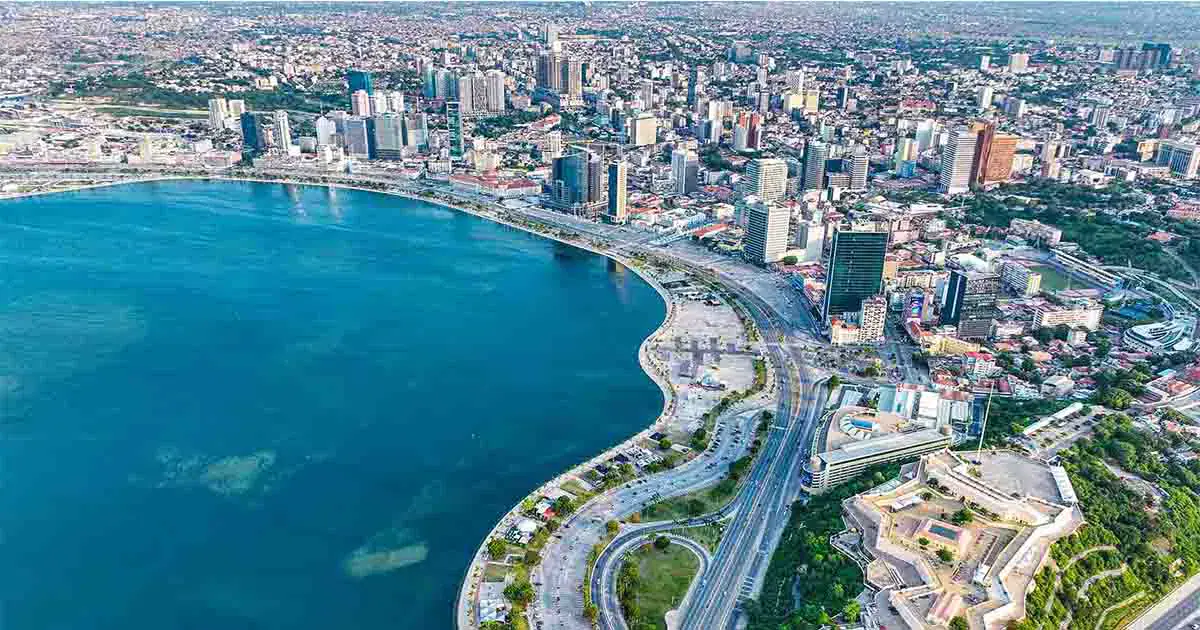
Angola, officially the Republic of Angola, is a country located on the western coast of southern Africa, covering an area of 1.246.700 square kilometers. The country has a population estimated to be around 38.778.554 inhabitants in 2026, according to the National Institute of Statistics (INE). The capital city is Luanda, and the country has 21 provinces, 326 municipalities, and 378 communes, following the implementation of the new Political-Administrative Division on January 1, 2025.
Angola has significant natural resources, including oil, natural gas, diamonds, iron, copper, and gold, which contribute to the development of its economy. The country gained independence from Portugal on November 11, 1975, and has since been working to overcome challenges related to poverty, unemployment, social inequality, and access to basic services. Despite these challenges, Angola has a diverse geography, with a range of ecosystems and climates.
The country's official language is Portuguese, and the national currency is the kwanza (AOA). The government is a presidential republic, with João Manuel Gonçalves Lourenço as President and Esperança da Costa as Vice-President. Angola's economy has been growing, with a GDP of $122.17 billion USD in 2025, and a GDP per capita of $3.129.50 USD.
The origin of Angola's name dates back to the term "Ngola," a title given to the sovereigns of the Kingdom of Ndongo, one of the political organizations that existed in the territory before the consolidation of Portuguese colonial rule. The term, associated with the Kimbundu language, was adopted by the Portuguese to identify part of the territory that would eventually become the current Republic of Angola.
Angola's administrative configuration has undergone changes with the approval of Law No. 14/24, of September 5, which established the new Political-Administrative Division. The reform aims to improve the country's governance and provide better services to its population. The country's human development index (HDI) was 0.616 in 2023, and life expectancy was 65 years in 2024.
The country's economy has been impacted by its membership in international organizations. Angola left the Organization of the Petroleum Exporting Countries (OPEC) on January 1, 2024. The country's telecommunications sector is growing, with an international dialing code of +244 and an internet domain of .ao.
Angola has made significant progress in recent years, but still faces challenges related to poverty, unemployment, and social inequality. The country's rich natural resources and diverse geography provide opportunities for economic growth and development. With a growing economy and a population with a relatively high life expectancy, Angola is working to improve the lives of its citizens and become a more stable and prosperous nation.
Key points
- Angola has significant natural resources, including oil, natural gas, and diamonds.
- The country's economy has been growing, with a GDP of $122.17 billion USD in 2025.
- Angola faces challenges related to poverty, unemployment, and social inequality.
Reporting sources
- Angola: história, população, economia, geografia e cultura · Hold On Angola