Researchers have published two studies in Nature revealing that Homo erectus inhabited southern China between 324,000 and 184,000 years ago. The findings, based on teeth found in two caves 15 kilometres apart, extend the documented presence of the species in China by over 200,000 years. The teeth, analysed for their external shapes, internal structures, and ancient proteins, suggest that Homo erectus was more adaptable to environmental change than previously thought.
The studies' findings challenge traditional associations of Homo erectus with savannas, grasslands, and open woodlands. Instead, evidence suggests that these ancient humans inhabited and moved through dense tropical rainforests, obtaining food and water within these environments. Kira Westaway, co-lead author of one study, said the discovery shows that rainforests were not a barrier to Homo erectus, contrary to previous assumptions.
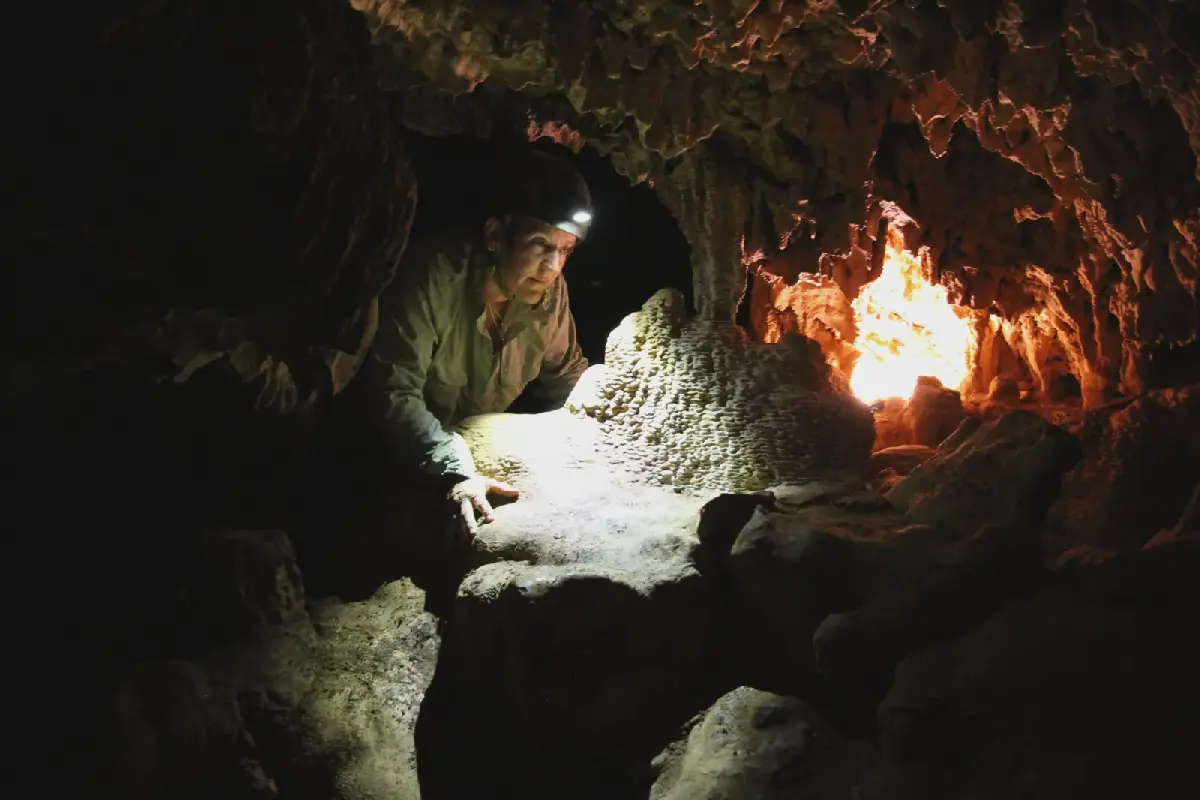
The teeth, found in Naxian and Baxian caves in the Chongzuo region, were analysed for their dental morphology and ancient proteins. Eight of the nine teeth matched the characteristics of Homo erectus, while one tooth's identity remains unresolved. The presence of this tooth alongside Homo erectus teeth raises the possibility that more than one human lineage inhabited this part of Asia at the same time.
The second study used five independent dating methods to establish the ages of the teeth and surrounding sediments. The results, combined into a single model, confirmed that Homo erectus occupied the region between 324,000 and 184,000 years ago. Animal teeth and chemical signatures also pointed to a humid environment dominated by dense forest cover.
Three Homo erectus teeth preserved chemical signatures consistent with their owners consuming food and water within the forest environment. This provides direct evidence that ancient humans exploited these environments, even if rainforests were not their preferred habitat. Westaway said scientists had previously assumed that Homo erectus could not cope with tropical rainforests due to a lack of direct evidence.
The teeth may also hold evidence of long-distance movements during childhood. Strontium isotope ratios in some teeth do not match the geological signatures of the rocks surrounding the caves, suggesting that some individuals may have travelled considerable distances during their early years. Westaway said some of the closest matches were found in distant areas, including northern Vietnam, potentially up to 250 kilometres away.
The findings challenge a longstanding explanation for the disappearance of Homo erectus from Southeast Asia. The new evidence complicates the theory that the expansion of tropical rainforests contributed to the species' extinction, as the southern Chinese population demonstrated an ability to adapt to closed-canopy forests. Researchers may need to look for another environmental shift or event to explain their extinction.
Key points
- Homo erectus inhabited southern China's rainforests 324,000-184,000 years ago
- Ancient humans obtained food and water within the forest environment
- The findings challenge traditional associations of Homo erectus with savannas and open woodlands
Reporting sources
- Chinese cave teeth rewrite story of Homo erectus · Daily News Egypt