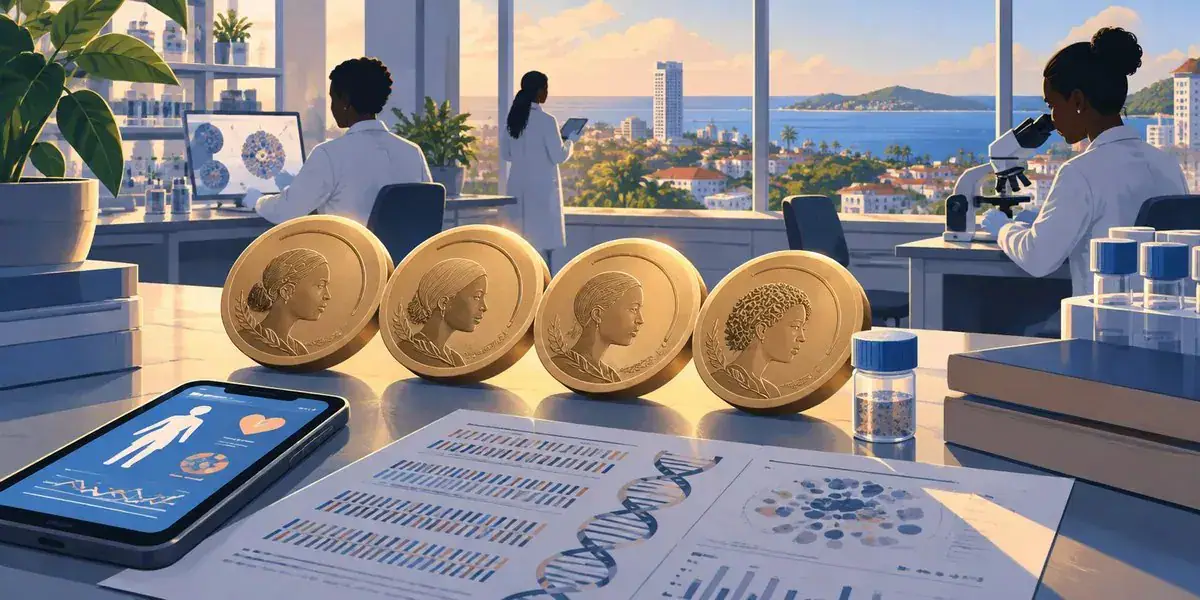
Four Tanzanian women scientists have been recognized for their research in public health areas critical to Tanzania. Angel Meela, Dativa Pereus, Grantina Modern, and Hope Mbelwa are among 38 researchers honored under the 2026 L’Oréal-UNESCO For Women in Science Sub-Saharan Africa programme. The awards ceremony took place in Johannesburg on 19 November 2026. Their research focuses on autism support, malaria surveillance, child nutrition, and cervical cancer detection.
The four Tanzanian researchers were selected from over 1,000 applications. Each award highlights locally developed solutions to public health problems. Doctoral recipients, including Meela, Pereus, Modern, and Mbelwa, receive grants of €10,000. Hope Mbelwa and Angel Meela are PhD candidates at the Nelson Mandela African Institution of Science and Technology. Their projects apply advanced methodology to needs with direct policy or commercial relevance.
Angel Meela is developing an affordable mobile application using augmented reality to support autistic children in under-resourced schools. The tool is designed to work offline, reaching learners where connectivity is limited. Dativa Pereus, based at Muhimbili University of Health and Allied Sciences, focuses on genomic and epidemiological malaria surveillance. Her work aims to improve public health responses to malaria, one of Tanzania’s most persistent disease burdens.
Grantina Modern, at the University of Dar es Salaam, is researching the gut microbiome’s role in childhood stunting and growth. Hope Mbelwa, also at Nelson Mandela African Institution of Science and Technology, is developing a multimodal artificial-intelligence tool for early cervical cancer detection. These projects demonstrate the potential for research to address pressing health issues in Tanzania.
The recognition of these Tanzanian women scientists highlights the need for sustained investment in STEM education and research. Women represented 37% of students enrolled in STEM bachelor’s programmes during the 2024/25 academic year. However, the gap narrows at postgraduate levels. Women accounted for 2,088 of 5,409 master’s students and 290 of 858 doctoral candidates.
Closing the gaps in STEM participation requires sustained mentorship, dedicated research finance, and clear pathways into leadership. Lesotho has committed a US$173M Investment Case for women and girls’ health, backed by the 2gether 4 SRHR programme. Tanzania needs similar commitments to support women in science and address pressing health challenges.
The L’Oréal-UNESCO For Women in Science programme provides small research grants that can identify high-potential talent. These grants can help validate and scale research projects, leading to practical health gains. The programme has awarded 30 doctoral and eight postdoctoral researchers, with grants of €10,000 and €15,000 respectively.
Key points
- The four Tanzanian women scientists won grants for research on autism support, malaria surveillance, child nutrition, and cervical cancer detection.
- The researchers were selected from over 1,000 applications under the 2026 L’Oréal-UNESCO For Women in Science Sub-Saharan Africa programme.
- The programme provides small research grants to support women in science and address pressing health challenges in Sub-Saharan Africa.
Reporting sources
- Tanzanian women scientists win L’Oréal UNESCO grants · FurtherAfrica