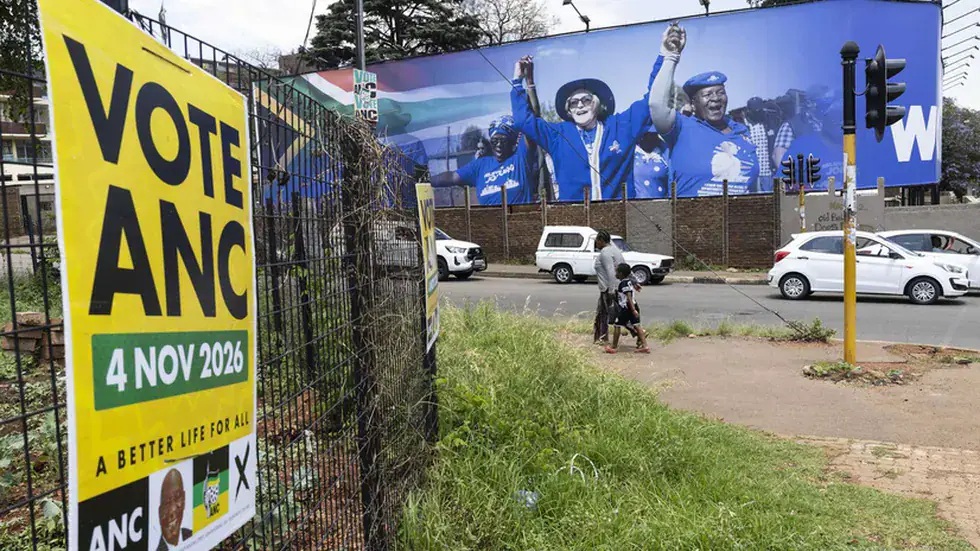
The African National Congress (ANC) has emerged victorious in South Africa's local elections, securing 30.76% of the votes cast. This outcome marks a significant decline for the ANC, which had previously garnered nearly two-thirds of the votes in the country's first democratic elections in 1994. The party will now need to engage in coalition talks to form governments in over 100 municipalities. This development has set the stage for intense negotiations between the ANC and other political parties.
The 2026 local elections saw a total of 15.9 million registered voters, an increase of four million from the 2021 elections. The high voter turnout has been attributed to efforts by President Cyril Ramaphosa, who had appealed to citizens to participate in the electoral process. The ANC's decline in vote share has raised questions about the party's future and its ability to maintain its stronghold on South African politics.
The ANC's loss of support has been seen as a significant shift in the country's political landscape. The party, led by Nelson Mandela from 1994 until his death in 2013, has traditionally been the dominant force in South African politics. However, the latest election results indicate a decline in its popularity, with the party now needing to form coalitions to maintain its influence in local governments.
Coalition talks are expected to be challenging, with several parties vying for influence. The ANC will need to negotiate with smaller parties to secure majority support in over 100 municipalities. This process is likely to be complex and may lead to some unexpected alliances. The outcome of these talks will determine the composition of local governments and the distribution of power in South Africa's municipalities.
The ANC's decline has been attributed to various factors, including growing discontent with the party's performance in government. The party has faced criticism for its handling of issues such as unemployment, corruption, and service delivery. The latest election results suggest that voters are increasingly holding the ANC accountable for its actions and are seeking change.
President Cyril Ramaphosa has acknowledged the challenges facing the ANC and has called for unity within the party. He has also urged the party to engage in constructive dialogue with other political parties to ensure stability and effective governance in local governments. The ANC's ability to navigate these challenges will be crucial in determining its future prospects.
The outcome of the local elections has significant implications for South Africa's democracy. The country's electoral system is designed to promote proportional representation, and the ANC's decline has highlighted the importance of coalition politics. The next few weeks will be critical in determining the composition of local governments and the future direction of South African politics.
Key points
- ANC secures 30.76% of votes, needs coalitions in over 100 municipalities.