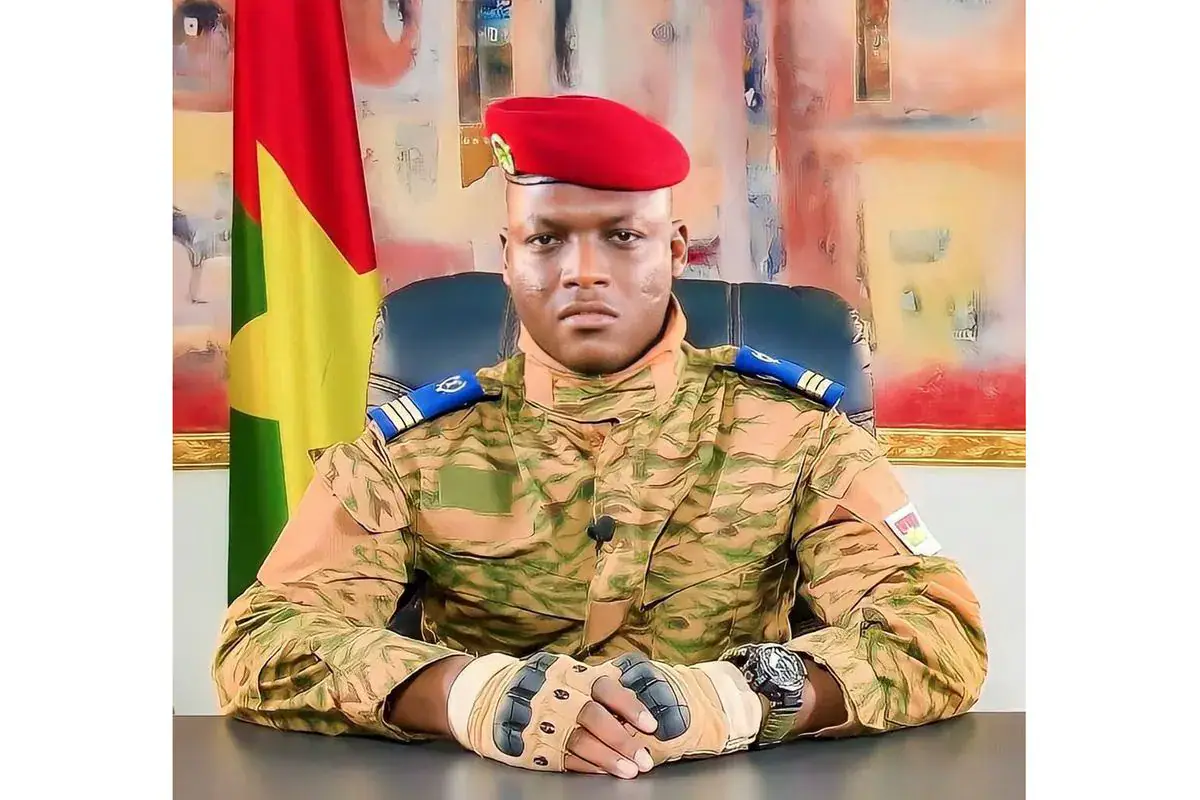
Burkina Faso has introduced significant changes to its school curriculum, effective from the start of the 2026-27 academic year on October 1. The reforms, led by President Ibrahim Traoré, aim to promote national sovereignty and distance the country from its colonial legacy under France. The changes cover history, geography, and civic education, with a focus on strengthening African identity, patriotism, and national pride.
The new curriculum replaces colonial-era terminology with more assertive language. Terms like 'colonisation' are now described as 'imperialist invasion', while 'colonisers' are referred to as 'invaders'. European explorers are rebranded as 'spies', and 'ethnic groups' become 'socio-cultural groups'. These changes reflect the government's efforts to reframe Burkina Faso's history and challenge the legacy of colonialism.
The revised curriculum includes new history lessons that examine African resistance, indigenous knowledge, and Burkina Faso's revolutionary history. The 1791-1804 Haitian Revolution is also added to the curriculum, alongside the history of the Alliance of Sahel States, formed by Burkina Faso, Mali, and Niger. These additions aim to promote a more nuanced understanding of African history and challenge dominant narratives.
Geography lessons are also being revised to remove descriptions that portray Burkina Faso and other African countries in a negative light. Terms like 'poor country', 'indebted country', and 'landlocked country' are being replaced with more neutral language, focusing on 'challenges' and 'opportunities'. This shift in language aims to promote a more positive and empowered understanding of African nations.
The reforms were announced in September by Secondary Education Minister Professor Moumouni Zoungrana, who argued that existing textbooks portrayed Africans negatively and gave insufficient attention to their victories and resistance to foreign domination. To support implementation, the government distributed a 190-page guide to teachers, pending the production of revised textbooks.
The changes form part of President Traoré's wider campaign to promote national sovereignty and distance Burkina Faso from its colonial legacy under France, which ruled the country until independence in 1960. The curriculum reforms reflect a broader effort to reframe Burkina Faso's identity and challenge the influence of colonialism on its education system.
The impact of these changes on Burkina Faso's education system and broader society remains to be seen. However, the reforms mark a significant shift in the country's approach to its history, identity, and relationship with the colonial legacy. As the new curriculum takes effect, it will be closely watched by educators, policymakers, and citizens both within Burkina Faso and across Africa.
Key points
- The new curriculum replaces colonial-era terms with more assertive language, describing 'colonisation' as 'imperialist invasion'.
- The revised curriculum includes new history lessons that examine African resistance, indigenous knowledge, and Burkina Faso's revolutionary history.
- Geography lessons are being revised to remove negative descriptions of African countries, focusing on 'challenges' and 'opportunities'.
Reporting sources
- It's not 'colonialism', it's 'invasion': Burkina Faso corrects Africa's history · https://www.thecitizen.co.tz/