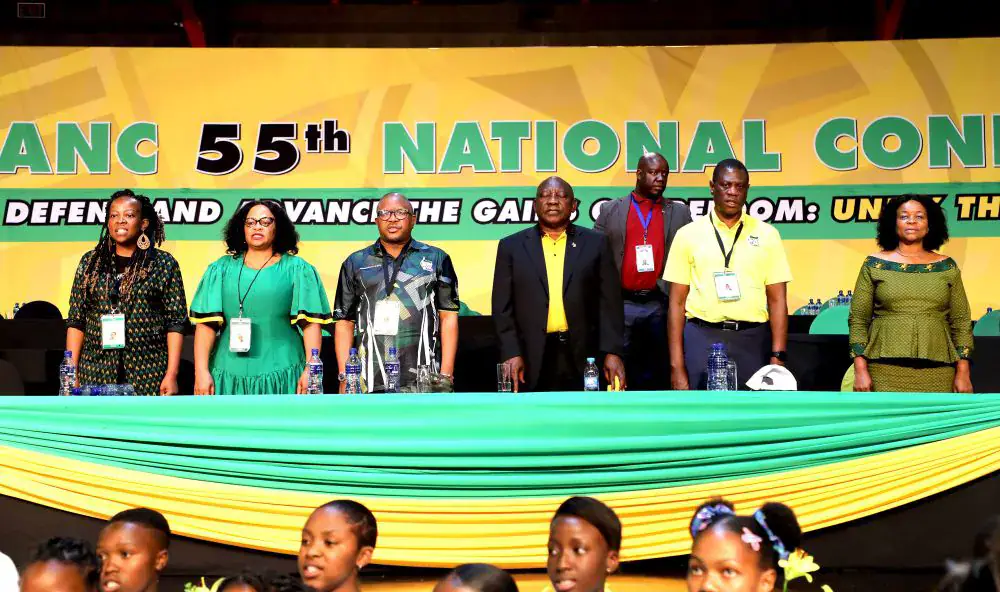
The African National Congress (ANC) top leadership has made a decision on how to approach coalition governments with other parties, following concerns about potential partnerships with the Democratic Alliance (DA). The ANC had recently indicated a willingness to collaborate with other parties to form a Government of National Unity (GNU) after losing its majority in the recent local government elections. This development has sparked debate within the party about the best course of action.
The ANC's national spokesperson, Mahleng Bhengu, stated that the party will assess each municipality's performance and engage in discussions to determine the best approach for each area. The party's top leadership has emphasized that any decision on coalition governments will have significant implications for the party's future. The ANC secured 30.76% of the vote in the recent local government elections, down from 45.59% in the 2021 elections.
The DA emerged as the second-largest party, securing 24.64% of the national vote, followed by the MK Party with 9.76%, the Economic Freedom Fighters (EFF) with 6.22%, and ActionSA with 5.67%. The ANC has traditionally been the largest and most influential party in South Africa. However, the recent election results have led to a shift in the country's political landscape.
A total of 213 municipalities are up for grabs, with 137 still awaiting a decision on which party will take control. The DA has won key municipalities in Gauteng, Tshwane, and Ekurhuleni but has opted not to govern them outright. The ANC's decision on coalition governments is expected to have far-reaching consequences for the country's governance.
The ANC's leadership has faced pressure from within the party to take a firm stance on coalition governments. The party's previous statements suggested a willingness to work with other parties to achieve a GNU. However, concerns about partnering with the DA have been raised, given the two parties' historical differences.
The ANC's shift in approach may be attributed to its declining popularity in recent elections. The party's vote share has decreased significantly since the 2021 elections. This decline has led to increased competition from other parties, forcing the ANC to reconsider its strategy.
As the ANC begins to implement its new approach to coalition governments, the country's political landscape is likely to undergo significant changes. The party's decision will have implications for the governance of various municipalities and may shape the future of South African politics. The ANC's leadership will need to balance the party's interests with the need for effective governance.
Key points
- The ANC's top leadership has decided to assess each municipality's performance before determining its approach to coalition governments.
Reporting sources
- I-ANC 'isixazulule' eyokubambisana ne-DA · Isolezwe