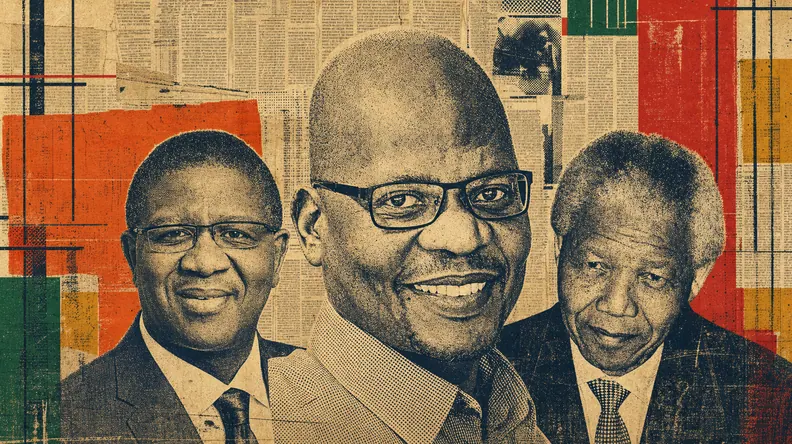
The African National Congress (ANC) has been reduced to a punchline in a bad joke, with its secretary-general, Fikile Mbalula, exemplifying the party's decline. A comparison of photographs from the ANC's 1990 Groote Schuur talks and a current picture of Mbalula starkly illustrates the diminution of brain power within the party. The 1990 delegation, led by Nelson Mandela, consisted of recently returned exiles, newly freed prisoners, and United Democratic Front leadership.
The ANC's recent debacle over the registration of candidates for the 4 November local government elections, which can be attributed to Mbalula, has further highlighted the party's incompetence. Despite being one of the few parties to have contested every election and by-election since 1994, the ANC failed to perform the simple task of submitting its candidate list on time. This blunder will likely cost the party several municipalities and affect the balance of power in others.
In response to the Electoral Commission of South Africa's (IEC) rejection of its candidate list, the ANC chose to blame the IEC and take the matter to court, a battle it was unlikely to win. Mbalula and President Cyril Ramaphosa echoed the party's assertions, despite the IEC's clear culpability. The ANC's actions demonstrate a lack of accountability and a tendency to deflect responsibility.
The courts subsequently handed the ANC a "bloody nose," rejecting its appeal. Nevertheless, the party has announced its intention to exercise its legal rights and pursue an appeal process. The ANC's response to the court judgment was marked by a call to its members, leaders, and supporters to remain calm and disciplined, and to refrain from public commentary that could prejudice the ongoing legal process.
The ANC's decline is evident in its inability to perform basic tasks, such as submitting candidate lists on time. This decline is also reflected in the caliber of its leadership, with Mbalula's actions and statements exemplifying the party's incompetence. The party's response to its failures has been characterized by blame-shifting and a lack of accountability.
The ANC's handling of the local government elections has significant implications for the party's future. The party's failure to submit its candidate list on time will likely result in the loss of several municipalities, which could have a lasting impact on the party's influence and power. The ANC's decline has created an opportunity for opposition parties to gain ground and challenge the ANC's dominance.
The ANC's continued insistence on pursuing an appeal process, despite the courts' clear rejection of its claims, raises questions about the party's priorities and motivations. The party's actions suggest a desire to deflect responsibility and avoid accountability, rather than acknowledging its own failures and taking steps to address them. The ANC's decline is a concern for South Africans, who are increasingly disillusioned with the party's performance.
Key points
- ANC's decline reflected in secretary-general Fikile Mbalula's actions
- Party's handling of local government elections exemplifies its incompetence
- ANC's response to failures characterized by blame-shifting and lack of accountability