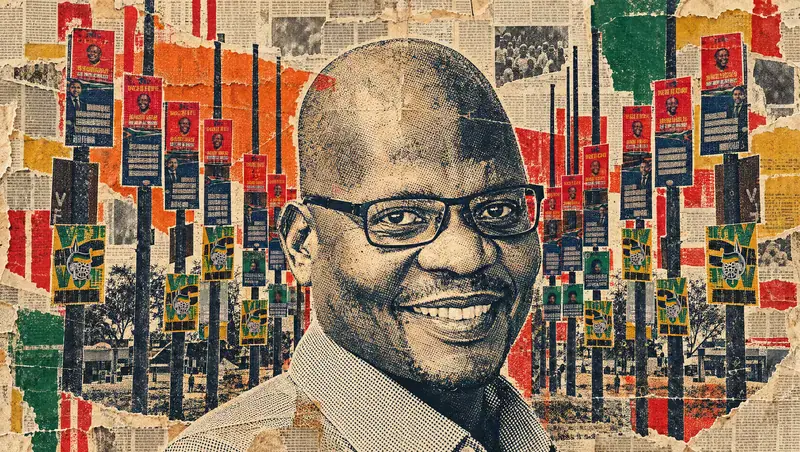
As South Africa prepares to go to the polls, the ANC's campaign strategy has been criticized for relying too heavily on nostalgia about the country's journey to democracy. In the 2024 election, the party's messaging, which highlighted its role in the fight against apartheid and the early successes of the democratic era, failed to resonate with voters. Despite this, the ANC has continued to tug at the heartstrings, telling the same story of triumph over apartheid and the strides made since then.
The ANC's approach has been met with skepticism by voters, who are more concerned about the issues that affect their daily lives. The party's failure to address these concerns has been evident in the numerous protests and violent demonstrations that have taken place across the country. Communities are making noise, protesting, and turning on their elected representatives with intense venom. The ANC has tried to change the subject, pointing to the work it is doing to correct the mess it blames on the Zuma years, but this narrative has not sustained.
One of the key issues that the ANC has struggled to address is service delivery failure. In many municipalities, residents are without water or power for extended periods, and sewage runs down the streets. Roads are filled with potholes, and stormwater drains are overwhelmed, turning streets into rivers during heavy rains. Street lights are not working, creating a haven for criminality, and refuse is not collected, resulting in open spaces being used as dumping sites.
The ANC has also been criticized for its handling of corruption, lack of accountability, and poor governance. These issues are highlighted in the Auditor-General's reports, media coverage, and civil society activism. Voters are aware that these are the causal factors in their lived realities, and the ANC's failure to address them has eroded its support. The party's attempts to point fingers at other parties, such as the DA, have not been successful.
The current election is seen as consequential, not just for South Africa but also for the global democratic landscape. The rise of the far right in the UK, the fall of Viktor Orbán in Hungary, and the survival of democratic norms in Brazil are just a few examples of the significant events that have taken place recently. In South Africa, the election is seen as a defining moment for democracy and a milestone in the country's history.
The ANC's problem is that the issues are real and massive, and they cannot be dodged. The party's focus on nostalgia has not resonated with voters, who are more concerned about the issues that affect their daily lives. The ANC's failure to address these concerns has been evident in the numerous protests and violent demonstrations that have taken place across the country.
As the election approaches, it is clear that the ANC's campaign strategy has not been effective. The party's focus on past glories has not resonated with voters, who are more concerned about the issues that affect their daily lives. The ANC's failure to address these concerns has eroded its support, and it remains to be seen how the party will recover from this setback.
Key points
- ANC's nostalgia-fueled campaign fails to resonate with voters.