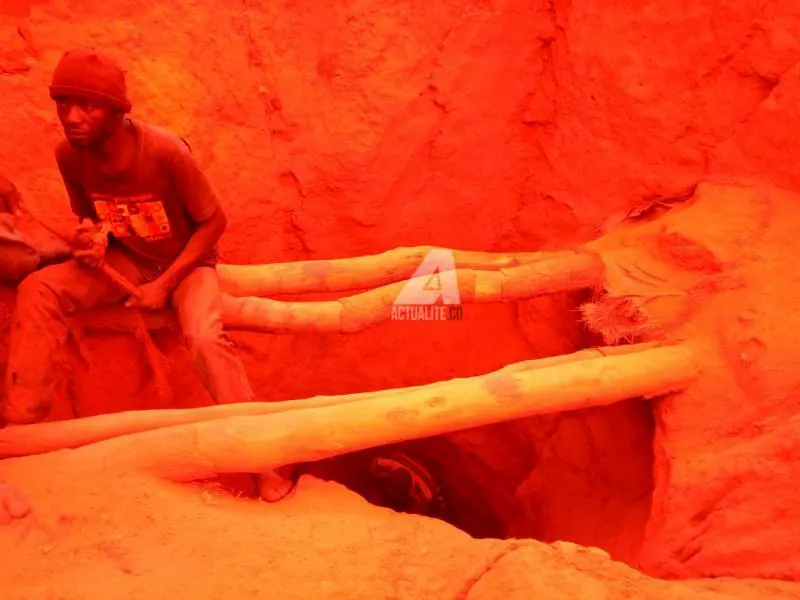
A recent report by Amnesty International has shed light on the grave human rights abuses committed by the M23 group against artisanal miners in the Democratic Republic of Congo. The report, titled "DRC: 'We are not here to play,'" details several human rights abuses attributed to the M23, including summary executions, torture, arbitrary detention, forced labor, and forced recruitment. These abuses have been documented in various mining areas, including Rubaya and Lomera.
According to Amnesty International, M23 combatants have forced minors to extract minerals, often working them underground for over a week without rest. In the Rubaya coltan mine in North Kivu and the Lomera gold mine in South Kivu, minors have been subjected to forced labor, with some witnesses reporting that they were beaten, tortured, or threatened with death if they refused to work. The organization has also documented the execution of 18 artisanal miners in the Rubaya and Lomera mines.
The report highlights the case of Evariste, a 22-year-old miner who was beaten to death by M23 combatants. A witness described Evariste's condition, stating that he was covered in blood and unable to speak or move. Another miner reported that his brother was killed by M23 combatants and that he was punished for denouncing the perpetrator. These testimonies illustrate the brutal treatment meted out to artisanal miners by the M23.
Amnesty International has also gathered evidence of torture and ill-treatment inflicted on 16 individuals, including minors and civilians living near the mines. Some of these individuals reported being beaten so severely that they lost consciousness, while others were forced to work without pay or were threatened with death. The organization's report also describes the use of detention cells, including underground cells known as "ndake," where miners were held and subjected to physical abuse.
The report further alleges that the M23 has been involved in the illegal export of gold and coltan to Rwanda, with the complicity of Rwandan authorities. This has enabled the M23 to profit from the exploitation of the DRC's mineral resources, while the local population suffers from human rights abuses and economic exploitation. Amnesty International's secretary-general, Agnès Callamard, stated that these abuses aim to punish miners and instill fear, while minerals are smuggled out of the country.
The release of this report comes at a time when diplomatic efforts to bring peace to eastern DRC have yet to yield significant results. Despite initiatives led by Washington and the Doha process, the conflict between the DRC government and the M23 continues, with both sides accusing each other of failing to respect their commitments. The report's findings highlight the need for urgent action to address the human rights crisis in the region.
The situation in eastern DRC remains dire, with ongoing human rights abuses and a lack of accountability for perpetrators. The international community has called for the parties to the conflict to respect their commitments and work towards a peaceful resolution. However, the gap between diplomatic progress and the reality on the ground persists, and it remains to be seen whether the parties will take concrete steps to address the humanitarian crisis.
Key points
- M23 combatants have committed human rights abuses against artisanal miners in DRC, including forced labor, torture, and extrajudicial killings.
- The M23 has been involved in the illegal export of gold and coltan to Rwanda, with the complicity of Rwandan authorities.
- The report's findings highlight the need for urgent action to address the human rights crisis in eastern DRC.