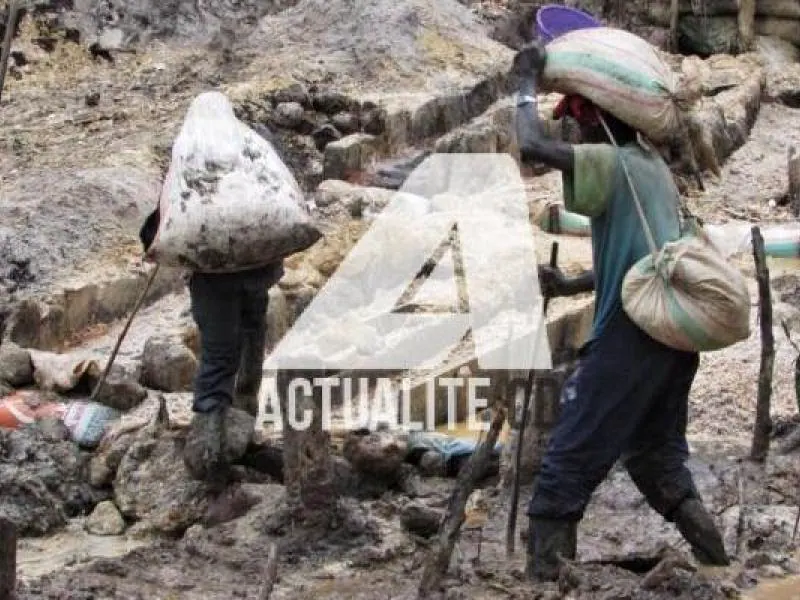
Amnesty International has released a report detailing the M23's exploitation of gold and coltan resources in the Democratic Republic of Congo. The report, titled "On n’est pas là pour jouer" (We're not here to play), highlights the group's human rights abuses in artisanal mines and smuggling of resources to Rwanda. According to Amnesty, the M23's actions constitute a form of pillage, a war crime. The report is based on investigations in two mining areas: a coltan mine near Rubaya in North Kivu and a gold mine in Lomera, South Kivu.
The report documents several human rights abuses attributed to the M23, including summary executions, torture, arbitrary detention, forced labor, and forced recruitment. Amnesty International's Secretary General, Agnès Callamard, stated that the organization's investigation aims to raise awareness about the involvement of Rwandan citizens in the trafficking of looted minerals. Callamard emphasized that the Rwandan government may also be responsible for these abuses if its citizens act under its direction or control.
Amnesty International's investigation found that gold extracted from areas controlled by the M23 was being smuggled to Rwanda through established networks. The organization gathered evidence of gold being loaded onto boats at the port of Lomera and transported to Kamembe in western Rwanda. Local miners reported seeing the M23 loading gold onto boats early in the morning, which would then return at night. One miner described seeing the M23 sending groups to different mine shafts, taking mineralized sand and transporting it to the lake.
The report highlights the involvement of Rwandan traders and the government's potential responsibility in the smuggling of looted minerals. Amnesty International's evidence suggests that large quantities of gold and coltan are being smuggled to Rwanda, raising questions about the involvement of Rwandan officials and M23 leaders. The organization believes that the scale of this smuggling could engage the responsibility of various actors in the alleged pillage of the DRC's natural resources.
The situation in eastern DRC remains volatile, with ongoing diplomatic efforts to bring peace to the region. Despite initiatives led by Washington and the Doha process, the conflict persists, with parties accusing each other of failing to respect commitments. Amnesty International's report emphasizes the need for the international community to hold those responsible for human rights abuses and smuggling accountable.
The report's findings have significant implications for the Rwandan government and its citizens involved in the mineral trade. Amnesty International is urging the Rwandan government to investigate and take action against those involved in the smuggling of looted minerals. The organization is also calling on the international community to support efforts to bring peace and stability to eastern DRC.
The exploitation of natural resources in eastern DRC has long been a source of conflict and human rights abuses. Amnesty International's report highlights the need for greater transparency and accountability in the mineral trade. The organization's findings emphasize the importance of addressing the root causes of the conflict and ensuring that those responsible for human rights abuses are held accountable.
Key points
- The M23's exploitation of gold and coltan resources in the DRC constitutes a form of pillage, a war crime, according to Amnesty International.
- Rwandan citizens and officials may be responsible for human rights abuses and smuggling of looted minerals, according to Amnesty International.
- The international community must hold those responsible for human rights abuses and smuggling accountable, Amnesty International urges.