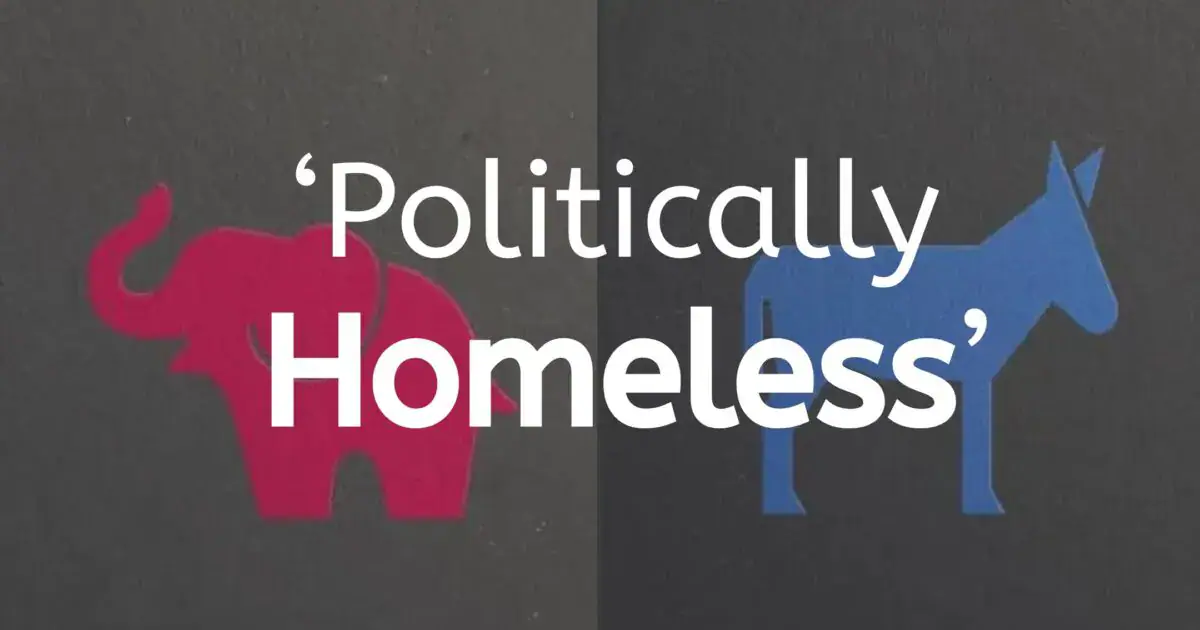
A growing number of American Jews are expressing feelings of being "politically homeless" as the 2026 midterms approach. This sentiment is driven by rising antisemitism and concerns about Israel's treatment within the Democratic Party. Representative Jared Moskowitz, a Florida Democrat, noted that Jews are feeling repelled by the Republican Party but anxious about antizionism on the left. Rabbi Avi Killip echoed this sentiment, stating that many American Jews feel abandoned and alone due to antisemitism on both sides.
The phrase "politically homeless" has gained traction in the Jewish community, with many expressing concerns about the Democratic Party's stance on Israel. Ashley Inbar, a 38-year-old Jewish Democratic voter in Maine, described feeling "oddly homeless" due to the conversation around her. Despite this, polls suggest that most Jewish voters remain Democrats. A September survey by the Jewish Electorate Institute found that Jewish voters favored Democratic congressional candidates over Republicans by 71% to 23%.
The survey also revealed real unease within the party, with over a third of Jewish Democrats saying the rise of anti-Israel candidates had made it harder for them to identify as Democrats. A majority of Jewish voters said antisemitism was increasing within both the Democratic and Republican parties. The pollster's takeaway was that Jewish voters were still "overwhelmingly voting Democratic" even as their identification with the party was becoming more complicated.
Another national poll released in September by the Jewish Voters Resource Center found that 67% of Jewish voters planned to vote for Democrats in November's congressional elections, compared with 26% for Republicans. The group reported the same Democratic share in a May survey. Affordability and the future of democracy ranked ahead of antisemitism and Israel among voters' top concerns.
However, some Jews are feeling estranged and destabilized, especially in states where progressives have won Democratic nominations. In Maine, Chris Myers Asch, a history teacher at Colby College, said that many Jews feel "politically homeless" due to Democratic nominee Troy Jackson's rhetoric on Israel. In Michigan, Jewish Democrats are torn between supporting their party and their misgivings about Democratic Senate nominee Abdul El-Sayed.
El-Sayed's comments linking a synagogue attack to Israel's war in Lebanon and his opposition to US aid to Israel have prompted some leaders to threaten to withhold their votes or support Republican Mike Rogers. Rabbi Aaron Starr, president of the Michigan Board of Rabbis, is one of the leaders of the Nonnegotiable Michigan petition, which is asking both candidates to pledge to protect Jewish safety and accept Israel's right to exist.
Despite these concerns, most Jewish voters are expected to stick with the Democratic Party. Kenneth D Wald, distinguished professor emeritus of political science at the University of Florida, noted that for the majority of the Jewish electorate, excluding the Orthodox, the evidence suggests that Jews will likely vote as they have over the past 15 or 20 years – between three-fifths and two-thirds Democratic.
Key points
- Many American Jews feel disconnected from both parties due to rising antisemitism and concerns about Israel.
- Despite feeling "politically homeless," most Jewish voters are expected to stick with the Democratic Party.
- The issue of Israel's treatment within the Democratic Party is a major concern for many Jewish voters.