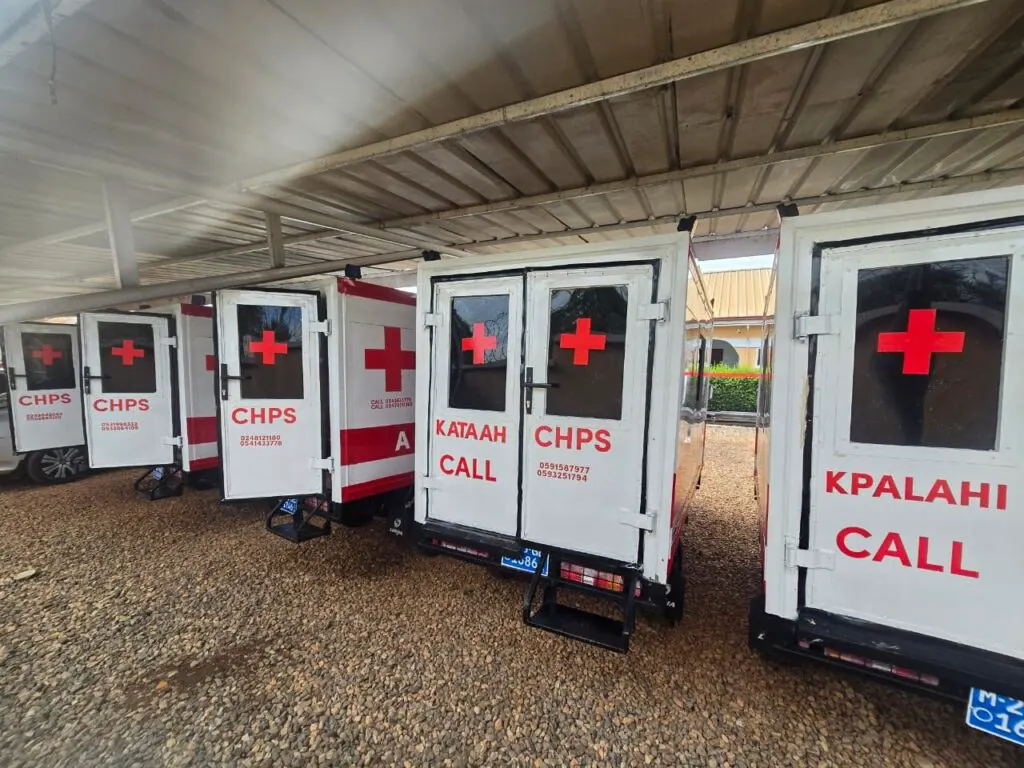
Five communities in the Upper West Region of Ghana, namely Kataah, Kulkpong, Kpaglahi, Vieri, and Egu, have finally received their first ambulances, marking a significant milestone in their quest for timely medical care. The villages, which are served by Community-Based Health Planning and Services (CHPS) compounds, have long struggled with accessing medical care due to their remote locations and poor road conditions. The ambulances, which are tricycle-based and marked with CHPS branding and emergency call information, were handed over to the communities on September 3, following training sessions for local drivers and clinic staff.
The communities have experienced numerous cases of medical emergencies that could not be attended to in time due to the lack of ambulances. Residents have shared heart-wrenching stories of losing loved ones due to delayed medical attention. Nadogobo Suglo, a resident, recalled the night his son was involved in an accident and could not be rushed to the hospital in time, resulting in his death. Similarly, Sadia Razak, a mother of five, lost her pregnant aunt due to delayed medical attention. These stories highlight the need for timely medical care in these remote communities.
The absence of ambulances in these communities has forced health workers to rely on alternative means of transportation, such as tricycles and motorbikes. Community health nurse Bright Addae noted that calling for a national ambulance was often futile, and as a result, health workers had to improvise with available means of transportation. Motorbike riders, such as Abboudi Idrisu, have been ferrying patients for years, often risking their lives and those of their passengers on broken roads.
The Upper West Region has recorded a high number of maternal deaths, with 19 reported in 2023, up from 16 the previous year. A study found that delays in reaching the hospital contributed to roughly half of maternal deaths in the region. Additionally, the region has the second-highest under-five child mortality rate in the country. The introduction of ambulances in these communities is expected to address these challenges and improve healthcare outcomes.
The ambulances were built locally by Moving Health, a Ghana-based NGO founded by Emily Young, which has deployed over 30 such units across the Upper West and Upper East Regions. The program's manager, Basuglo Yahaya, stated that the aim is to address delays that cost mothers and newborns their lives, using local materials and artisans to keep the vehicles affordable to maintain.
The project was made possible through a Rotary Foundation Global Grant involving Rotary clubs in Cambridge, Kyoto, Bedford, Concord, Boston, and Berlin, alongside the Rotaract Club of Accra-East Legon, which managed the funds in Ghana. While no further timeline has been given for expanding the program to additional communities, the introduction of ambulances in these five communities is a significant step towards improving healthcare access and outcomes.
The introduction of ambulances in these remote communities is expected to have a positive impact on healthcare outcomes. With the ability to quickly transport patients to medical facilities, residents can now access timely medical care, reducing the risk of delayed medical attention and related complications. The project has also provided training sessions for local drivers and clinic staff, ensuring that the ambulances are used effectively and efficiently.
Key points
- Five remote villages in Ghana's Upper West Region have received ambulances to improve access to medical care.
- The ambulances were built locally by Moving Health, a Ghana-based NGO, and were made possible through a Rotary Foundation Global Grant.
- The introduction of ambulances is expected to address delays that contribute to high maternal and child mortality rates in the region.