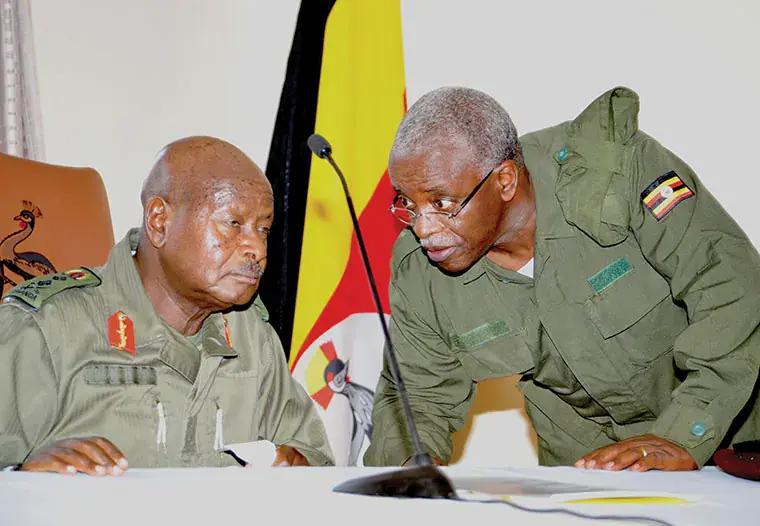
John Patrick Amama Mbabazi, born on January 16, 1949, in Mparo, Rukiga County, was a prominent figure in President Yoweri Kaguta Museveni's government for decades. He trained as a lawyer at Makerere University and was admitted to the Uganda Bar in 1977. Mbabazi's involvement in politics began with opposing Idi Amin's government, and he later joined the National Resistance Movement/Army rebellion. His contributions to the guerrilla struggle were significant, and he served as an external coordinator for the NRA.
Mbabazi's rise through the government was rapid after Museveni captured power in January 1986. He became Director General of the External Security Organisation, serving between 1986 and 1992, before occupying several influential positions, including Minister of State for Defence, Attorney General, Minister of Defence, and Minister of Security. His growing concentration of responsibilities earned him the nickname Super Minister, reflecting the extraordinary influence he wielded within government. Mbabazi also became NRM Secretary-General in 2005 and represented Kinkiizi West in Parliament from 1996 until 2016.
In May 2011, Museveni elevated Mbabazi to Prime Minister, making him one of the central figures in government administration. However, behind the powerful political partnership, tensions were reportedly building over succession politics and allegations that Mbabazi wanted to succeed Museveni. The relationship eventually collapsed, and in September 2014, Museveni removed Mbabazi as Prime Minister, effectively ending a political partnership that had survived decades of struggle, government, and party politics.
Rather than quietly disappear, Mbabazi launched the Go Forward movement and entered the 2016 presidential race as an independent candidate, hoping to transform his political experience and establishment connections into a nationwide electoral movement. The outcome was devastating, as he secured approximately 1.39 per cent of the vote, finishing third behind Museveni and opposition leader Kizza Besigye. His subsequent Supreme Court petition challenging the election results was dismissed.
The defeat exposed the difficulty of challenging a political machine Mbabazi had spent years helping construct. Despite his experience, connections, and former government influence, he failed to convince enough Ugandans that he represented a credible alternative to Museveni. Since then, he has largely retreated from frontline electoral politics. In July 2026, he was installed as a Lay Canon in Kinkiizi Diocese, recognising his contribution to the church and community.
Now aged 77, Mbabazi remains a significant figure in Uganda's political history. His journey presents a striking political paradox: a man who helped Museveni capture and consolidate power eventually attempted to replace him, only to discover that decades inside the corridors of power did not automatically translate into presidential support. His story remains one of Uganda's most consequential political rises, bitter separations, and unsuccessful presidential ambitions.
Mbabazi's legacy serves as a reminder of the complexities of Ugandan politics and the challenges of transitioning from a government insider to an opposition leader. His experience highlights the difficulties of building a personal support base within a dominant party system. As Uganda continues to evolve politically, Mbabazi's story will likely remain a significant chapter in the country's ongoing narrative.
Key points
- Amama Mbabazi's presidential bid in 2016 ended in significant defeat, with him securing only 1.39 per cent of the vote.
- Mbabazi's removal as Prime Minister in 2014 marked the end of his decades-long partnership with Museveni.
- Despite his influential positions, Mbabazi was unable to leverage his experience and connections into a successful presidential campaign.