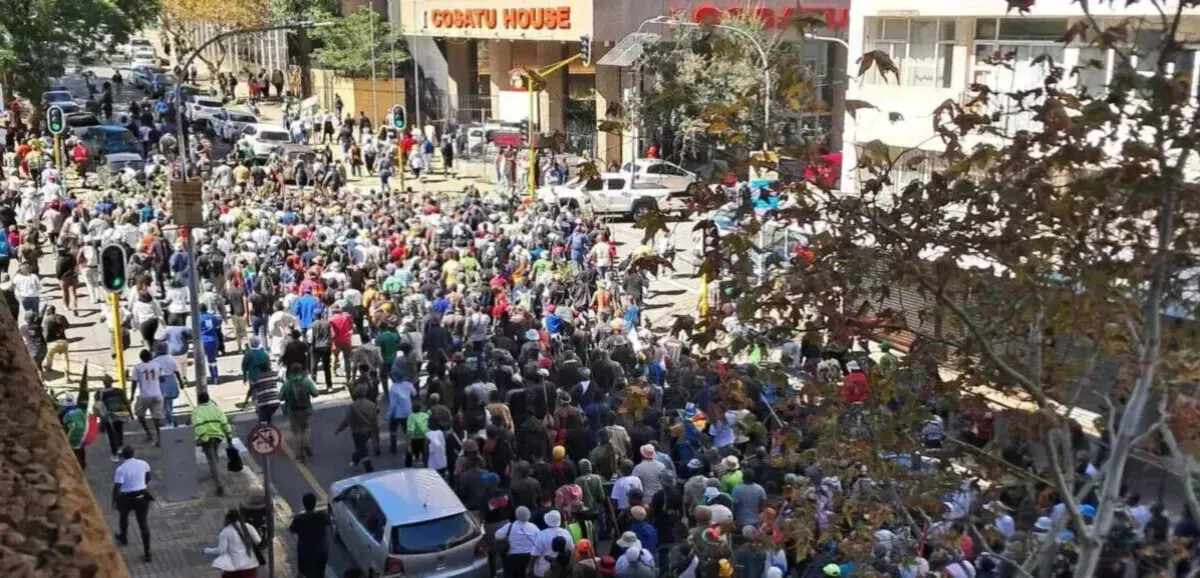
The Nigerian Ministry of Foreign Affairs announced that 1,926 Nigerians were repatriated from South Africa in 14 charter flights between June 10 and October 2. The repatriation efforts came amid a surge in xenophobic violence and protests in South Africa, where foreigners are often accused of taking jobs away from South Africans. The Nigerian government has been critical of the South African government's handling of the situation.
The repatriation process was facilitated by the Nigerian government, which fully funded the evacuation of 1,388 individuals. The remaining 538 individuals were supported by private funding, including contributions from the Redeemed Christian Church of God (RCCG), a prominent Nigerian church. The RCCG reportedly spent over $265,000 to repatriate 500 Nigerians. The Nigerian government's efforts to bring its citizens back home reflect the growing tensions between Nigeria and South Africa.
The violence and unrest in South Africa have been fueled by high unemployment rates, which exceed 30%, and deep-seated inequalities. The country has long been a magnet for migrants from across the continent, but the current climate has become increasingly hostile. In response to the crisis, the Nigerian Senate and House of Representatives announced the suspension of diplomatic relations with South Africa.
The rift between Nigeria and South Africa has been widening in recent months. The two countries have historically had a complex relationship, with South Africa being one of the largest economies in Africa and Nigeria being the most populous country on the continent. However, the current tensions have led to a significant deterioration in relations, with both countries imposing restrictions on each other's citizens.
The repatriation efforts are expected to continue as the Nigerian government seeks to bring back its citizens who are stranded in South Africa. The situation remains volatile, with many Nigerians still living in fear of xenophobic attacks. The Nigerian government has urged its citizens to exercise caution when traveling to South Africa and to consider returning home if they feel threatened.
The crisis has also sparked a wider debate about xenophobia and migration in Africa. Many have called for greater understanding and tolerance between countries, as well as more effective solutions to address the root causes of migration. The African Union has been urged to play a more active role in mediating the crisis and promoting dialogue between Nigeria and South Africa.
As the situation continues to unfold, both Nigeria and South Africa are under pressure to find a lasting solution to the crisis. The two countries have a long history of cooperation, but the current tensions have highlighted the need for more effective communication and collaboration. The international community is watching closely, as the crisis has implications for regional stability and economic growth.
Key points
- The Nigerian government has fully funded the evacuation of 1,388 individuals, while private funding supported the repatriation of the remaining 538 individuals.
- The repatriation efforts were facilitated by 14 charter flights between June 10 and October 2.
- The crisis has sparked a wider debate about xenophobia and migration in Africa, with many calling for greater understanding and tolerance between countries.