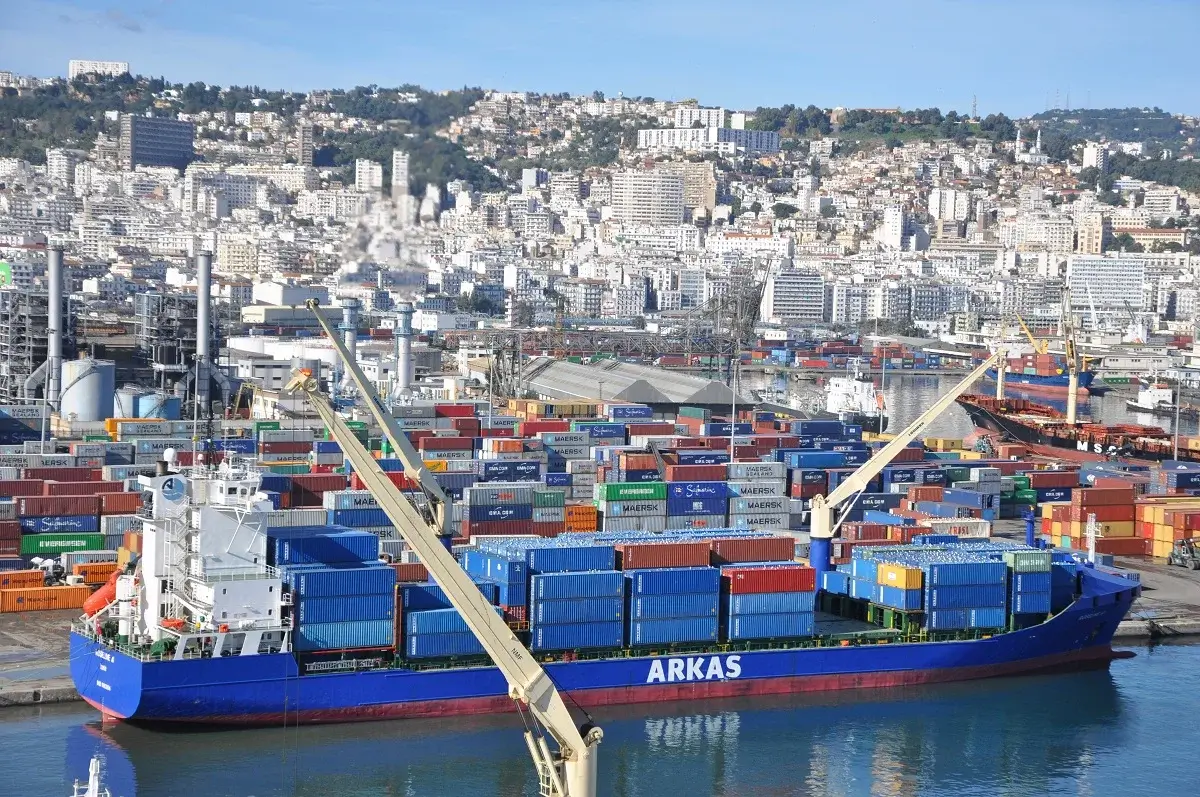
Ali Boulaaras, the new CEO of Serport, Algeria's port services group, has outlined his vision for the company's future. In a recent interview on Algerian radio, Boulaaras presented his main work axes, focusing on modernization, infrastructure development, increased capacity, and digitalization. He emphasized the crucial role of ports in the country's commercial exchanges, noting that 95% of trade passes through Algerian ports. Boulaaras also highlighted the challenges posed by the national economy's growth.
Serport, which comprises 13 subsidiaries, manages 10 commercial ports, with the remaining three dedicated to hydrocarbon activities. The ports of Skikda, Béjaïa, and Arzew primarily handle hydrocarbon-related activities, while others manage diverse goods. According to Boulaaras, Serport's performance improved in 2025, with 133 million tons handled, a 4% increase from 2024, and 16,923 ships accommodated, a 12% rise. The company also saw a 19% increase in container handling.
The reorganization of port activities is a priority for Serport, with a focus on specialization to enhance operational performance and reduce waiting times for ships. The port of Mostaganem is one of the first steps in this process, now dedicated to import and export operations for public enterprises. Boulaaras highlighted the port's excellent connectivity to rail and road networks. A development plan for the port is currently underway.
The extension of the phosphates port in Annaba is progressing rapidly, with a projected completion date of March 2027. The project includes a 1,600-meter quay, a 82-hectare platform, and a rail connection to extraction areas. This expansion is expected to increase capacity by 8-10 million tons. Algerian ports already export goods to various markets, including America, Asia, Africa, and Canada.
To strengthen its logistics chain, Serport plans to develop three corridors covering the center, east, and west of the country, integrating maritime, rail, and road transport. Boulaaras emphasized the company's ambition to make Algeria a major logistics hub between the Mediterranean and Africa. The platforms in Annaba, Djendjen, and Oran will play key roles in this organization.
The 24/7 operating regime introduced in March 2025 has yielded positive results, with a 24% reduction in waiting times and a 13% decrease in average stay duration. The container terminal occupancy rate has dropped from 110% to less than 40%. Boulaaras attributed these improvements to the new regime and announced plans to invest in handling equipment to minimize passage costs.
Serport also plans to establish a training center in Mostaganem for port-related professions, which is expected to be operational next year. The center will provide training, recycling, and seminars, with partnerships aimed at transferring expertise. The company's digitalization efforts are also underway, with the APCS subsidiary managing port formalities and planning to integrate other stakeholders, such as insurance companies and banks.
Key points
- Algeria aims to become a major logistics hub between the Mediterranean and Africa.
- Serport's CEO, Ali Boulaaras, has outlined a vision for modernization, infrastructure development, and digitalization.
- The company's 2025 performance showed significant improvements, with increased tonnage, ship traffic, and container handling.