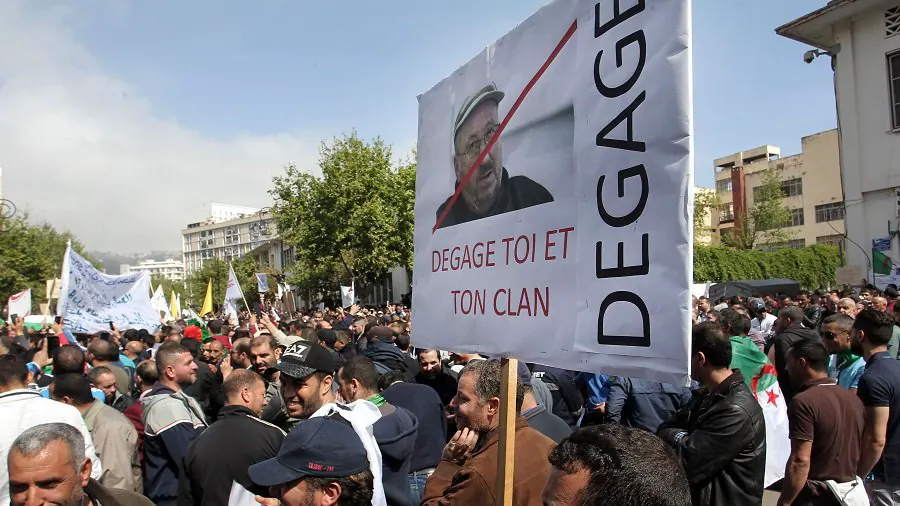
Algerian workers will take to the streets on May 1 to mark International Workers' Day, but this year's celebrations will be overshadowed by ongoing protests against the government. The protests, which have been gaining momentum, are led by various unions, including the Union générale des travailleurs algériens (UGTA), who are demanding the departure of the current leadership. The protests are part of a wider movement calling for change in Algeria.
The UGTA, which has been at the forefront of the protests, has called for a national rally in the capital, Algiers, on May 1. The union is demanding the immediate departure of its secretary-general, Abdelmadjid Sidi Saïd, as well as the recovery of the syndicate, which it says has been hijacked by the patronat. The UGTA's announcement of an upcoming congress on June 21 has not calmed the protesters, who are maintaining the pressure on the government.
Other unions, including the syndicat national autonome des personnels de l'administration publique (SNAPAP), have also called for rallies on May 1. The SNAPAP has expressed its support for the popular movement and has demanded the creation of a new Algerian state. The union has also called for a national march in Algiers to show solidarity with the protesters.
The Confédération des syndicats algériens (CSA), which represents 12 autonomous unions from various sectors of the public administration, has also decided to join the protests. The CSA has called for a national march on May 1 and has reiterated its support for the popular movement and the demand for a new Algerian state. The CSA has also expressed its opposition to the new government and has refused to work with them.
The protests are part of a wider movement that has been ongoing in Algeria for several weeks. The movement, which began with calls for economic reform, has evolved into a broader demand for change and the departure of the current leadership. The protesters have been calling for a new government and a new constitution, as well as the departure of President Abdelaziz Bouteflika, who resigned in April.
The Algerian government has been criticized for its handling of the protests, with many accusing it of using excessive force to quell the demonstrations. The government has also been criticized for its decision to hold elections on July 4, which many see as an attempt to sideline the protests. The CSA has expressed its opposition to the elections, citing the current context.
The protests are expected to continue in the coming days, with many unions and opposition groups calling for further rallies and demonstrations. The situation remains tense in Algeria, with many calling for change and an end to the current leadership. The government has yet to respond to the demands of the protesters, and it remains to be seen how the situation will evolve in the coming weeks.
Key points
- The protests are part of a wider movement calling for change in Algeria.
- Various unions, including the UGTA and SNAPAP, are demanding the departure of the current leadership.
- The protests are expected to continue in the coming days, with many unions and opposition groups calling for further rallies and demonstrations.