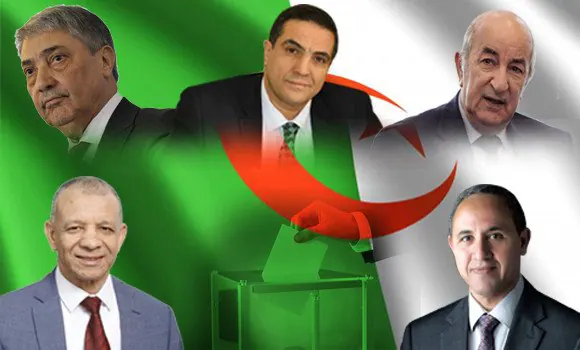
The five candidates in the December 12 presidential election have outlined different approaches to reforming Algeria's economy, all sharing the goal of moving away from a rentier economy and towards a more diversified and social economic model. According to their proposals, the new economic model would prioritize the creation of wealth while ensuring its equitable distribution.
The candidate from the Talaie El Houriyet party, Benflis, has proposed an "emergency economic national program" that advocates for a new economic model based on a social market economy. This model would redefine the role of the state as a regulator of economic activity and guarantor of equitable revenue distribution. Benflis' plan involves the state focusing on high-cost activities not covered by private investors and withdrawing from non-strategic and low-value-added activities.
Azzedine Mihoubi, interim secretary general of the Rassemblement national démocratique (RND), has put forth a comprehensive reform plan led by national competencies. His proposal includes creating a ministry of economy that combines several ministerial departments. Mihoubi aims to achieve 5% annual economic growth and restore macroeconomic balances by 2021 through emergency measures and structural reforms, focusing on supporting small and medium-sized enterprises (SMEs) and decentralizing economic decision-making to local authorities.
Abdelkader Bengrina, president of the Mouvement Binaa, has suggested a "new economic model" that is both free and social, to be adopted after a national dialogue and the conclusion of a socio-economic pact. This pact would involve all political and economic stakeholders, as well as civil society and national elites, in defining the country's socio-economic choices. Bengrina's plan includes short-term emergency measures and medium-term structural reforms aimed at achieving an average growth rate of 5-7% over the next five years and reducing unemployment to less than 8%.
Independent candidate Abdelmadjid Tebboune has proposed a new economic model based on diversified growth and a knowledge-based economy. His plan includes a new development policy outside of hydrocarbons, focusing on valorizing national production through fiscal incentives and limiting imports. Tebboune has promised to establish a new industrialization policy oriented towards micro, small, and medium industries, and to promote the emergence of a new generation of entrepreneurs.
Abdelaziz Belaïd, another candidate, has presented a program based on restructuring the economic, commercial, and financial sectors to enhance competitiveness. His plan involves periodically presenting state economic activity reports and eradicating the rentier economy. Belaïd also proposes creating a government instance dedicated to the Algerian community abroad, integrating them into the national economic reform plan.
The various economic reform plans proposed by the Algerian presidential candidates reflect their commitment to addressing the country's economic challenges and transitioning towards a more diversified and social economy.
Key points
- Algerian presidential candidates propose different economic reform plans to address decades-long rentier economy.
- The proposed plans prioritize the creation of wealth, its equitable distribution, and the transition to a free, diversified, and social economy.
- The candidates' programs include measures such as emergency economic plans, structural reforms, and new development policies to achieve economic growth and reduce unemployment.