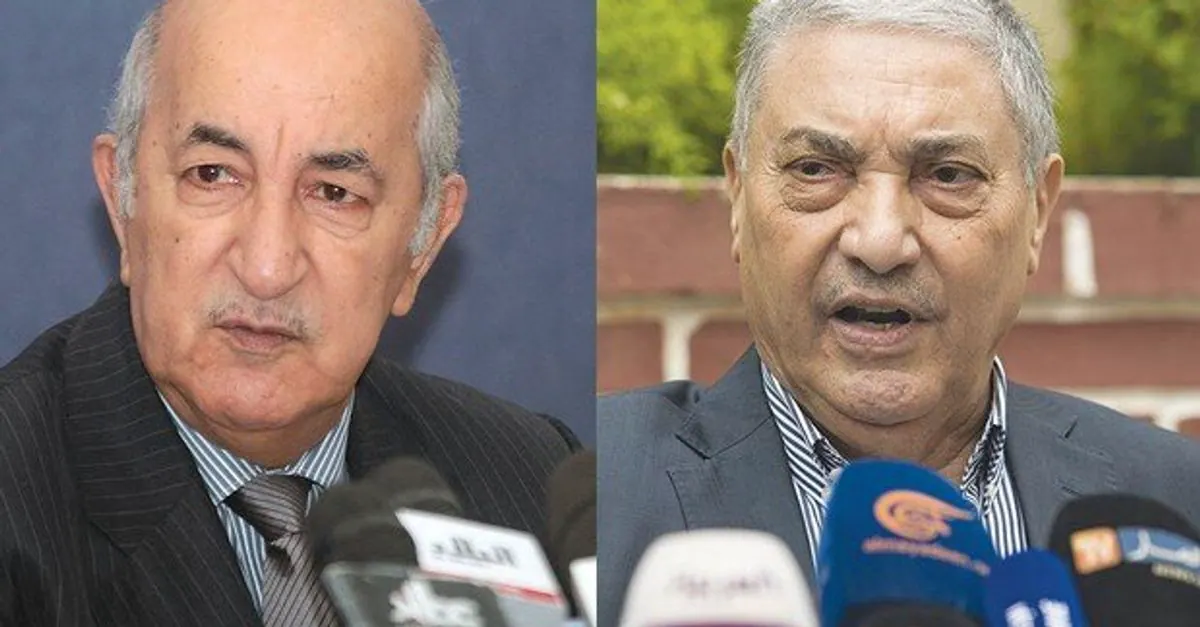
Algerian presidential candidate Ali Benflis has promised to make his upcoming term an "emergency national mandate" if elected on December 12. Benflis, a former head of government under President Bouteflika, presented his candidacy as a way to "accelerate the disappearance of the old despotic and corrupt regime." He outlined a three-axis plan to address the country's crisis, including resolving the crisis through the consideration of legitimate aspirations and demands of the democratic pacifist revolution that began on February 22, 2019.
Benflis' second axis for addressing the crisis involves the election of a constituent assembly, which he believes will allow for a radical break with the old political system. He also promised to reform all state institutions, legislative and representative, to ensure citizen control and rigorous monitoring of those in power. Benflis emphasized that his program is one of national emergency aimed at modernizing the nation politically, economically, and socially. He considers the state of citizenship to be inextricably linked to the state of law.
Candidate Benflis highlighted the complexity of the task ahead, stating that the mission is at the summit of difficulties and complexity, and a significant challenge for anyone seeking to gain the trust of the Algerian people. He warned that the problems in Algeria will only increase if no urgent solutions are taken. Benflis also emphasized that his candidacy and program are those of a man who has not waited for February 22 to oppose the power and political system.
On the previous day, fellow candidate Abdelmadjid Tebboune presented his program under the slogan "Engaged for change, capable of achieving it." Tebboune's program includes 54 commitments to establish a "new Republic." He has committed to a broad revision of the Constitution and a reformulation of the electoral framework. Tebboune also promised to strengthen good governance by separating the business world from politics and to reform the justice system and local administration.
Tebboune's program also focuses on economic development, including the implementation of a new policy of non-hydrocarbon development, substituting imported products with local ones, and promoting start-ups. He also aims to strengthen the economic role of local authorities in the development and diversification of the national economy. Additionally, Tebboune's program addresses defense and foreign policy, promising to put the military industry at the service of national security and defense, as well as economic development.
Tebboune has also emphasized the importance of reinforcing participatory democracy and revising the objectives and classic missions of Algerian diplomacy. He has denied receiving support from the FLN party but has not rejected support from anyone who wants to back him. Tebboune stated that he is a free candidate and welcomes all forms of support, except from those associated with foreign currents or who threaten national constants.
Both candidates have presented distinct visions for Algeria's future, with Benflis focusing on urgent national measures and Tebboune promising a broader program of change. The December 12 election will be a crucial moment for Algeria as it seeks to address its current crisis and chart a new path forward. The outcome will likely have significant implications for the country's future direction and development.
Key points
- - Ali Benflis has presented a three-axis plan to address Algeria's crisis, including resolving the crisis through consideration of legitimate aspirations and demands of the democratic pacifist revolution. - Abdelmadjid Tebboune has committed to a broad revision of the Constitution and a reformulation of the electoral framework as part of his program to establish a "new Republic." - Both candidates have emphasized the need for urgent action to address Algeria's crisis and promote change in the country.