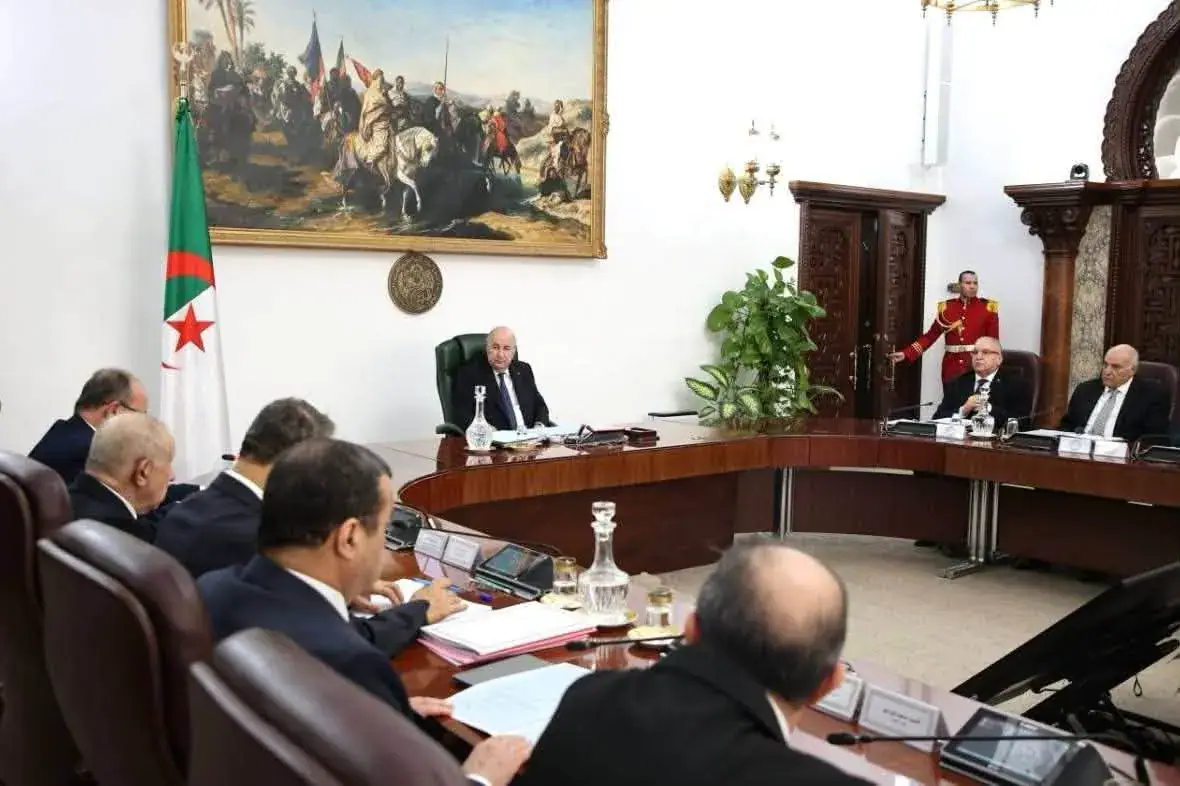
Algerian President Abdelmadjid Tebboune recently chaired a meeting of the Council of Ministers, focusing on the country's agricultural sector, rural development, and fishing industry. The meeting examined the current situation and future prospects of the sector, which had been previously discussed on October 4. Following a presentation by Agriculture Minister Sid Ali Khaldi, President Tebboune ordered the development of a new plan to organize agriculture at the local level, ensuring greater transparency and a more accurate census.
As part of the new plan, President Tebboune announced the creation of a dedicated office for dry vegetables, while cereals will continue to be managed by the Algerian Interprofessional Office for Cereals (OAIC). Additionally, a new service will be established to provide statistics for all agricultural activities and professions, aiming to eliminate delays in supplying the national market with essential products. The President also instructed the Agriculture Minister to develop a plan to redistribute tasks within the ministry.
President Tebboune assigned the Agriculture Minister to prepare for the upcoming agricultural campaign, ensuring the necessary means of mechanization are available in all production areas. This follows a previous decision to create mechanization cooperatives. The President also emphasized the need to exploit agricultural land, prohibiting the abandonment of land without exploitation, based on outdated assumptions that do not align with modern agricultural realities.
The President instructed the Agriculture Minister to combat all forms of agricultural production retention, as the state has opened the way for purchasing strategic crops at the best prices. He also banned the use of maize as green fodder in animal feed, citing its ineffectiveness in improving meat production and covering national market needs. Furthermore, President Tebboune ordered a review of the functioning and organization of companies under the agriculture sector.
To strengthen control over imported products, President Tebboune instructed the government to integrate statistics from ministerial services into the national digital platform of the High Commission for Digitization. He also ordered an increase in the number of control laboratories at ports and airports, prioritizing the most active ones, such as those in Oran, Mostaganem, Ghazaouet, Jijel, and Annaba.
President Tebboune called on the government to mobilize its services around the clock to protect citizens' safety and health from risks associated with importing hazardous products. He tasked the Justice Minister with reinforcing the legal framework with maximum penalties for those involved in introducing substances and products that threaten public health into the country.
The new agricultural plan aims to modernize and reorganize the sector, increasing transparency and efficiency. Key aspects of the plan include the creation of new structures, such as a dedicated office for dry vegetables, and the development of a more accurate census. The plan also focuses on exploiting agricultural land, combating retention of agricultural production, and strengthening control over imported products.
Key points
- The new plan aims to increase transparency and modernize the agricultural sector.
- President Tebboune ordered the creation of a dedicated office for dry vegetables and a new service for agricultural statistics.
- The plan focuses on exploiting agricultural land and combating retention of agricultural production.