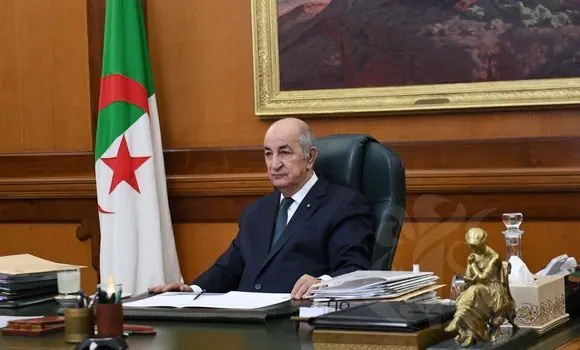
On April 19, 2020, Algerian President Abdelmadjid Tebboune, Supreme Commander of the Armed Forces and Minister of National Defense, presided over a periodic Council of Ministers meeting. The meeting began with a report from the Prime Minister on government activities since the last Council of Ministers meeting on March 22. This report set the stage for discussions on various critical issues facing the nation.
A significant part of the meeting was dedicated to a draft law modifying and complementing the 1966 penal code, presented by the Minister of Justice, Keeper of the Seals. The proposed amendments aim to adapt the law to recent societal changes, addressing new forms of crime and filling legal gaps in crisis management. The draft law also targets the criminalization of acts threatening national security and stability, such as spreading fake news and undermining state unity.
The proposed changes to the penal code have been necessitated by the emergence of new criminal activities that have threatened the country's security and stability. These include the spread of fake news, acts against state security and national unity, and the falsification of documents to obtain financial or material aid. The Council of Ministers adopted the provisions, which also focus on enhancing penalties for specific crimes, including offenses against imams and the destruction of public places of worship.
President Tebboune emphasized that the draft law aligns with his commitment to societal moralization and the eradication of practices that have tarnished the state's image. He underscored the importance of building a genuine democracy that ensures equal opportunities for all citizens, regardless of their social status. The President also highlighted the need for a strong state with an independent judiciary to safeguard national cohesion and prevent anarchy.
The Council of Ministers also heard from the Minister of Interior, Local Authorities, and Territorial Planning, who reported on solidarity efforts for families affected by the COVID-19 crisis and those receiving annual aid during the Ramadan month. By April 18, 388,000 families, including 178,000 in Blida province, had benefited from over 12,000 tons of food products donated by 39 provinces. Additionally, 220,000 families in 5,500 underprivileged areas received comprehensive support, including access to clean water.
The government has taken measures to combat speculation and monopolies, referring 482 cases to justice and seizing 2,500 tons of food products and 6.5 million units of pharmaceutical equipment. President Tebboune praised the nation's solidarity, describing it as a hallmark of Algerian society that has mitigated the crisis's impact. He thanked the Algerian people, walis, and civil society for their efforts and called for the reconstruction of civil society to promote popular oversight.
President Tebboune instructed the Ministers of Interior and Labor to classify associations that have distinguished themselves during the crisis as public utility associations. He also urged the acceleration of approvals for serious civil associations at the national or local level, provided they are free from political or ideological biases. The President's directives aim to foster a culture of solidarity and popular control, essential for navigating the challenges posed by the pandemic and beyond.
Key points
- The Algerian government has launched a significant overhaul of its penal code to address new forms of crime and enhance national security.
- President Tebboune has emphasized the importance of solidarity and popular oversight in addressing the COVID-19 crisis and beyond.
- The government has intensified efforts to combat speculation and monopolies, seizing large quantities of essential goods and referring cases to justice.