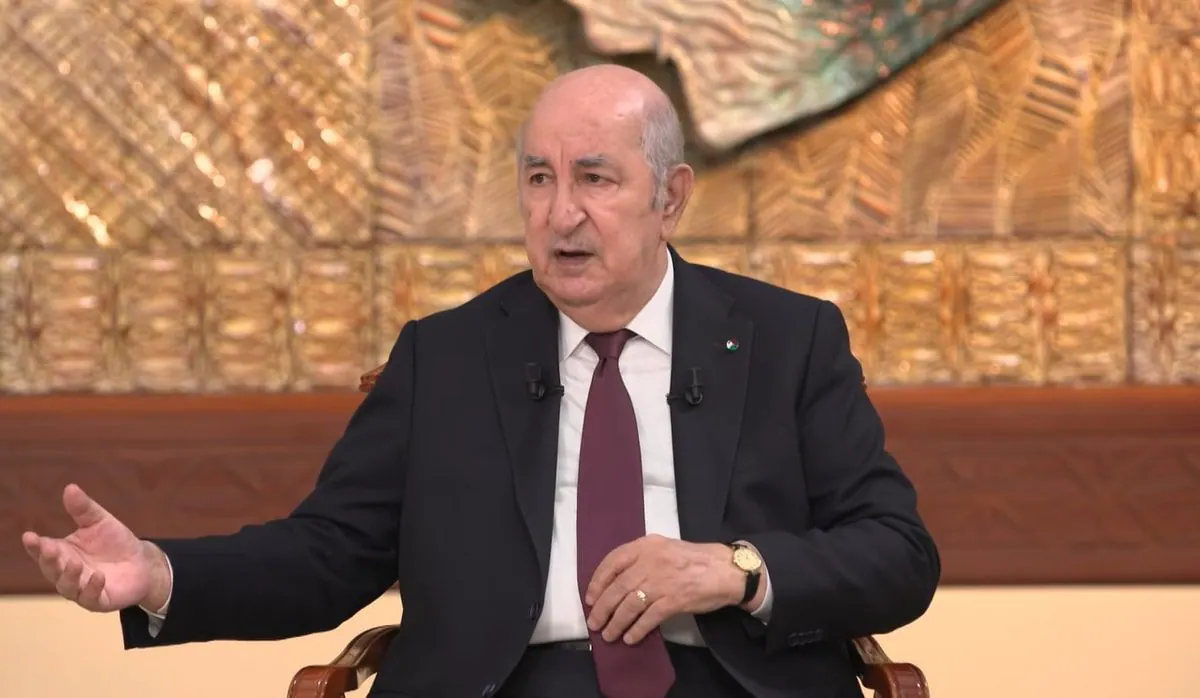
Algerian President Abdelmadjid Tebboune has contested the International Monetary Fund's (IMF) forecast that the country's foreign exchange reserves will decline sharply in the coming years. In a recent interview with local media, Tebboune expressed confidence that the reserves will remain at an "acceptable level" until at least 2031. The IMF had predicted that the reserves would decline to $19.8 billion by 2031, down from $51 billion in 2025.
The IMF's forecast is based on the country's heavy reliance on hydrocarbon exports, which account for the majority of its revenue. The institution recommends greater flexibility in the exchange rate and gradual consolidation of public finances. However, Tebboune emphasized that Algeria will not resort to debt and instead will focus on diversification, large mining projects, and reducing imports. He cited the automotive industry, mining, and electronics as key sectors that will contribute to stable revenue.
Tebboune also disputed the IMF's growth forecast, predicting that Algeria's economy will grow between 4.01% and 4.02% this year. He even suggested that the country's GDP could reach $400 billion by the end of 2026 or early 2027. The president expressed confidence that the country's institutions have a better understanding of the economy than international financial organizations.
One of the key projects that Tebboune highlighted is the integrated phosphate project in eastern Algeria. The project, which includes a railway and port extension, is expected to be completed by the end of 2026 and will significantly boost the country's exports. He also mentioned that over 10,000 investment projects have been registered with the Algerian Agency for Investment Promotion (AAPI), including 300 projects backed by foreign investors.
Tebboune emphasized that the government is working to regulate imports and reduce the country's import bill. He noted that Algeria has started producing goods locally, such as notebooks and pens, which were previously imported. The president also vowed to take measures against operators who have attempted to circumvent regulations to obtain foreign currency for imports.
The Algerian government's strategy to maintain foreign exchange reserves also involves promoting investment and improving the business environment. Tebboune announced that a decree will be issued to establish a one-stop shop for investors, which will help distribute projects across different regions of the country. He expressed optimism that the country's economy will continue to grow and that foreign exchange reserves will remain stable.
The dispute between Tebboune and the IMF highlights the differences in their assessments of Algeria's economic prospects. While the IMF is cautious about the country's reliance on hydrocarbons and its declining foreign exchange reserves, Tebboune is confident that his government's policies will ensure a stable economic outlook. The country's economic performance will be closely watched in the coming years as it seeks to diversify its economy and maintain its foreign exchange reserves.
Key points
- Algerian President Abdelmadjid Tebboune disputes IMF forecast that foreign exchange reserves will decline to $19.8 billion by 2031.
- Tebboune assures that reserves will remain at an "acceptable level" until at least 2031.
- The Algerian government is focusing on diversification, large mining projects, and reducing imports to maintain foreign exchange reserves.