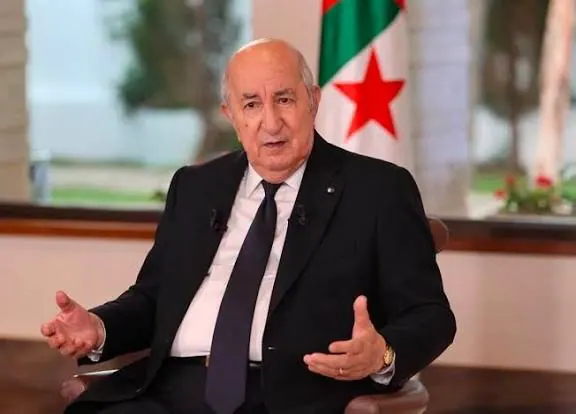
Algerian President Abdel Majid Tebboune has stated that his government will not back down on its decision to allocate a prison for drug barons and impose the death penalty on those convicted of forest fires, child abduction, and other serious crimes. During a meeting with the national press, the President emphasized that these measures are essential for protecting citizens and the country from a large-scale war on crime. He cited the example of the United States, which still practices capital punishment, questioning whether this makes it any less democratic.
President Tebboune's comments come amid a broader crackdown on crime in Algeria. The government's efforts to combat crime have been ongoing, with a focus on addressing issues such as drug trafficking, forest fires, and child abduction. The President's stance on harsh penalties has been consistent, with an emphasis on ensuring public safety and security. He noted that the government's decisions are aimed at safeguarding the nation and its citizens from the threats posed by organized crime.
The allocation of a prison for drug barons, specifically the Tenzrouft prison, is part of a larger strategy to tackle the issue of narcotics in Algeria. The government has been working to disrupt and dismantle drug trafficking networks, with a focus on targeting those responsible for importing and distributing illicit substances. This approach is seen as a key component in the fight against organized crime.
In addition to addressing crime, the Algerian government has been working on various development initiatives. Recent reports indicate that over 15,000 tons of cement and clinker were exported from the port of Ténès in September. This comes as part of efforts to boost economic growth and diversify the country's exports. The government has also been focused on improving infrastructure and public services.
The President's meeting with the national press provided an opportunity for him to address various issues of public concern. He touched on topics such as the country's electoral process, with a focus on ensuring transparency and fairness. The government has been working to improve the electoral system, with an emphasis on increasing citizen participation and representation.
Algeria has also been strengthening its international partnerships, particularly in the region. The country has been working to enhance cooperation with neighboring countries, including Greece, on issues such as energy and transportation. This cooperation is seen as essential for promoting regional stability and economic growth.
The government's efforts to address the legacy of past issues, such as the impact of nuclear testing, have also been ongoing. The Minister of Energy and Mining, Mohamed Arkab, has emphasized Algeria's commitment to addressing the environmental and health impacts of nuclear testing. This includes efforts to clean up contaminated sites and provide support to affected communities.
Key points
- President Abdel Majid Tebboune reaffirms commitment to severe punishments for serious offenses
- Government allocates Tenzrouft prison for drug barons
- Algeria strengthens international partnerships and addresses legacy of past issues