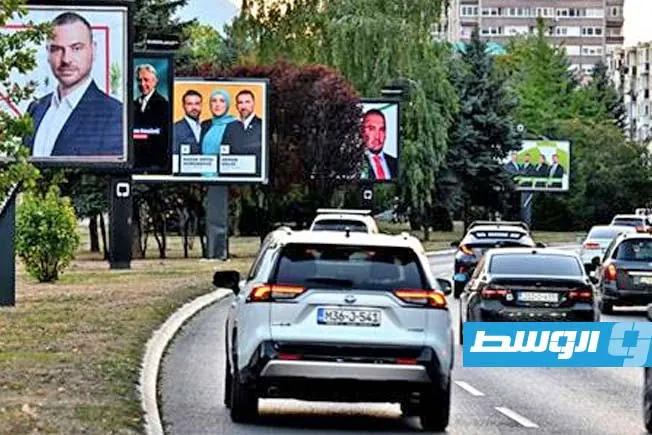
Bosnians are voting in elections that may impact the country's bid to join the European Union and the influence of major powers such as the US and Russia. The elections are taking place to choose members of the tripartite presidency and national parliament, as well as regional legislative elections in the two entities that make up the country. The elections come as the country is seeking to join the EU, but the process has been slow due to internal political issues.
The country gained EU candidate status in December 2022 and was given the green light to start accession talks in 2024, but actual negotiations have not begun yet. This is due to the local political leaders' failure to implement basic requirements such as strengthening judicial oversight and passing anti-corruption laws. The slow pace of EU integration and economic stagnation have led to growing frustration among voters.
The Bosnian electorate is diverse, with a population of around 3.4 million people, and the country's politics is often dominated by ethnic-based parties. The main parties in the elections are the Bosnia and Herzegovina Democratic Action party, the Independent Social Democrats Alliance, and the Croatian Democratic Union. These parties have traditionally been based on ethnic lines, but there are also multi-ethnic opposition alliances, such as the Social Democratic Party.
The elections are being closely watched by major powers, including the US and Russia, which have long sought to exert influence in Bosnia and Herzegovina. The US has been pushing for a project to import American liquefied natural gas, while Russia has been supporting the country's Serb entity, Republika Srpska. The EU has also been trying to expand its influence in the region.
The electoral commission is expected to announce preliminary results later on Sunday after polls close at 5 pm local time. The outcome of the elections could have significant implications for the country's future, including its bid to join the EU. If ethnic-based parties continue to dominate, it may hinder progress on EU integration.
The country's complex political system, established by the 1995 Dayton Peace Agreement, has led to a situation where ethnic-based parties have significant influence. The agreement created a tripartite presidency and a weak central government, which has often been unable to make key decisions. This has led to frustration among voters, who are seeking change.
The elections come at a time when Bosnia and Herzegovina is seeking to move forward with its EU integration bid, but the process has been slow due to internal issues. The country's progress will depend on its ability to implement reforms and strengthen its institutions. The outcome of the elections will be crucial in determining the country's future direction.
Key points
- The elections in Bosnia and Herzegovina may impact the country's bid to join the European Union.
- The country's complex political system, established by the 1995 Dayton Peace Agreement, has led to a situation where ethnic-based parties have significant influence.
- The US and Russia are seeking to exert influence in Bosnia and Herzegovina, with the US pushing for a project to import American liquefied natural gas and Russia supporting the country's Serb entity.