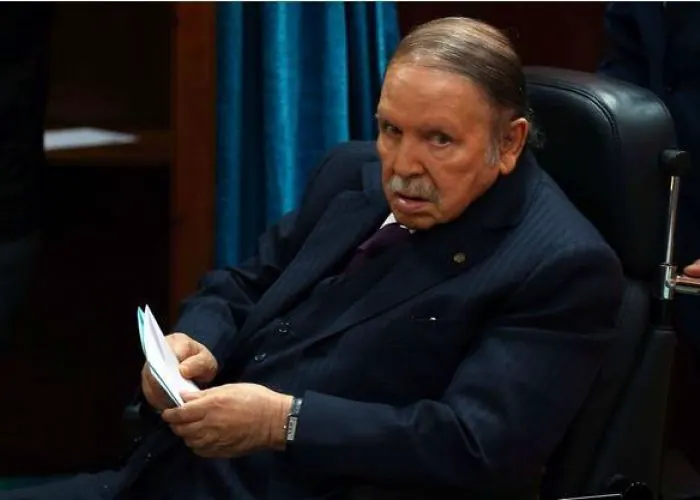
Algerian President Abdelaziz Bouteflika announced on Wednesday that he will resign from his position before April 28, the end of his current term. This move will trigger a transition period, during which a new government will be formed to ensure the normal functioning of state institutions. Bouteflika's decision was announced through a statement from the presidency, which stated that he will take important decisions to guarantee the continuity of state institutions during the transition period.
The announcement of Bouteflika's resignation had been anticipated for some time, with several private television channels reporting the news earlier in the day. The President's decision comes after weeks of speculation about his future, with many Algerians calling for his resignation amid widespread protests. A new government was appointed on March 31, which will be responsible for managing current affairs during the transition period.
According to the Algerian Constitution, the President's resignation will trigger Article 102, which outlines the procedures for a transition of power. Bouteflika's next steps will likely involve appointing a new head of the Senate, with Abdelkader Ben Salah currently holding the position. Ben Salah is currently in Tunisia, and his replacement is seen as a key move to ensure a smooth transition.
The transition period is expected to last for at least 90 days, during which time a new presidential election will be organized. The interim head of state will have limited powers, and will not be able to grant pardons or organize a referendum. This means that any changes to the Constitution will have to wait until a new President is elected.
Bouteflika's resignation is seen as a significant development in Algeria's recent history, with many Algerians calling for a radical change in the country's system of government. Protests are planned for Friday, with demonstrators expected to express their dissatisfaction with the current system and demand a transition led by neutral figures.
The new government appointed on March 31 will play a key role in managing the transition period. This government will be responsible for ensuring the continuity of state institutions and managing current affairs until a new President is elected. The appointment of this government is seen as a key step in ensuring a smooth transition.
The international community is closely watching developments in Algeria, with many countries expressing their support for a peaceful and democratic transition. The African Union and other regional organizations have called for calm and stability during this period, and have expressed their support for the Algerian people as they navigate this significant transition.
Key points
- Algerian President Abdelaziz Bouteflika to resign before April 28
- Transition period to last at least 90 days
- New presidential election to be organized during transition period