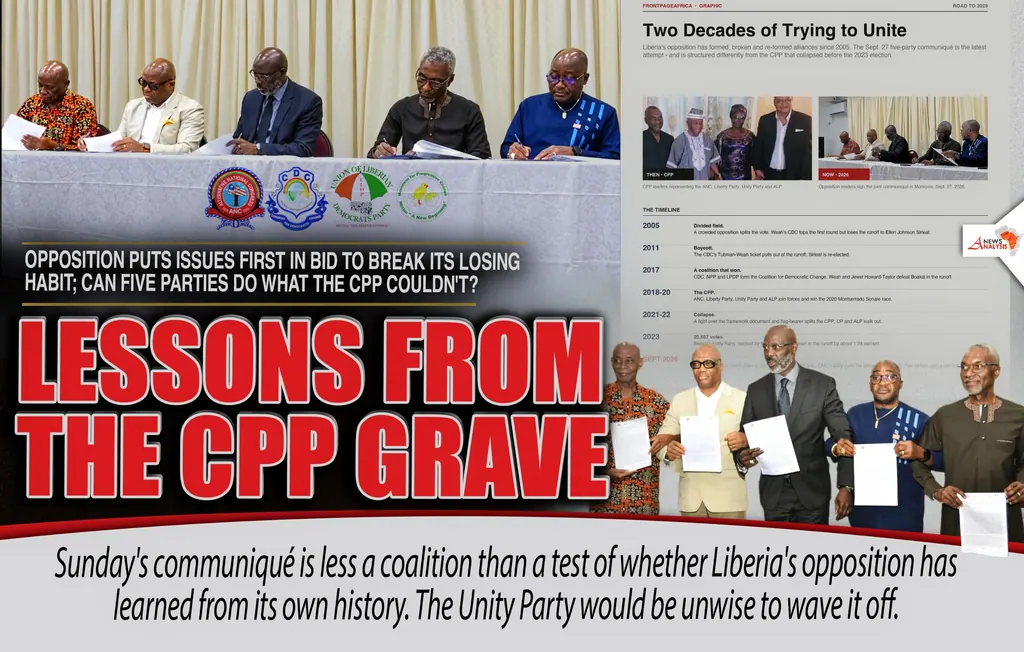
In a significant development, five Liberian opposition parties have formed an alliance aimed at challenging the ruling party in the 2029 elections. The parties, led by former President George Manneh Weah, signed an eight-page communiqué outlining their grievances against the government. The document highlights issues such as corruption, opaque procurement, and pressure on the courts. This new alliance brings together the Coalition for Democratic Change (CDC), led by Weah, with the Liberty Party, the National Democratic Party of Liberia, the Progressive Democratic Party, and the Unity Party not being part of it but others like Alexander Cummings' party.
The new opposition alliance has created a Joint Technical Committee, comprising two members from each party, to develop policy positions and build county-level outreach. This approach differs from the previous opposition coalition, the Collaborating Political Parties (CPP), which collapsed over issues of leadership and candidate selection. The new alliance has deliberately put the ticket question last, focusing on issues and structure before candidates. This strategy aims to avoid the pitfalls that led to the CPP's demise.
A key difference between this alliance and the CPP is the presence of a dominant base, with Weah's CDC bringing significant votes to the table. The smaller parties bring policy credibility, regional contacts, and technocratic expertise. By putting issues first, the alliance hopes to create a viable opposition that can challenge the ruling party effectively. The communiqué reads like an opposition policy platform in draft, outlining concerns on the economy, courts, and the electoral commission.
However, fault lines are already visible within the alliance. The Citizens Movement for Change walked out of the negotiations, citing concerns about the lack of a clearly defined national reform agenda. Musa Bility's objection to the hosting of meetings and concerns about leadership have not gone away. The CDC's own record will also be scrutinized, with critics pointing to issues of selective justice and opaque procurement during Weah's presidency.
The opposition's claims will be judged partly on whether its lead party can answer its own history. The Unity Party, in particular, will point to missing money, sanctions on CDC-era officials, and the way the Weah government treated critics. The absences from the alliance also matter, with the Liberty Party not at the table and the National Patriotic Party divided.
To become a viable opposition, the alliance must achieve three key goals over the next 18 months. Firstly, it must turn its charge sheet into policy, providing costed answers to pressing issues such as squatter settlements and health worker pay. Secondly, it must engage with voters in the northwest and southeast swing counties, where the 2023 runoff was lost. Thirdly, it must settle the selection rule for its standard bearer early, even if the name comes late.
The ruling party's response to the opposition alliance has been one of dismissal, with Secretary General Amos Tweh saying it poses no serious threat. However, this approach may be weak strategy, as it fails to address the concerns outlined in the communiqué. A more durable response would be to take the sharpest charges off the table, such as publishing the Foya file and letting the drug investigation proceed.
Key points
- The opposition alliance has created a Joint Technical Committee to develop policy positions and build county-level outreach.
- The alliance has deliberately put the ticket question last, focusing on issues and structure before candidates.
- The opposition must achieve three key goals to become viable: turn its charge sheet into policy, engage with voters in key counties, and settle the selection rule for its standard bearer.