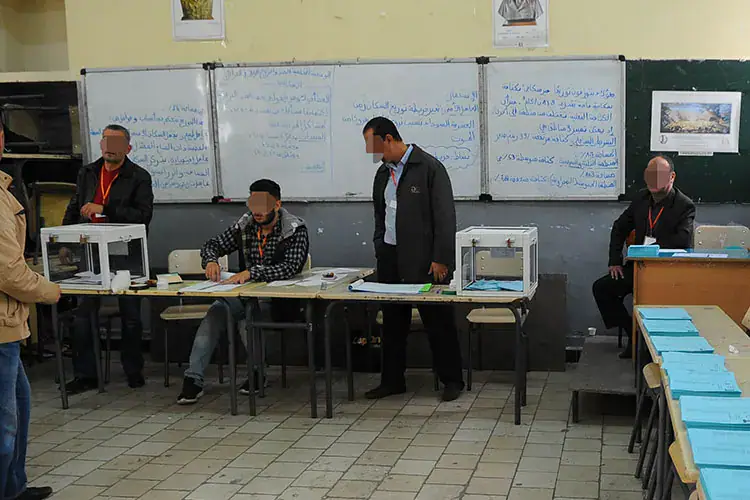
Algerian political parties participating in the upcoming local elections have started appointing representatives to monitor voting stations. This development comes as the election campaign enters its second week. According to sources, the parties are preparing for a potentially reduced need for random assignment of monitors due to a limited number of competing lists in several municipalities. This could enable parties to ensure their representatives are present at various polling stations without needing to resort to random assignment or agreements with other lists.
The limited number of competing lists in some municipalities is expected to simplify the process of assigning monitors. In some cases, the number of lists does not exceed three or four, reducing the likelihood of exceeding the maximum number of representatives allowed per polling station. This is a change from previous elections, where a larger number of competing lists often led to challenges in distributing monitoring opportunities. Parties are required to have a limited number of representatives at each polling station, and random assignment or agreement among parties is used when necessary.
The Algerian election law stipulates a maximum of five representatives per polling station. If the number of lists exceeds this limit, parties must either reach an agreement or conduct a random draw to determine the representatives. This process aims to prevent overcrowding and ensure the smooth operation of the voting process. The law also outlines the responsibilities of list representatives, including monitoring the voting process, reporting observations, and recording concerns.
The appointment of monitors is crucial for political parties, as they play a significant role in overseeing the voting process. Representatives are responsible for monitoring all stages of the election, from the opening of polling stations to the counting of votes. This process is essential for ensuring the integrity and transparency of the election. With the election campaign in full swing, parties are working to ensure their representatives are prepared to fulfill their duties.
The local election campaign has entered its second week, with parties continuing to organize rallies and meetings across the country. While some parties have reported a significant turnout at their events, the individual campaigns of candidates remain relatively low-key. Party leaders are using these events to present their programs, discuss national and local issues, and encourage voters to participate in the election.
Some observers have noted that the discourse of certain candidates during their interventions and gatherings tends to focus on national and general political issues. This has raised concerns about the extent to which the programs presented are tailored to the specific needs of each municipality and province. The primary goal of these elections is to elect representatives capable of addressing local development issues and improving the living standards of citizens.
The elections are scheduled to take place on November 28, and parties are working to ensure their representatives are in place to monitor the voting process. The limited number of competing lists in some municipalities is expected to reduce the need for random assignment, enabling parties to have a greater presence at polling stations. Ultimately, the election will determine the representatives responsible for addressing local issues and improving public services.
Key points
- Algerian parties are preparing monitors for local elections amid expectations of reduced need for random assignment.
- Limited competing lists in some municipalities may simplify monitor assignment.
- Parties are working to ensure representatives are present at polling stations to monitor the voting process.
Reporting sources
- الأحزاب تجهّز مراقبيها والقرعة تتراجع بمحدودية القوائم! · Echorouk El Yawmi