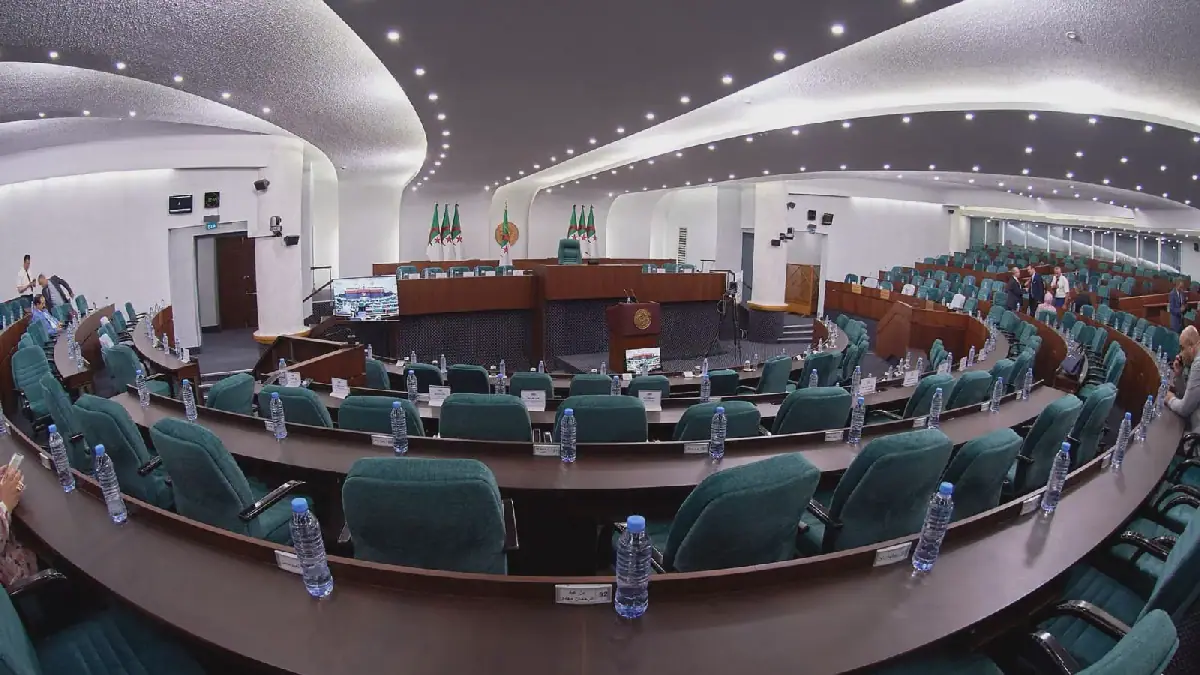
The Algerian National People's Assembly's finance committee has abandoned its amendment to require parliamentary approval for fuel price increases. The committee had initially proposed that any revision of fuel prices be subject to parliamentary approval. However, they have now retained a formulation close to the government's proposal, allowing fuel prices to be revised "if necessary" by concerned authorities in accordance with existing legislation.
The decision marks a significant shift in the country's approach to fuel pricing. Earlier in November, the committee had proposed a safeguard to prevent price hikes without parliamentary approval. However, this clause has been removed from the text. The move has sparked concerns among opposition MPs, who fear that it may lead to increased fuel prices, which could negatively impact citizens' purchasing power.
The finance committee justifies its decision by citing the continuous rise in production costs. They argue that revising fuel prices may become an economic necessity to ensure the financial stability of refining and distribution companies and prevent supply disruptions. The committee also emphasizes the importance of maintaining state support for fuel prices, which remain among the lowest in the region due to public subsidies.
The new text gives the government flexibility to revise fuel prices without parliamentary approval. While the Minister of Hydrocarbons, Mohamed Arkab, has ruled out a price hike in 2027, the text allows for potential increases in the future, depending on production costs and public finances. The law will be voted on by the Assembly on November 16, and its implementation will depend on its publication in the Official Journal.
In addition to the fuel price decision, the finance committee has introduced a new article to the finance bill, affecting Algerians living abroad. The article proposes an increase in the fiscal stamp for renewing biometric passports remotely. The stamp will increase by 500 dinars for adults and 250 dinars for minors and students for a classic renewal. In cases of loss, damage, or a 48-page passport, the increase will be 1,000 dinars for adults and 500 dinars for minors and students.
The new measures will apply to Algerians living abroad who renew their passports remotely, allowing them to avoid consulate visits. However, they will have to pay the increased stamp fee electronically at the time of application. The value of these fees in foreign currency will be set annually. The changes aim to improve the passport renewal process for Algerians abroad.
The finance bill will be voted on by the Assembly on November 16 and then examined by the Council of the Nation. Once published in the Official Journal, the law will come into effect, likely on January 1, 2027. Certain measures may require implementing texts before they become effective.
Key points
- Algerian lawmakers have dropped a requirement for parliamentary approval of fuel price hikes.
- The finance committee has introduced an increase in the fiscal stamp for renewing biometric passports remotely for Algerians living abroad.
- The new measures will apply to Algerians living abroad who renew their passports remotely, allowing them to avoid consulate visits.