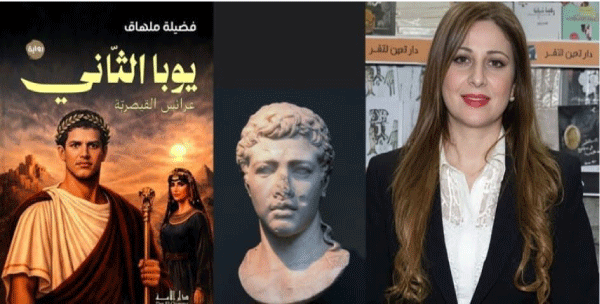
The Algerian novel "Yuba al-Thani" by Fadila Mlehak has sparked a reevaluation of the historical narrative in Algerian literature. Published by Dar al-Umma, the novel has been praised for its bold approach to reexamining the country's past. The story revolves around Yuba II, a historical figure who ruled Numidia, a region in ancient Algeria. By reexploring this figure, Mlehak's novel encourages readers to reconsider the traditional narrative of Algerian history.
One of the key aspects of the novel is its challenge to the traditional notion of historical narrative. Mlehak's work invites critics to search for new laws and approaches to understanding historical fiction. The novel's focus on the human experience and emotions, rather than just dry historical facts, sets it apart from traditional historical accounts. By doing so, Mlehak's novel provides a more nuanced and multifaceted understanding of Algerian history.
The novel also explores the concept of identity and its relationship to history. Mlehak's protagonist, Yuba II, is a complex figure who embodies the tensions between different cultures and historical periods. Through his story, the novel highlights the importance of understanding the past in order to build a stronger sense of identity in the present. This theme is particularly relevant in Algeria, where the country's complex history has often been a source of contention.
Another significant aspect of the novel is its use of anthropological and mythological elements. Mlehak draws on Algerian folklore and mythology to create a rich and vibrant narrative that brings the past to life. This approach allows the novel to transcend traditional historical accounts and provide a more immersive and engaging reading experience. By incorporating these elements, Mlehak's novel challenges readers to think creatively about the past and its ongoing impact on the present.
The novel has been praised for its innovative approach to historical fiction. Mlehak's use of experimental techniques and bold narrative choices has been hailed as a major achievement in Algerian literature. The novel's exploration of the human experience, identity, and history has resonated with readers and critics alike. As a result, "Yuba al-Thani" has become a significant work in the Algerian literary canon.
The novel's impact extends beyond the literary world. "Yuba al-Thani" has sparked a wider conversation about the importance of reexamining historical narratives and challenging traditional accounts. This conversation is particularly relevant in Algeria, where the country's complex history continues to shape its present and future. By providing a new perspective on Algerian history, Mlehak's novel has contributed to a deeper understanding of the country's past and its ongoing impact on its people.
In conclusion, "Yuba al-Thani" is a groundbreaking novel that challenges traditional notions of historical narrative. Through its innovative approach and bold narrative choices, Mlehak's novel has provided a new perspective on Algerian history and its ongoing impact on the present. As a work of historical fiction, "Yuba al-Thani" has set a new standard for Algerian literature and has sparked a wider conversation about the importance of reexamining the past.
Key points
- The novel challenges traditional notions of historical narrative and encourages readers to reconsider the past.
- The novel explores the concept of identity and its relationship to history.
- The novel's use of anthropological and mythological elements creates a rich and vibrant narrative.