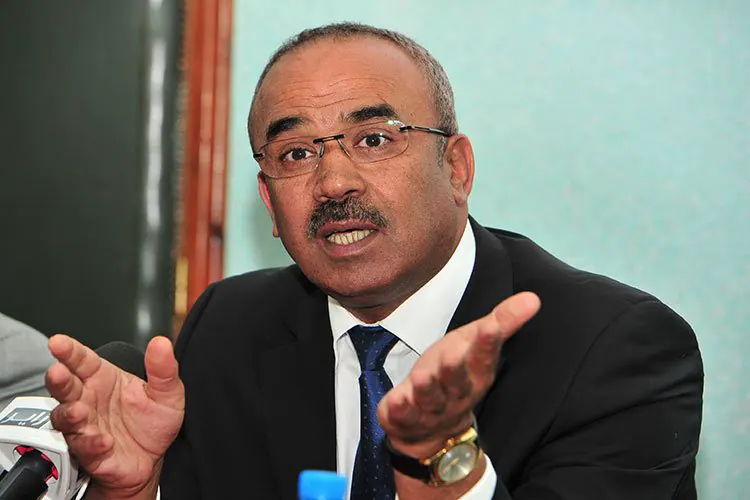
The Algerian government, led by Prime Minister Noureddine Bedoui, is facing significant challenges in its efforts to engage with the public. Recently, several ministers were sent to various regions to assess the situation and mark their presence, but they were met with hostility and rejection. On one occasion, Energy Minister Mohamed Arkab was prevented from leaving Tébessa airport in eastern Algeria, where he had arrived to inspect projects in his sector.
A delegation of ministers, led by Interior Minister, faced a hostile reception in Bechar, a city in the south of the country. Despite a strong police presence, the ministers were nearly lynched by citizens who objected to their visit. The delegation, which also included ministers responsible for water resources and housing, was forced to abandon plans to visit Béni-Abbes, 240 km south of Bechar, due to a popular protest.
The visit by the ministerial delegation was announced on the eve of their trip, but they were met with a strongly hostile reception. The ministers were only able to proceed with their visit due to the protection of a large security contingent, comprising gendarmerie, CRS, and BRI units. On the second day of their visit, Interior Minister attempted to justify the purpose of their trip, stating that the government's primary concern was stability and security in the run-up to the presidential election on July 4.
The Algerian government has been facing significant challenges since the resignation of President Abdelaziz Bouteflika, who stepped down in April following weeks of mass protests. The Bedoui government, which was formed in the aftermath of Bouteflika's resignation, has been struggling to assert its legitimacy and connect with the public. The rejection faced by government ministers during their visits highlights the difficulties faced by the government in regaining public trust.
The first member of the Bedoui government to face opposition was the Minister of Public Works, who was forced to cancel a visit to a construction site in a suburb of Algiers due to a strong popular mobilization. The incident highlighted the challenges faced by the government in implementing its agenda and engaging with the public. The rejection of government ministers by the public is likely to complicate the survival of the Bedoui government over the next three months.
The Bedoui government's difficulties are compounded by the fact that its leader, Noureddine Bedoui, is widely unpopular and seen as illegitimate by many Algerians. Bedoui was appointed prime minister by Bouteflika shortly before his resignation, and his government's efforts to assert its authority have been met with widespread skepticism. The government's reliance on young and inexperienced ministers to connect with the public has been seen as a high-risk strategy.
The challenges faced by the Bedoui government are significant, and it remains to be seen how it will navigate the complexities of the current transition period. The government's efforts to engage with the public and assert its legitimacy will be closely watched, particularly in the run-up to the presidential election on July 4. The rejection faced by government ministers during their visits highlights the need for the government to develop a more effective strategy for connecting with the public and regaining trust.
Key points
- The Algerian government, led by Prime Minister Noureddine Bedoui, is facing significant challenges in its efforts to engage with the public and assert its legitimacy.
- Government ministers have faced hostility and rejection during visits to various regions, highlighting the difficulties faced by the government in regaining public trust.
- The Bedoui government's survival over the next three months will depend on its ability to develop an effective strategy for connecting with the public and navigating the complexities of the current transition period.