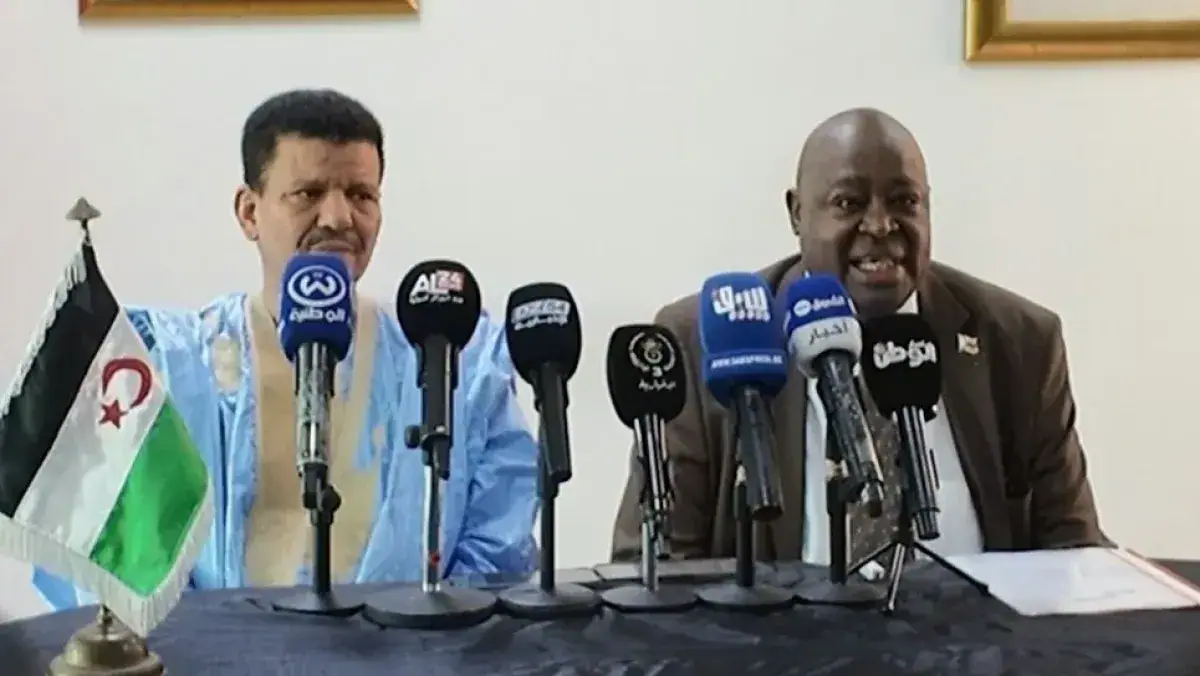
Algerian Foreign Minister, Mohamed Yslam Bisht, stated that the UN Security Council has effectively killed the Moroccan autonomy proposal for Western Sahara. In a speech at the 8th Diplomatic Forum for Solidarity with the Sahrawi People, Bisht described the proposal as a colonial project. He emphasized that the Sahrawi people's struggle has entered a new phase, with the Security Council's decision marking a definitive end to the autonomy proposal.
Bisht drew parallels between the autonomy proposal and similar initiatives presented to other nations, including Algeria during the colonial era, South Africa under apartheid, and Palestine. He argued that these proposals are outdated and that the Sahrawi people's right to self-determination must be respected. The minister stressed that any solution to the Western Sahara conflict must be based on the Sahrawi people's free and genuine will, as guaranteed by the UN.
The Algerian minister expressed hope that the Security Council's decision marks the beginning of the end of the conflict, paving the way for the Sahrawi people to enjoy their freedom and independence. He also emphasized that the Polisario Front is open to negotiations, provided that they are based on international references and guarantee the Sahrawi people's right to choose their future freely.
The Diplomatic Forum for Solidarity with the Sahrawi People issued a statement reaffirming its support for the Sahrawi people and calling for an end to the exploitation of Western Sahara's resources. The forum also demanded respect for international law and an end to human rights abuses in the occupied territories. The statement emphasized the need for greater cooperation and coordination to promote peace, stability, and development in the region and across Africa.
The Sahrawi people's struggle for independence has been ongoing for decades, with the Polisario Front representing their interests. The conflict has led to a significant humanitarian crisis, with thousands of Sahrawi people living in refugee camps in Algeria. The international community has long called for a peaceful resolution to the conflict, with the UN playing a key role in negotiations.
The Moroccan autonomy proposal was presented as a way to address the Western Sahara conflict, but it has been met with widespread criticism from the Sahrawi people and their supporters. The proposal has been seen as an attempt to legitimize Morocco's occupation of Western Sahara, which has been condemned by many countries and international organizations.
The Algerian government's stance on the Western Sahara conflict has been consistent, with the country providing significant support to the Sahrawi people. The government's position is based on the principles of self-determination and respect for international law. The country's efforts to promote a peaceful resolution to the conflict have been recognized by many countries and international organizations.
Key points
- The UN Security Council has effectively rejected the Moroccan autonomy proposal for Western Sahara.
- The Sahrawi people's right to self-determination must be respected, as guaranteed by the UN.
- The international community has called for a peaceful resolution to the Western Sahara conflict, with the UN playing a key role in negotiations.