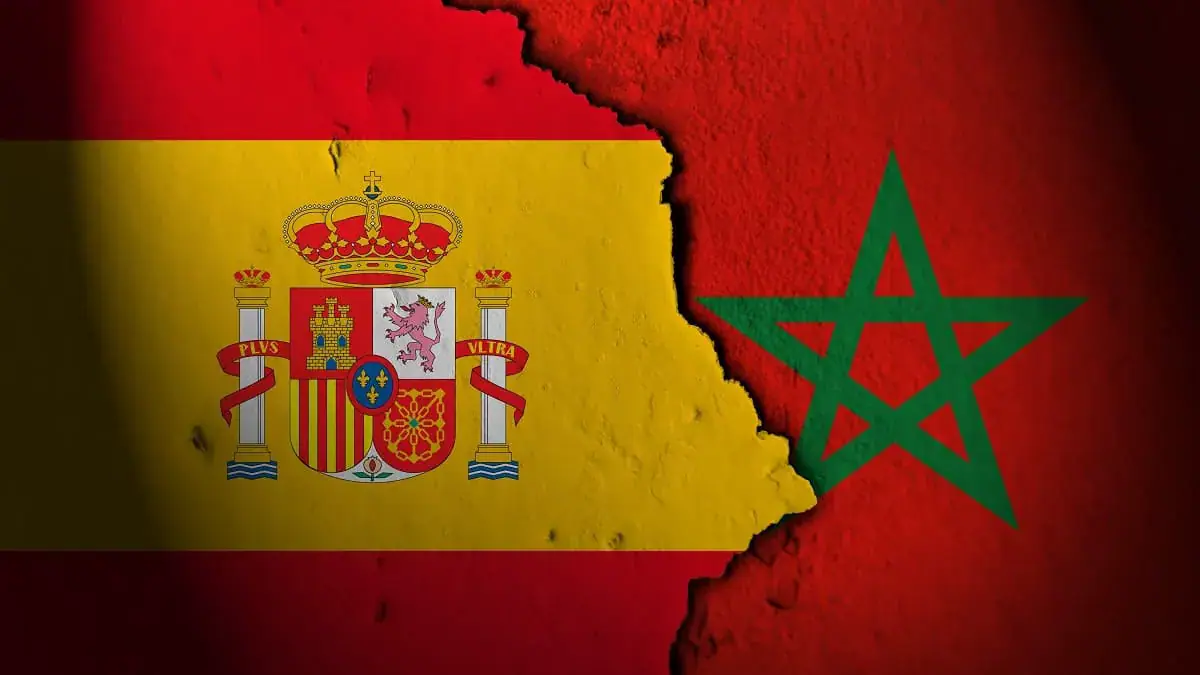
A report by Algerian media outlet tsa-algerie.com reveals that a declassified document from Spain's National Immigration and Border Police Centre implies Morocco's involvement in the recent migrant crisis in Ceuta. The report, initially classified, was cited in a French television report and suggests that Morocco may have coordinated the mass influx of migrants into the Spanish enclave.
According to the report, Enrique Perez Avila, a professor at the University of Ceuta, stated that it was highly unlikely for 80,000 people to spontaneously move towards the border within 24 hours. Perez Avila believes that Morocco was behind the mass migration, citing evidence of coordinated messages on social media and WhatsApp groups instructing people to cross the border.
The report highlights that messages inciting people to cross the border contained specific instructions, including taking a train to Tangier and then a taxi to Fnideq, a town near the border with Ceuta. Perez Avila notes that these messages were not simply encouraging people to migrate but were explicit in their instructions to "attack" Ceuta.
The report also documents the seemingly permissive attitude of Moroccan police officers, who were seen observing the migrants without intervening. Images show officers standing by as migrants flowed across the border, sparking questions about their role in the crisis.
Furthermore, the report reveals that individuals in civilian clothing were present among the migrants, seemingly exerting authority and giving instructions. Perez Avila questions who these individuals were and what level of authority they represented, suggesting that they may have been involved in coordinating the migrant influx.
While the Spanish police report does not directly accuse Morocco of orchestrating the crisis, it provides substantial evidence to suggest that the Moroccan authorities may have been involved. The incident occurred following a visit by Spanish Prime Minister Pedro Sánchez to Algeria, and amid heightened tensions between Spain and Morocco over the Western Sahara issue.
The declassified report may put pressure on the Spanish government to re-examine its stance on the crisis and potentially hold Morocco accountable for its alleged role. The incident has significant implications for European-African relations, particularly with regards to migration and border control.
Key points
- A declassified Spanish police report suggests Morocco may have orchestrated the recent migrant crisis in Ceuta.
- The report documents coordinated messages and instructions on social media and WhatsApp groups, as well as the permissive attitude of Moroccan police officers.
- The incident has significant implications for European-African relations, particularly with regards to migration and border control.
Reporting sources
- Crise de Ceuta : le rapport qui enfonce le Maroc · tsa-algerie.com