The Algerian government has recently established a High Council for the National Scientific Community Abroad, aiming to bridge the gap between local and international scientific expertise. The council's primary objective is to facilitate the transfer of knowledge and new technologies to Algeria, fostering collaboration between local universities and international scientific communities. This initiative was highlighted by Pr Malika Aïd-Boudries, a researcher and professor at Harvard University, and a member of the newly formed council.
Pr Malika Aïd-Boudries emphasized the importance of creating connections between Algerian scientists abroad and those within the country. She stressed that local students and researchers will benefit from international scientific experiences, which are not readily available in Algeria. The council's multidisciplinary approach will enable its members to work collectively, sharing their expertise and knowledge to drive scientific progress. This collaborative effort aims to leverage Algeria's vast potential and promote the exchange of ideas and experiences.
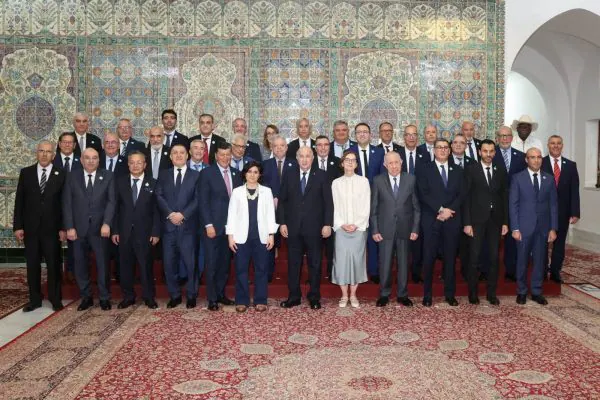
The High Council consists of 27 experts from various fields, including biomedical engineering, materials science, artificial intelligence, and medicine. These renowned Algerian scientists were introduced during the council's first official session. According to Pr Aïd-Boudries, the council's multidisciplinary nature is its primary characteristic, allowing members to work together, sharing their expertise and driving collective progress.
The council's mission, as outlined in the presidential decree n° 26-293, includes promoting the participation of Algerian scientific communities abroad, proposing sustainable mechanisms to connect them with the national education and research system, and fostering the exchange of knowledge and experiences in advanced technologies. Pr Aïd-Boudries highlighted the significance of collaboration, emphasizing that Algeria has enormous potential, but it requires a collective effort to harness it.
As a specialist in genomics and bioinformatics, Pr Aïd-Boudries sees significant opportunities for cooperation in these fields, which are still developing in Algeria. She believes that international expertise can contribute substantially to the growth of these disciplines within the country. The council plans to organize workshops, training sessions, and other events to facilitate knowledge sharing and capacity building among local students and researchers.
The council's activities will focus on creating sub-committees, working on related topics and themes, to promote collaboration and coordination among its members. Pr Aïd-Boudries emphasized that each member will work within their domain of expertise, but not individually, to ensure a collective and cohesive approach. This strategy aims to enable the council to mobilize its competencies effectively and drive scientific progress in Algeria.
The establishment of the High Council for the National Scientific Community Abroad marks a significant step towards strengthening Algeria's scientific capabilities. By connecting local and international scientific expertise, the council aims to drive innovation, promote knowledge sharing, and contribute to the country's scientific and economic growth. The council's success will depend on its ability to foster collaboration and coordination among its members, as well as with local universities and research institutions.
Key points
- The Algerian government has established a High Council for the National Scientific Community Abroad to connect local and international scientific expertise.
- The council aims to facilitate the transfer of knowledge and new technologies to Algeria, promoting collaboration between local universities and international scientific communities.
- The council's multidisciplinary approach will enable its members to work collectively, sharing their expertise and knowledge to drive scientific progress in Algeria.