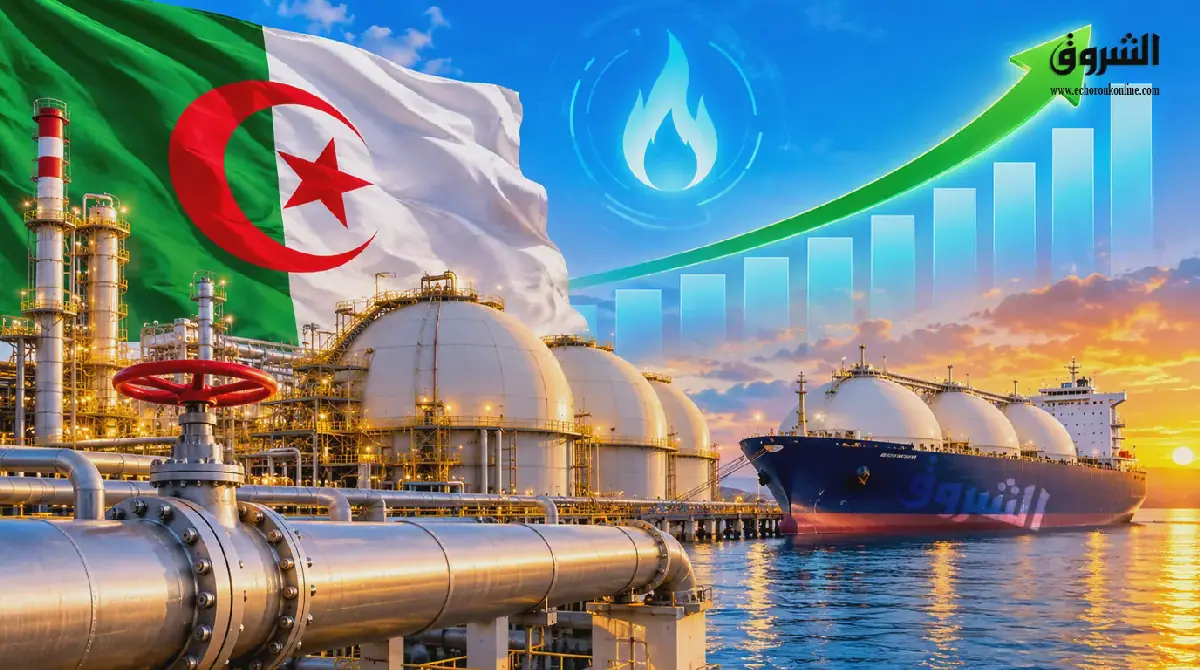
Algeria's liquefied natural gas exports have shown a significant rebound, reaching 1.03 million tonnes in October 2026. This represents a 51% increase from September's 680,000 tonnes, and marks the highest level in a year. The recovery comes as the country's average natural gas production is forecast to increase to around 10 billion cubic feet per day in 2026.
Despite the monthly rebound, Algerian LNG exports remain down 12% over the first ten months of 2026, totalling 7.06 million tonnes. This compares to 8 million tonnes during the same period in 2025. The decline was driven by maintenance operations, higher domestic gas consumption for power generation, and a reduction in volumes supplied to liquefaction plants.
France was the largest recipient of Algerian LNG in October, importing 296,000 tonnes. Spain and Turkey also received significant shipments, with 262,000 tonnes and 261,000 tonnes respectively. The Netherlands and Germany received 76,000 tonnes and 74,000 tonnes, while Italy received 66,000 tonnes. Exports to France surged by 84% year-on-year.
The increase in Algerian LNG exports to various countries is notable, with shipments to Spain increasing by 3% and exports to Turkey also recording a slight rise. The Netherlands received a cargo of approximately 76,000 tonnes, marking only its second shipment from Algeria in more than two years. Algeria also strengthened its presence in the German market by delivering its second-ever LNG cargo.
The African Energy Chamber expects Algeria's average natural gas production to reach approximately 10 billion cubic feet per day in 2026. This represents a 1.6% increase from the 9.84 billion cubic feet per day recorded in 2025. The forecast is underpinned by the start-up of new development projects and discoveries made in 2025.
Several major development projects are expected to support Algeria's production growth, including the development of the Tin Fouyé Tabankort field and the start-up of the Ain Amenas 2 development project. Algeria is also continuing expansion and development work at Hassi R'Mel, the country's largest gas field.
With LNG exports showing signs of recovery and several major development projects expected to boost output, Algeria is seeking to consolidate its position as a key gas supplier to international markets, particularly Europe. However, sustaining this momentum will depend on the successful completion of ongoing projects and continued investment in upstream infrastructure.
Key points
- Algeria's LNG exports rebounded sharply in October 2026, rising by 51% month-on-month to 1.03 million tonnes.
- The country's average natural gas production is forecast to increase to around 10 billion cubic feet per day in 2026.
- Algeria is seeking to consolidate its position as a key gas supplier to international markets, particularly Europe.
Reporting sources
- Surge in Algerian Gas Exports as Production Set to Rise · Echorouk El Yawmi