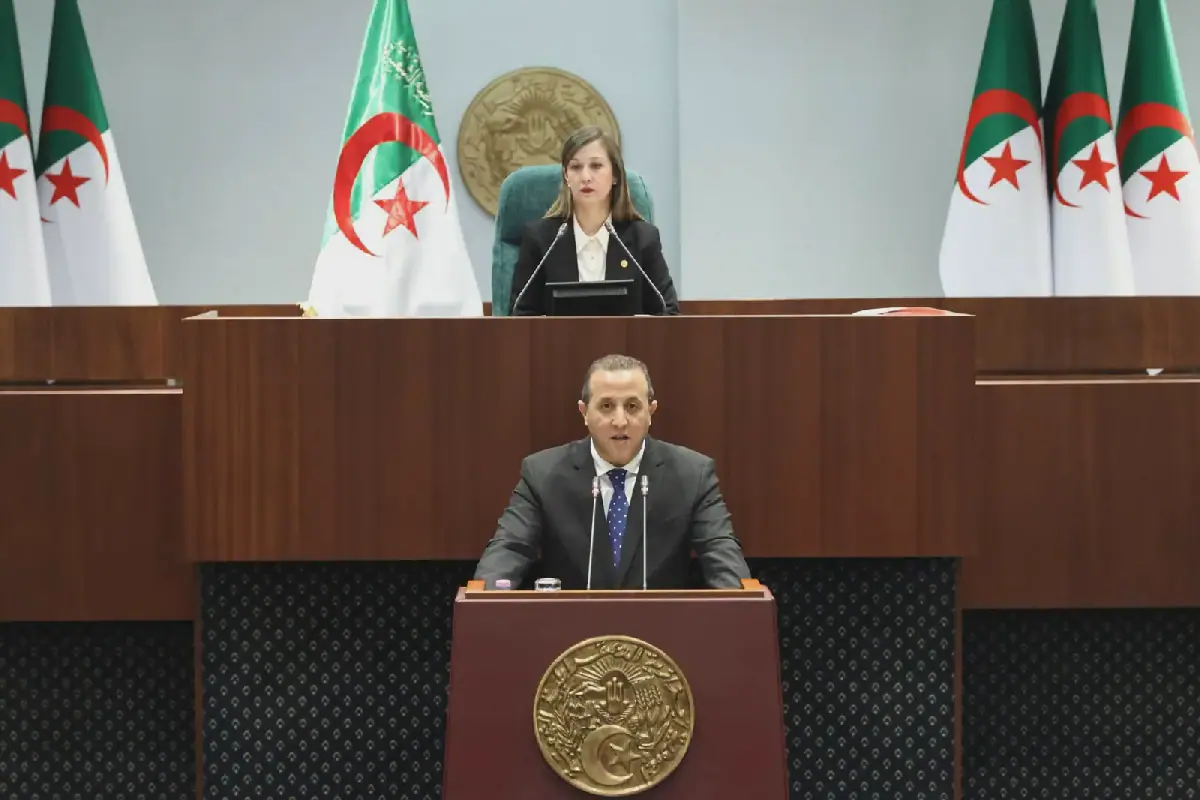
Algerian Finance Minister Mohamed Lamine Lebbou recently presented the country's 2027 budget plan to the National People's Assembly (APN). The proposed budget projects a growth rate of 4.2% and outlines significant financial allocations. Lebbou emphasized that these projections are set against a backdrop of global instability, marked by geopolitical tensions, persistent inflation, and unpredictable energy markets. The minister's presentation highlighted the government's focus on economic diversification and support for the purchasing power of Algerian citizens.
The 2027 budget plan anticipates revenues of over 9,251.1 billion Algerian dinars. The proposed expenditures are set at 17,251.6 billion dinars in commitment authorizations and 17,882.6 billion dinars in payment credits. These financial allocations reflect the government's priorities, which include encouraging productive investment, broadening the tax base, and enhancing fiscal transparency. The budget plan also focuses on customs regulations and state-owned assets. The government's strategy aims to drive economic growth while maintaining financial stability.
One of the most notable aspects of the 2027 budget plan is the extension of tax exemptions on certain food products until December 31, 2029. This measure includes exemptions on vegetables, fruits, and other essential goods. The goal is to support the purchasing power of Algerian citizens by keeping prices stable. This move is part of a broader effort to shield citizens from the impacts of global economic fluctuations. The exemptions will apply to locally produced goods, such as eggs, chicken, and turkey.
The 2027 budget plan also introduces administrative changes, including the mandatory use of online declarations and payments for taxpayers subject to the unique flat tax (IFU). This digital shift aims to modernize tax administration, improve revenue collection, and reduce tax evasion. The measure is expected to affect thousands of small traders and artisans who will no longer need to visit tax offices in person. The Finance Ministry has emphasized its commitment to enhancing tax compliance and efficiency.
The 2026 financial performance was highlighted as a benchmark for the 2027 projections. The estimated growth for 2026 is around 4.3%, primarily driven by non-hydrocarbon activities, which are expected to grow by 4.8%. The hydrocarbon sector is also anticipated to show positive growth, albeit at a modest 1%. The 2026 budget revenues are projected to exceed 8,611 billion dinars, with expenditures expected to surpass 17,636 billion dinars. These figures provide a basis for comparing the ambitions outlined in the 2027 budget plan.
Concerns about fuel prices were addressed by the minister, who clarified that the mechanism in place allows for adjustments in both directions. However, no automatic increase in fuel prices at the pump is currently planned. The budget plan also includes changes related to vehicle vignettes and housing, particularly the AADL 3 program. These modifications reflect the government's efforts to fine-tune economic policies and address citizen concerns.
The 2027 budget plan is set to undergo further debate and potential amendments by parliamentarians before its final adoption. Key aspects, such as salary increases, will be closely watched by the public. The plan's approval will depend on the outcome of these discussions. The government's commitment to protecting purchasing power and driving economic growth will be critical factors in the plan's implementation.
Key points
- The 2027 budget plan forecasts a 4.2% growth rate and extends tax exemptions on certain food products until 2029.
- The plan outlines revenues of over 9,251.1 billion Algerian dinars and expenditures of 17,251.6 billion dinars in commitment authorizations.
- The budget introduces administrative changes, including mandatory online declarations and payments for taxpayers subject to the unique flat tax (IFU).