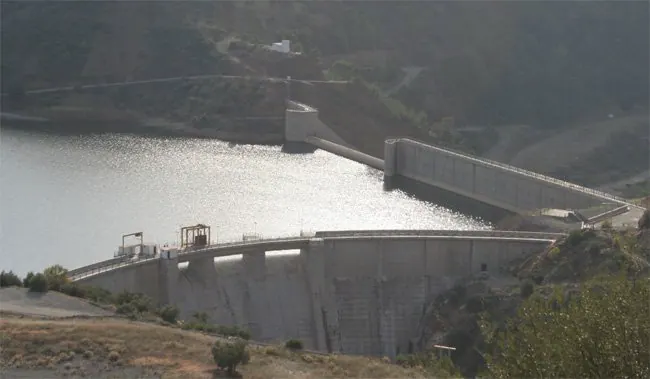
A looming crisis threatens to leave thousands of households in Algeria's Béjaïa province without access to water as expropriated landowners from Bouhamza and Tamokra have announced plans to close the Tichy Haf Dam. The dam, which supplies water to a significant portion of the region, is set to be shut down starting March 1, according to a statement from the Collectif des expropriés des communes de Bouhamza et Tamokra. The group claims that discussions with authorities have stalled, and despite promises made in 2019, no tangible actions have been taken.
The Tichy Haf Dam, located on the Oued Bousellam, 10 km southeast of Akbou, was commissioned in 2007. It serves multiple purposes, including irrigation for the Sahel and Haute-Soummam areas, as well as providing water for drinking, industrial use, and flood control for the Akbou-Béjaïa corridor. The dam's closure would severely impact the region, with 6,400 hectares of agricultural land and 47 hm3 of water per year allocated for industrial and potable use.
The expropriated landowners have expressed frustration with the Algerian National Agency for Dams and Transfers (ANBT), citing a lack of response to their concerns despite multiple letters. According to their statement, the decision to close the dam was made due to the ANBT's inaction and failure to honor previous commitments. The group claims that their goal is to assert their rights and bring attention to their situation.
The potential consequences of the dam's closure are dire, with many households in Béjaïa province relying on the dam for their water supply. If the dam is shut down, residents can expect to face severe water shortages, with many households potentially going without access to water. The situation has sparked concern among local residents, who are anxiously awaiting a resolution.
The dispute between the expropriated landowners and the ANBT has been ongoing for nearly two years. Despite a meeting held on August 7, 2019, which resulted in promises from authorities, the landowners claim that no progress has been made. The situation has become increasingly tense, with the landowners vowing to take action if their demands are not met.
The Tichy Haf Dam plays a critical role in supporting the region's agriculture, industry, and drinking water needs. Its closure would have far-reaching consequences, affecting not only the local population but also the regional economy. Efforts to resolve the situation have so far been unsuccessful, with the landowners remaining resolute in their determination to assert their rights.
As the situation continues to unfold, residents of Béjaïa province are bracing themselves for the potential consequences of the dam's closure. With thousands of households at risk of being left without access to water, the stakes are high. It remains to be seen whether a resolution can be reached before the dam's shutdown, which is scheduled to take effect on March 1.
Key points
- Thousands of households in Béjaïa province face water shortages due to the threatened closure of Tichy Haf Dam
- Expropriated landowners from Bouhamza and Tamokra claim that authorities have failed to honor previous commitments
- The Tichy Haf Dam supplies water for irrigation, drinking, industrial use, and flood control in the Akbou-Béjaïa corridor