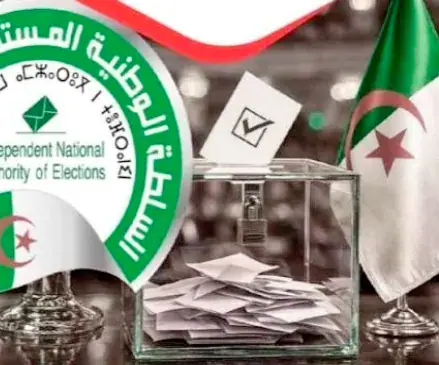
The upcoming local elections in Algeria, scheduled for November 28, are set to witness a significant presence of political parties in the electoral competition. According to Ali Benzadi, a member of the Independent National Electoral Authority (ANIE), the current landscape shows a notable evolution with the return of political parties, whose participation has strengthened compared to previous elections. This trend indicates a resurgence of partisan dynamics and renewed activity.
The ANIE member made these remarks during an interview on the Algerian Radio's "L'invité de la matinale" program. He highlighted that the number of candidates and their profiles are significant aspects of this electoral event. With 54% of candidates being under 40 years old, representing over 87,000 people, the youth's presence in the electoral competition is substantial. Furthermore, female representation stands at around 12%.
The level of education among candidates is also noteworthy, with nearly 48.5% holding a university degree. Benzadi views this as a remarkable outcome that could lead to improved representation and management of local collectives. A total of 5,631 lists have been submitted for the Communal People's Assemblies (APC) and 434 lists for the Wilaya People's Assemblies (APW), involving 25 political parties and 51 partisan alliances.
The electoral process has seen some lists rejected, with six lists rejected at the APW level and three at the APC level. So far, seven APW lists have been disqualified, while the communal balance is still being finalized. Benzadi assured that the ANIE has been flexible in facilitating procedures for replacing candidates, allowing political formations and independent lists to regularize their files without deviating from legal requirements.
The ANIE has also established a mechanism for allocating airtime on public media, considering over 6,000 lists. The approach guarantees a minimum expression for smaller formations and independent lists while taking into account the electoral weight of parties with more significant numbers of candidatures. This way, no list will be deprived of its right to access the media.
To facilitate the process, the ANIE has opened new studios in Oran, Béchar, Ouargla, and Constantine, complementing the central installations. Candidates can now record their messages in more accessible structures. Additionally, several specialized commissions will monitor the press, private channels, and online content to ensure a fair and transparent process.
The ANIE member warned against using paid commercial advertising on social media to promote candidatures, emphasizing that this practice is prohibited. He also highlighted that hate speech, personal attacks, and the abusive use of state symbols are not allowed. The ANIE will closely monitor these aspects to maintain the integrity of the electoral process.
Key points
- 54% of Algerian election candidates are under 40 years old.
- Nearly 48.5% of candidates hold a university degree.
- The ANIE has established a mechanism for allocating airtime on public media to ensure fair access for all lists.