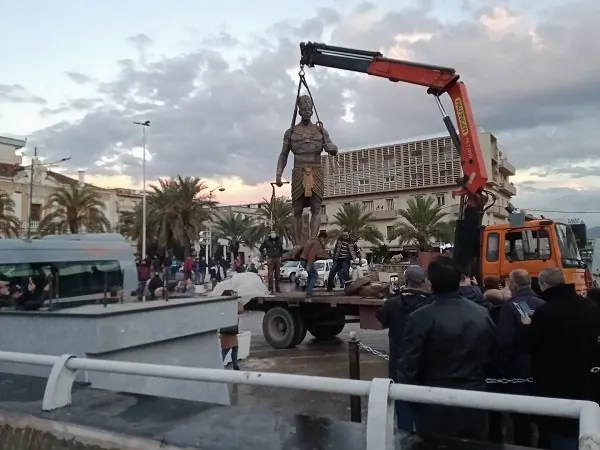
The city of Tizi-Ouzou in Algeria's Kabylie region has unveiled a 4.4m statue of ancient Pharaoh Chachnaq, also known as Sheshonq 1er, to mark the celebration of Yennayer 2971, the Amazigh New Year. The statue, created by artists Hamid Ferdi and Salmi Samir, was financed by the local assembly for 6 million Algerian dinars. The ceremony was attended by local and national officials, including the secretary general of the wilaya, representing the wali.
Chachnaq, who ruled ancient Egypt in 950 BC, founded the 22nd dynasty and was a significant figure in North African history. The statue's unveiling was seen as a way to pay homage to Chachnaq and recall a glorious page in Algerian and North African history. The local assembly's interim president, Ferhat Saadoud, said the date of Yennayer was chosen to highlight Chachnaq's importance and reinforce the connection to the region's rich history.
A conference on Chachnaq and Yennayer was organized by the local assembly, featuring writer Brahim Tazaghart, who emphasized Chachnaq's role as a unifying symbol for Algerians and North Africans. Tazaghart highlighted the importance of reclaiming national history and decolonizing it through an Algerian interpretation of events, particularly in the context of globalization.
Historian and consultant Djamel Laceb noted that linking Yennayer to Chachnaq serves as a reminder of a glorious chapter in Algerian history. Laceb stressed the significance of revisiting such illustrious events to reinforce national identity. Meanwhile, archaeologist Hamid Bilek emphasized that Chachnaq's legacy should prompt discussions about the role of Amazighs in history, citing archaeological evidence.
According to historical records, Chachnaq was born in Egypt to a family of Amazighs from ancient Libya. He founded the 22nd dynasty after reunifying Upper and Lower Egypt and went on to expand his kingdom into Palestine, Syria, and Lebanon. The Pasenhor stela, an ancient Egyptian inscription, provides valuable information about Chachnaq's family and their roots in Egypt.
The unveiling of the statue and the conference on Chachnaq and Yennayer reflect a broader effort to promote and preserve Amazigh culture and history. The events drew a large crowd of citizens from various regions, highlighting the significance of this cultural heritage. Local authorities and officials emphasized the importance of preserving and promoting this aspect of Algerian history.
The statue of Chachnaq is seen as a symbol of the rich cultural heritage of the Amazigh people and a reminder of their contributions to North African and Egyptian history. As Algeria and other countries in the region continue to celebrate Yennayer, the legacy of Chachnaq and his impact on the region's history will remain an essential part of the cultural narrative.
Key points
- The statue of Chachnaq is a 4.4m monument created by Hamid Ferdi and Salmi Samir, financed by the local assembly for 6 million Algerian dinars.
- Chachnaq, who ruled ancient Egypt in 950 BC, founded the 22nd dynasty and was a significant figure in North African history.
- The unveiling of the statue and conference on Chachnaq and Yennayer reflect a broader effort to promote and preserve Amazigh culture and history.