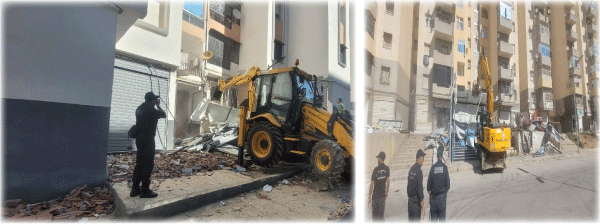
The Algerian authorities carried out a large-scale operation to remove random extensions in Ali Mungli, a suburb of Constantine, on September 22, 2026. The extensions, which have become a familiar sight in the area, were removed by the relevant authorities, accompanied by security forces. The operation aimed to put an end to the phenomenon of random extensions that have been proliferating in the area, despite repeated campaigns to remove them.
The extensions, which include colorful awnings, artificial grass, and cages for chickens and ducks, have been set up by traders and residents of ground-floor apartments. Some traders have claimed that they pay for the space and improve the facade of the building, while others have argued that they need the extra space for their businesses. However, many of these extensions have been set up randomly, causing obstacles and hazards for pedestrians and emergency services.
The operation, which was carried out by the Constantine administrative district, in collaboration with various services, including the "Proberak", "Igivam", "Obigei", and "Sonelgaz" companies, as well as the Ali Mungli district police and civil protection services, targeted several areas, including the 460-unit housing project in neighborhood 04. The authorities have vowed to continue their efforts to remove random extensions and restore order in the area.
Despite previous operations to remove random extensions, the phenomenon persists, with many traders and residents quickly rebuilding their extensions after they are demolished. The authorities have warned that these extensions pose a risk to public safety, as they can obstruct emergency exits and create fire hazards. In addition, the extensions have been criticized for their impact on the aesthetic appeal of the city, with many buildings featuring makeshift and unattractive facades.
Residents of ground-floor apartments have also been found to be using the space in front of their homes for various purposes, including setting up gardens, raising animals, and storing goods. While some have argued that these extensions are necessary for their comfort and well-being, others have expressed concerns about the risks they pose, including fire hazards and environmental pollution.
The authorities have announced plans to launch awareness campaigns to educate traders and residents about the risks associated with random extensions and the importance of respecting urban planning regulations. However, it remains to be seen whether these efforts will be effective in addressing the issue, which has become a persistent problem in Ali Mungli.
The issue of random extensions in Ali Mungli highlights the challenges faced by urban planners and authorities in managing urban growth and development. The city's residents and traders have called for a more comprehensive approach to addressing the issue, including the provision of alternative spaces for traders and residents to operate.
Key points
- The Algerian authorities have launched a major operation to remove random extensions in Ali Mungli, a suburb of Constantine.
- The extensions, which have become a familiar sight in the area, pose a risk to public safety and aesthetic appeal of the city.
- The authorities have vowed to continue their efforts to remove random extensions and restore order in the area.