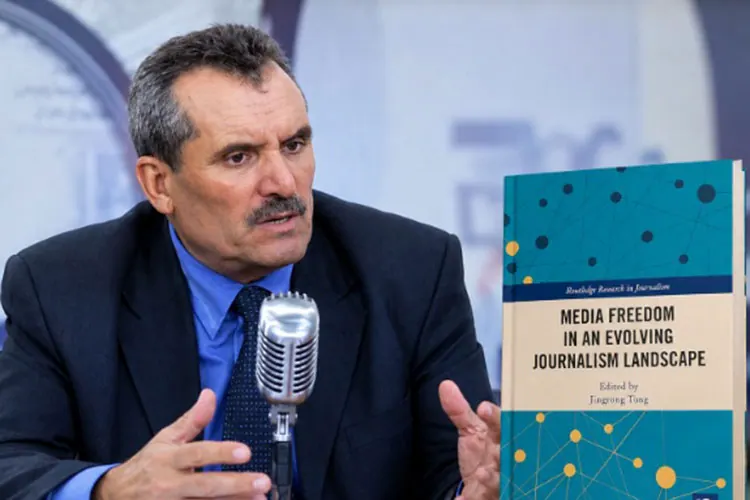
Algerian academic El-Id Zghalami, a professor of media and communication at the University of Algiers 3, has emphasized that artificial intelligence (AI) cannot replace journalists. Zghalami, a co-author of the book "Media Freedom in an Evolving Journalism Landscape," notes that the concept of freedom of expression and press freedom is undergoing significant changes. He highlights that the media landscape has become more complex with the rise of digital media, AI, and modern technologies.
Zghalami stresses that each country is searching for a media model that suits its specific context, politics, economy, and society. He believes that Algeria must establish its own model based on its political convictions, social and cultural characteristics, and national interests. The academic points out that the Algerian media system is closely tied to the political system, making its evolution closely linked to the country's various stages since independence.
The professor notes that the 1963 Algerian constitution guaranteed freedom of expression and the press, but this was later restricted with the adoption of a single-party system in 1965. Zghalami highlights that the current legal framework for media has been updated with the adoption of an organic media law in August 2023, followed by laws regulating print, electronic, and audiovisual press in December 2023.
However, Zghalami expresses concern that the implementing texts for these laws are still missing, which poses a challenge to the organization of the media sector. He emphasizes the need for the establishment of regulatory authorities for audiovisual and print media, as well as an ethics council for the profession. Zghalami sees these bodies as essential for democracy and media pluralism.
Zghalami observes that the media landscape in Algeria is rich, with over 20 television channels, 55 local and national radio stations, and more than 200 print newspapers, in addition to electronic press and digital platforms. However, he notes that the practice of journalism is still influenced by political, legal, and financial factors. The rise of digital media has also changed the way audiences interact with the media.
The academic highlights that around 30 million Algerians have access to the internet and social networks, which have become strong competitors to traditional journalism. He notes that citizens often receive information from digital platforms before traditional media, and some media outlets even rely on these platforms for information. This raises concerns about credibility and the verification of news and information.
Zghalami emphasizes that the primary challenge for journalists today is not traditional censorship but rather the vast flow of information, which requires verification of sources and diversity of information before publication. He calls for facilitating access to official sources of information for journalists, particularly on sensitive issues, to limit the spread of rumors and inaccurate information on social media.
Key points
- Artificial intelligence should be used as a tool to support and complement journalistic work, not replace it.
- The Algerian media landscape is influenced by the country's political, social, and cultural context.
- The implementation of media laws and regulations in Algeria is still incomplete.