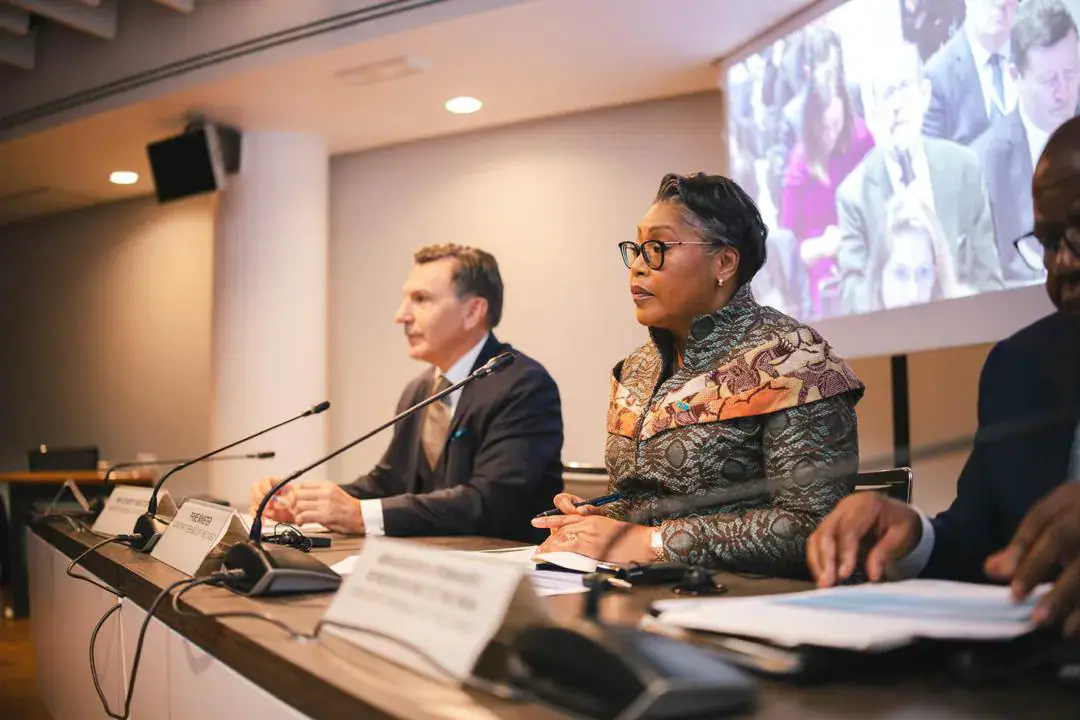
The World Food Programme (WFP) has unanimously adopted the Democratic Republic of Congo's (DRC) strategic plan for 2027-2030, worth $2.62 billion. The plan was approved during the WFP's second ordinary session of its governing body in Rome. The Congolese Prime Minister, Judith Suminwa Tuluka, attended the session alongside the Minister of State for Social Affairs, Humanitarian Actions, and National Solidarity, Ève Bazaiba.
The plan aims to address the country's humanitarian crisis, particularly the mass displacement of people due to armed conflicts, which has left thousands of families without food or protection. The WFP's Country Strategic Plan (CSP) is its primary instrument for programming interventions in the DRC. Its adoption reflects the consideration of Kinshasa's priorities in food security, nutrition, and community recovery.
The plan aligns with the DRC's National Strategic Development Plan (NSDP) and seeks to better connect immediate humanitarian assistance with public development policies to sustainably reduce population vulnerability. Prime Minister Judith Suminwa emphasized the need for a balanced allocation of resources, citing that 75.3% of the plan's resources are dedicated to emergency humanitarian response, while only 3.8% is allocated to social safety nets for community recovery.
Judith Suminwa urged for a rebalancing of the budget, in line with the Humanitarian-Peace-Development Nexus, to preserve life-saving interventions while increasing investments in resilience, social protection, and local production capacities. The Prime Minister's personal participation in the session demonstrates Kinshasa's commitment to prioritizing its humanitarian needs in partnership with the WFP.
During a high-level breakfast meeting with financial partners and WFP leadership, Judith Suminwa also solicited financial commitments commensurate with the needs of the Congolese population. The plan's adoption demonstrates the WFP's support for the DRC's priorities and its commitment to addressing the country's humanitarian crisis.
The WFP's governing body consists of 36 representatives from its member states, who unanimously supported the CSP after expressing concerns about the deteriorating humanitarian situation in the DRC. The plan's approval enables the WFP to implement its interventions in the country, focusing on saving lives, reducing hunger, and transforming crises into opportunities for peace, autonomy, and development.
The DRC's strategic plan for 2027-2030 has been evaluated at $2.62 billion, which will be used to support the country's most vulnerable populations. The plan's implementation will be crucial in addressing the humanitarian crisis in the DRC and promoting sustainable development.
Key points
- The plan allocates 75.3% of its resources to emergency humanitarian response and 3.8% to social safety nets for community recovery.
Reporting sources
- PAM : adoption unanime du plan stratégique 2027-2030 de la RDC, évalué à 2,62 milliards USD · Congolese press agency