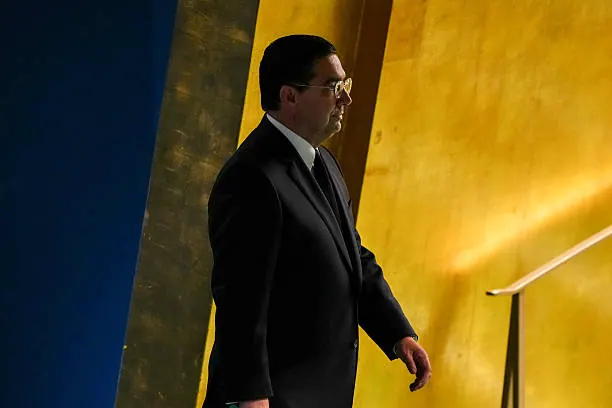
On September 27, 2026, a significant event unfolded at the 81st session of the UN General Assembly in New York. Algerian Minister of State and Foreign Affairs, Ahmed Attaf, represented Algeria at the high-level meeting. As Israeli Prime Minister Benjamin Netanyahu began his speech, Algeria, along with numerous other countries, chose to protest by leaving the assembly. This act of protest was in response to Netanyahu's history of actions and statements that have been widely criticized, including his role in the ongoing conflict in Palestine.
The protest was not an isolated action; it was part of a coordinated effort by many countries to express their disapproval of Netanyahu's policies and actions. The Algerian delegation's decision to leave was in line with its consistent support for the Palestinian cause. Algeria has been vocal about its stance against normalization with Israel, a position that sets it apart from some of its Arab neighbors. The country's actions at the UN General Assembly were seen as a reaffirmation of its commitment to defending the rights of the Palestinian people.
In stark contrast to Algeria's bold stance, Morocco and the United Arab Emirates chose to remain in the assembly and listen to Netanyahu's speech. These countries have been involved in normalization efforts with Israel, which has been a point of contention for many in the Arab and Muslim world. Their decision to stay and not publicly protest Netanyahu's speech was seen as a reflection of their differing approach to dealing with Israel, one that has been criticized by many as being at odds with the broader Arab and Islamic public opinion.
The reactions of Morocco and the United Arab Emirates have been particularly noteworthy given their public stances on the Palestinian issue. Morocco, under the leadership of King Mohammed VI, who also heads the Al-Quds Committee, has claimed to support Palestinian rights. However, its actions, including normalization with Israel, have raised questions about its commitment to the Palestinian cause. Similarly, the United Arab Emirates has faced criticism for its dealings with Israel, which some see as undermining the Palestinian struggle for statehood.
The incident at the UN General Assembly highlighted the divisions within the Arab world regarding how to engage with Israel. While Algeria and some other countries took a firm stance against Netanyahu's speech and, by extension, Israel's policies, others like Morocco and the UAE opted for a more conciliatory approach. This division reflects broader debates within the Arab world about the best strategy for supporting Palestine and dealing with Israel.
The Algerian delegation's protest was part of a larger group of countries that included those from Africa, Europe, Asia, Latin America, the Caribbean, and Oceania. These countries left the assembly in response to an appeal by the Palestinian delegation, demonstrating a unified stance against Israel's actions. The protest was not just about Netanyahu's speech but also about the ongoing Israeli policies in the West Bank and Gaza, which have resulted in significant casualties and human rights abuses.
According to reports from Palestinian authorities, as of October 7, 2023, the conflict has resulted in 73,928 martyrs and 175,305 injured. The situation remains dire, with many bodies still buried under debris. Algeria's actions at the UN were seen as a necessary stand against what it perceives as Israel's criminal policies and a demonstration of its solidarity with the Palestinian people.
Key points
- Algeria withdrew from the UN General Assembly in protest of Israeli Prime Minister Benjamin Netanyahu's speech, highlighting its consistent support for the Palestinian cause.
- The incident highlighted the divisions within the Arab world regarding engagement with Israel, with countries like Algeria taking a firm stance against Israel's policies.
- Morocco and the United Arab Emirates chose to remain in the assembly, reflecting their differing approach to dealing with Israel, which has been criticized by many.