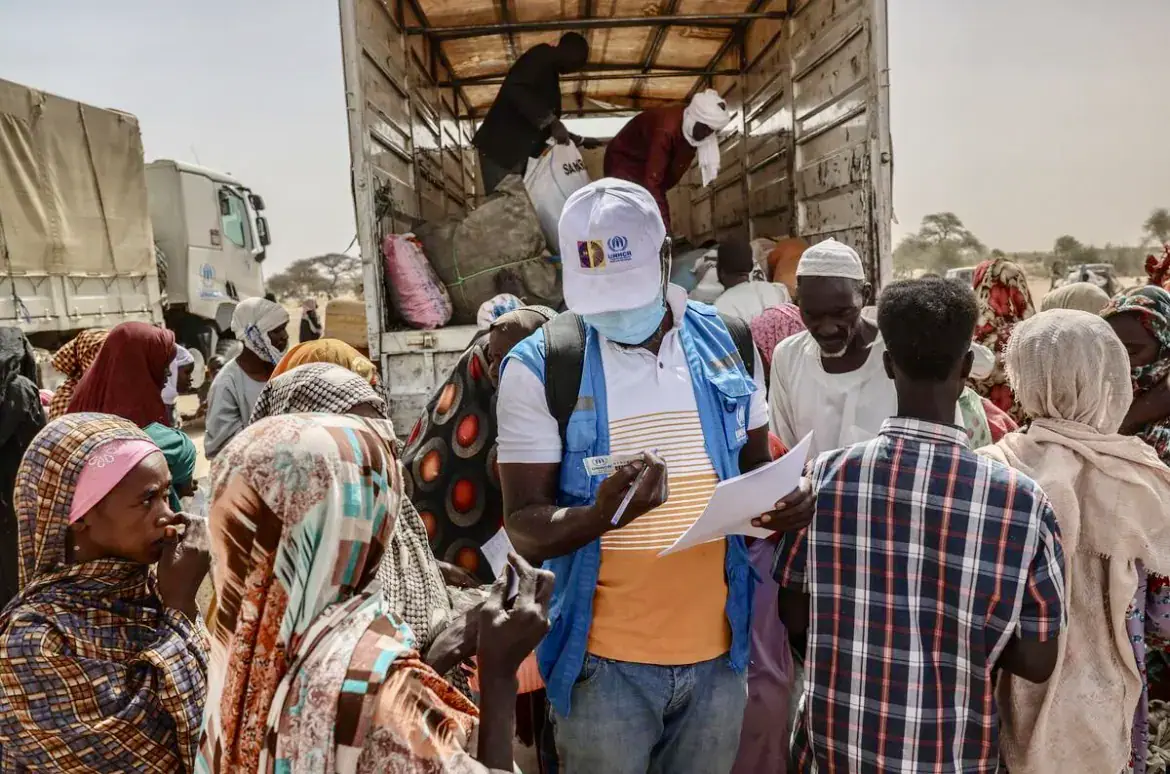
The governments of Chad and the Central African Republic (CAR), along with the United Nations High Commissioner for Refugees (UNHCR), have agreed on the practical modalities for the voluntary repatriation of Central African refugees living in Chad. According to the UNHCR, nearly 147,000 Central African refugees are currently living in Chad, mainly in the provinces of Logone Oriental, Mandoul, Moyen-Chari, and Salamat. These refugees have been arriving in Chad since the early 2000s, fleeing violence and conflict in their home country.
The UNHCR and the Chadian National Commission for the Reception, Reintegration of Refugees and Repatriates (CNARR) conducted surveys in 2025 and 2026, which revealed that 61,000 of these refugees wish to return to the Central African Republic. The first convoys, expected to carry around 200 people each, will likely concern refugees from Logone Oriental province. Before departure, candidates will undergo a medical examination. The convoys will be transported by truck to transit centers in CAR territory.
The repatriates will receive food assistance from the World Food Programme (WFP) for three months, as well as reintegration assistance. They will have the option to return to their places of origin or other destinations of their choice, mainly in the prefectures of Ouham and Lim-Pendé. Possible destinations include Paoua, Kabo, Markounda, Sido, Batangafo, and Bangui. The Central African authorities have committed to facilitating their durable reintegration, including access to basic social services, civil status documents, livelihoods, land, and property.
The repatriation process will be based on the principles of voluntariness, safety, and dignity. Those who do not wish to return to their home country will continue to benefit from international protection in Chad. The tripartite commission, comprising Chad, CAR, and the UNHCR, held its first two-day meeting in N'Djamena on November 4, which led to the adoption of the practical modalities for the operation.
The refugees have been living in Chad for many years, fleeing successive waves of violence and conflict in the Central African Republic. The UNHCR and its partners have been working to provide them with protection and assistance. The voluntary repatriation operation is expected to be a major step towards helping these refugees rebuild their lives in their home country.
The Chadian government, along with the CAR and the UNHCR, is committed to ensuring the success of this operation. The process will involve close collaboration between the different parties, including the refugees themselves. The goal is to provide a safe and dignified return for those who wish to go back to their home country.
The first convoys of voluntary repatriation are expected to take place before the end of 2026. The operation will be implemented in phases, with the first phase likely to focus on refugees from Logone Oriental province. The UNHCR and its partners will continue to work with the refugees and the governments of Chad and CAR to ensure a smooth and successful repatriation process.
Key points
- The first voluntary repatriation convoys for Central African refugees in Chad are expected to take place before the end of 2026.