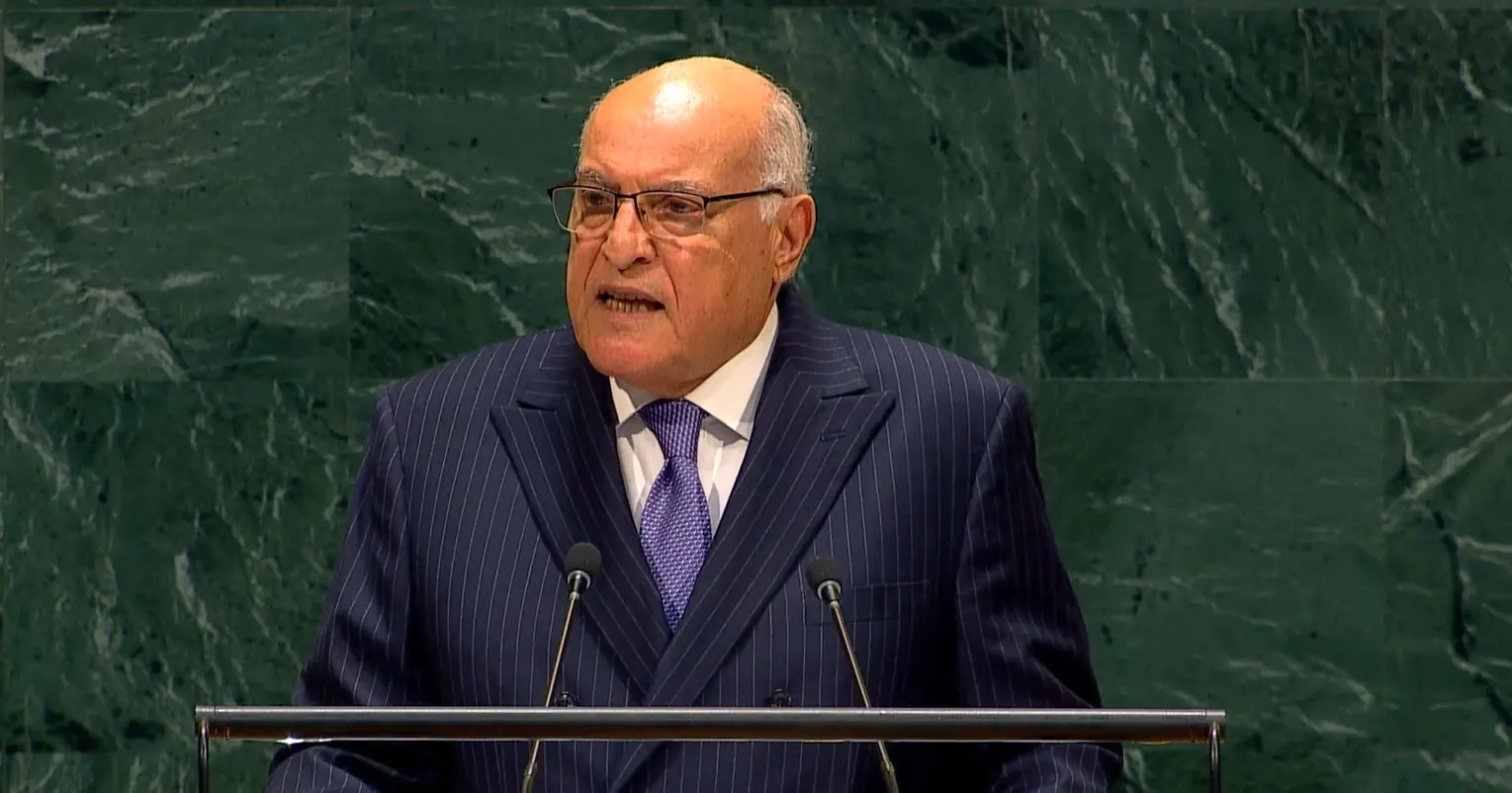
Algeria has reaffirmed its commitment to supporting just causes for African nations and contributing to efforts that promote stability, development, and integration on the continent. During the 81st session of the UN General Assembly, Algerian Minister of State and Foreign Minister Ahmed Attaf emphasized his country's principled stance in support of the Sahrawi people's right to self-determination. This stance is rooted in Algeria's firm conviction that decolonization issues cannot be resolved through the logic of fait accompli, but rather by enabling peoples to exercise their internationally recognized rights.
Attaf highlighted Algeria's welcome of direct negotiations between the parties to the conflict, Morocco and the Polisario Front, earlier this year under the auspices of the UN with the assistance of the United States. He outlined what Algeria considers essential for a lasting and just solution to the Western Sahara issue. According to Attaf, the success of the negotiation process requires the involvement of both parties in good faith and with a genuine will to reach a fair, lasting, and mutually acceptable political solution, free from impositions and bargaining.
The Algerian minister stressed that any serious negotiation process can only be effective within the framework of the relevant UN references and respect for the UN's decolonization doctrine. He warned that any attempt to bypass these references or marginalize the rightful owners, the Sahrawi people, and their sole legitimate representative, the Polisario Front, would not contribute to resolving the conflict but would instead complicate it and exacerbate tensions in a region that needs peace, stability, cooperation, and development.
Algeria has hosted Sahrawi refugees on its territory for over half a century due to the occupation of their land. Attaf emphasized that this situation cannot be reduced to a refugee issue where the affected population is given choices between voluntary return, resettlement, or local integration. Instead, it requires the completion of the decolonization process in Western Sahara through an inclusive political process that allows the Sahrawi people to exercise their inalienable right to self-determination.
The Algerian foreign minister reiterated that the proper and correct approach to addressing the situation in the last colony in Africa is to enable the Sahrawi people to exercise their right to self-determination. He pointed out that the right of peoples to determine their own destiny remains a fixed principle in international law. Attaf noted that half a century cannot transform an imposed reality into a legal fact or diminish a right that its holders do not need others to explain to them.
Attaf concluded his address on the Western Sahara issue by emphasizing that genuine peace is not built on bypassing rights but on finding a settlement that respects them and responds to the aspirations of their holders. He drew on the collective memory of peoples and the historical experience of the UN, which, according to him, confirm that lasting peace can only be achieved by respecting the rights of all parties involved.
Algeria's stance on the Western Sahara conflict has been consistent, emphasizing the need for a solution that respects international legitimacy and the rights of the Sahrawi people. The country's commitment to supporting the Sahrawi cause is rooted in its belief in the principles of decolonization and self-determination. As the international community continues to seek a resolution to the conflict, Algeria's position underscores the importance of adhering to UN references and ensuring the active participation of all parties involved.
Key points
- Algeria warns against attempts to bypass UN references in resolving the Western Sahara conflict.
- The Sahrawi people's right to self-determination must be respected and exercised in a meaningful and unhindered manner.
- A lasting solution to the Western Sahara issue requires a political process that includes all parties and respects international legitimacy.