The history of South Africa is reflected in its coins, which have changed over time to reflect the country's transformations. According to Dillon Bassani, CEO of the Bassani auction house, "Every time South Africa changed, our money changed with it." The coins serve as tangible remnants of the time in which they were made, showcasing different presidents, monarchs, governments, and symbols.
One of the most well-known examples is the 1892 5 shilling coin featuring Paul Kruger's portrait, designed by German engraver Otto Schultz and minted in Berlin. The oxcart on the back had two disc wheels, unlike the traditional oxcart with one disc wheel and larger rear wheels. This design was later changed, and the two versions are now known as the double and single disc wheel among collectors.
During the South African War in 1900, the Zuid-Afrikaansche Republiek (ZAR) was involved, and some of the coins from that time that have survived include the so-called 1900 blank pound and bare penny. These pieces are remarkably simple, with little of the ornamentation typically associated with coins. According to Landon Coleske, senior numismatic expert at the Bassani auction house, "A clean piece of metal can sometimes tell a more powerful story than the most beautifully engraved coin."
In 1902, in the final months of the war, a temporary field mint was established at Pelgrimsrus, where the well-known 1902 field pound was manufactured. The coin bears the simple inscriptions "ZAR 1902" and "ONE POUND". Coleske notes that "the field pound is one of those coins where the history almost outweighs the coin itself."
By 1931, the ZAR had ceased to exist, and South Africa had become part of the Union of South Africa. One of the rarest coins from this time is a silver threepence, or tickey, which weighs only 1.41 grams. Only 66 examples for normal circulation were produced, and only a handful are known today.
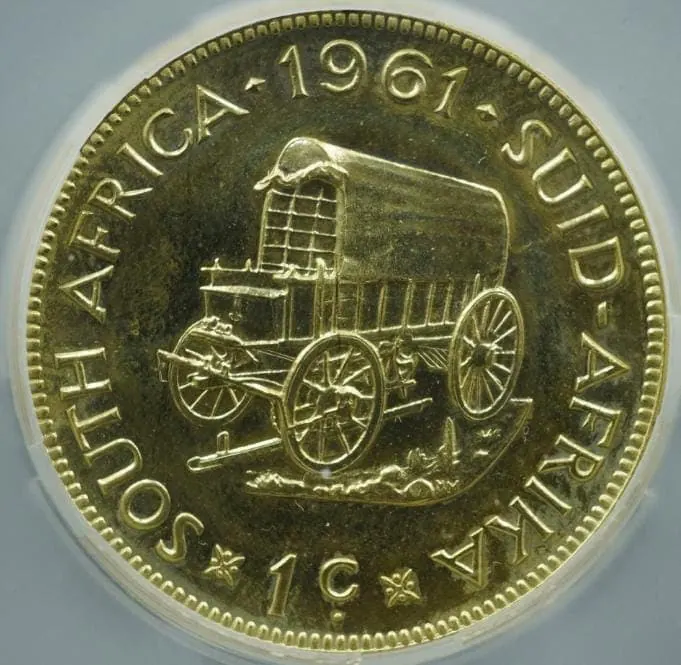
The next significant change occurred in 1961 when the rand was introduced on February 14, replacing pounds, shillings, and pennies. South Africa became a republic on May 31 of that year, and Jan van Riebeeck became one of the distinctive images on the new coin series. Bassani notes that "to make history does not mean that you celebrate every period of it, it means that we preserve the evidence of where we come from."
In 1994, South Africa held its first democratic election based on universal adult suffrage, and Nelson Mandela was inaugurated as president. The change was also reflected on coins with a special R5 coin featuring the Union Building. According to Bassani, "a collector can place the portrait of Paul Kruger alongside that of a British monarch, then alongside the coins of the Republic, and finally alongside a 1994 presidential inauguration R5."
Key points
- South African coins reflect the country's history and transformations over time.
- The coins serve as tangible remnants of the time in which they were made.
- The history of South African coins spans from the ZAR to the democratic dispensation of 1994.