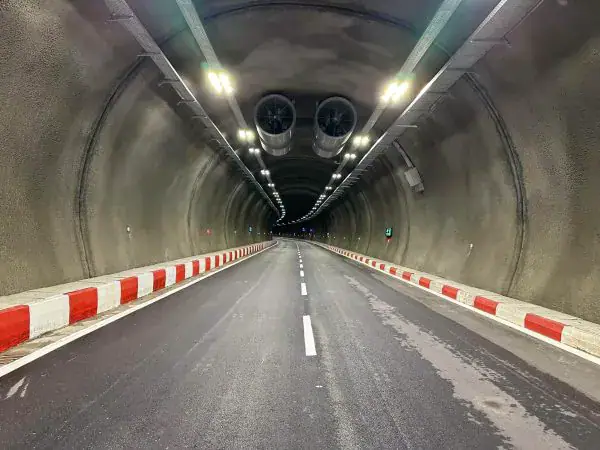
The Algerian government has reopened two tunnels, T1 and T2, in the Kherrata region of Béjaïa province, after a comprehensive renovation and modernization project. The reopening ceremony was attended by local authorities, including the wali, Mohamed Meziane, and representatives from the construction companies involved. The tunnels, initially built in 1885, have been upgraded to meet international technical standards, with improved ventilation, lighting, and safety features.
The renovation project included a complete overhaul of the tunnels' electromechanical systems, installation of advanced ventilation and smoke evacuation systems, and state-of-the-art lighting to enhance visibility and driving comfort. The project also incorporated intelligent safety features, such as visual guidance devices, modern signage, and an integrated network of surveillance cameras with automatic incident detection. These upgrades aim to ensure the highest safety standards and restore smooth traffic flow on this vital road axis.
The reopened tunnels are a significant relief for motorists and local residents, as they form part of the busy National Route 9 (RN09), which connects Béjaïa to neighboring provinces. The RN09 carries an average of 40,000 vehicles per day, including 12,000 heavy trucks, making it one of the country's most congested roads. The upgraded tunnels will help alleviate traffic congestion and improve logistics, as they provide a critical link between the port of Béjaïa and over 13 interior provinces.
The modernization project is part of a broader initiative to improve Algeria's road infrastructure and enhance user safety. The local authorities have also launched a separate project to upgrade a 16-kilometer stretch of the RN09, from Skala to Souk El-Tennine. Additionally, work is ongoing to modernize the third tunnel, located on the Bordj Mira side, which is expected to be completed by the end of 2027.
The upgraded tunnels and road network are expected to significantly reduce the number of accident blackspots and flood-prone areas, improving traffic flow and road safety. The project aims to provide safer and more comfortable travel for motorists, while also promoting economic growth and development in the region. Local authorities have emphasized the importance of collective responsibility in maintaining the new infrastructure and ensuring road safety.
The Direction des Travaux publics and local authorities have urged road users to exercise caution and adhere to speed limits and signage when using the upgraded tunnels and road network. The successful completion of this project is a testament to the collaboration between government agencies, construction companies, and local communities.
The reopening of the Kherrata tunnels marks a significant milestone in Algeria's efforts to modernize its road infrastructure and improve road safety. The project demonstrates the government's commitment to investing in the country's transportation network and promoting economic growth and development.
Key points
- The two tunnels, T1 and T2, have been upgraded with modern safety features, including advanced ventilation and lighting systems, and an integrated network of surveillance cameras.
- The RN09 carries an average of 40,000 vehicles per day, making it one of the country's most congested roads.
- A separate project has been launched to upgrade a 16-kilometer stretch of the RN09, from Skala to Souk El-Tennine.