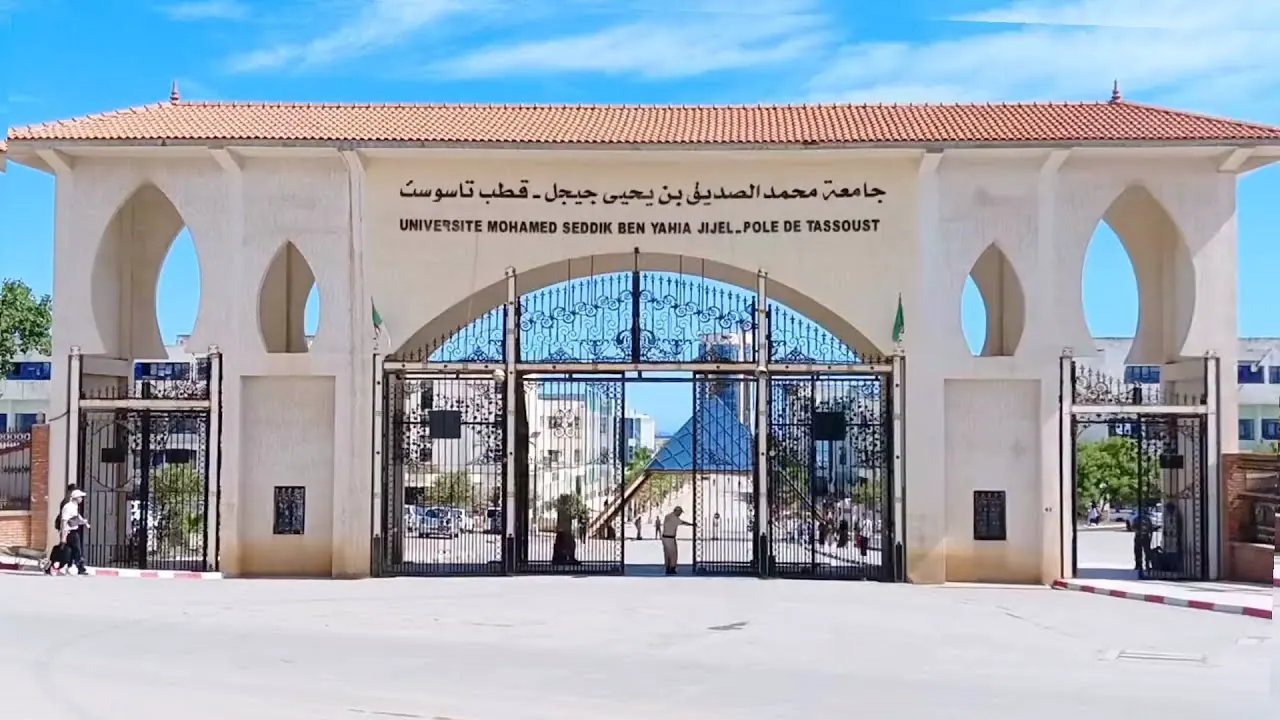
The 2026-2027 academic year in Algeria is set to commence on Tuesday in the city of Jijel. According to Abd al-Jabbar Dawudi, Advisor to the Minister of Higher Education and Scientific Research for Digital Communication, the inaugural lesson will focus on "Artificial Intelligence and Digital Transformations." Dawudi made these remarks during an appearance on the "Dheeb al-Sabah" program on the Algerian First Channel of Radio.
Dawudi highlighted that artificial intelligence applications are now integral to various stages of university registration, from initial to final stages. He further stated that the use of these applications will be expanded to cover different pedagogical activities across all academic levels, including Bachelor's, Master's, and Doctoral degrees. This move is part of Algeria's efforts to align with global economic shifts, particularly as major economies increasingly adopt knowledge-based economies.
The Algerian university system is preparing to welcome nearly two million students in the next two years. Dawudi mentioned that the current number of students stands at 1,884,839, which is close to reaching the two million mark within a year or two. He also noted that the Algerian university system produces around 392,000 students annually, equivalent to approximately 400,000 graduates, across various academic levels and specializations.
The scientific and technological pole in Algeria has produced its first batch of graduates, with 157 students, all of whom have secured jobs. Dawudi described this as a significant milestone, emphasizing that Algeria now boasts a genuine scientific hub for nurturing elite talent and a beacon for development. He expressed satisfaction with the outcomes of this initiative.
In terms of digitalization, the Higher Education Ministry manages a digital space comprising 74 online platforms aimed at providing services to students, professors, researchers, and staff. Dawudi noted that for the fourth consecutive year, the ministry has adopted a "zero paper" policy, with initial and final registrations conducted digitally. A local Algerian model for artificial intelligence, similar to international chat applications, has been integrated as an AI assistant.
The AI model, during a two-week registration period, recorded over two million interactions, including downloads on mobile phones. It provides answers to various queries from students and citizens. Dawudi also mentioned that the use of technology and AI has led to a 97% satisfaction rate regarding university orientation among new Baccalaureate holders, the highest recorded since Algeria gained independence.
The orientation process is crucial for students' academic and professional futures, reducing dropout rates during higher education. Dawudi emphasized that the concept of "future professions" encompasses not only scientific and technological fields but also literary and human sciences. The Ministry has updated training pathways and maps for students, introducing 13 specializations directly related to future professions, including smart city management and artificial intelligence.
Key points
- Algeria's 2026-2027 academic year to start in Jijel on Tuesday with a focus on artificial intelligence.
- The Algerian university system produces around 400,000 graduates annually.
- A 97% satisfaction rate regarding university orientation has been achieved through the use of AI and technology.