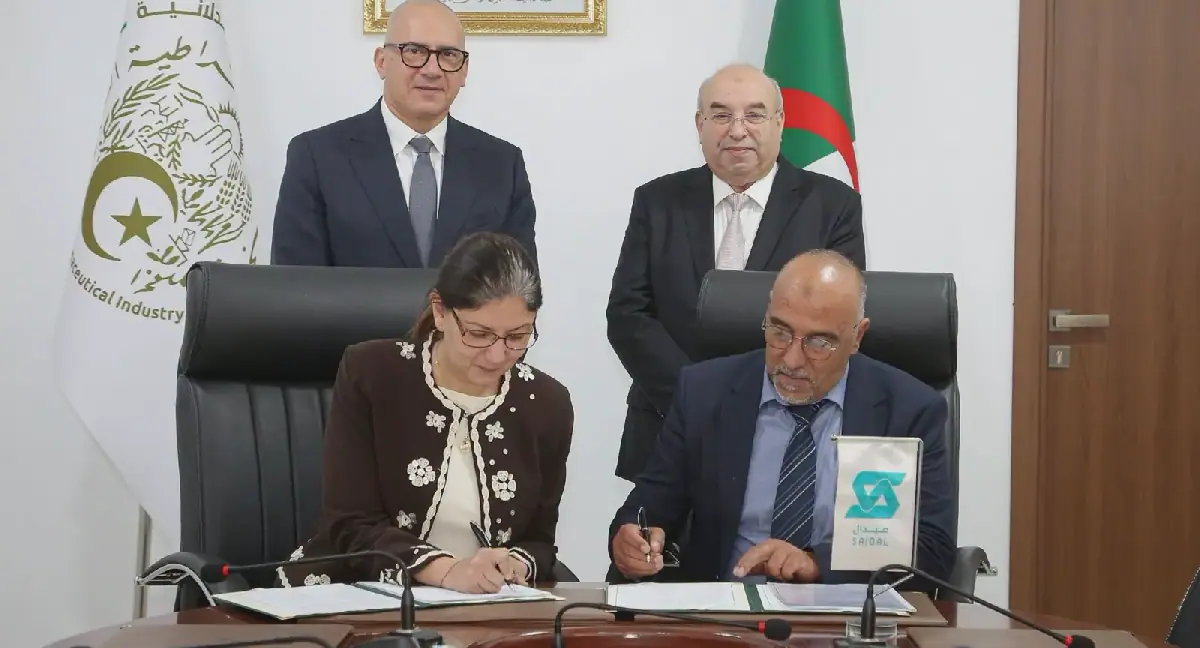
Algerian state-owned pharmaceutical company Saïdal has signed a memorandum of understanding with British laboratory GlaxoSmithKline (GSK) to produce several vaccines in Algeria. The agreement, signed on November 26 in Algiers, aims to transfer technology and expertise from GSK to Saïdal. The deal was witnessed by Algerian Minister of Pharmaceutical Industry Ouacim Kouidri. This partnership is part of Saïdal's industrialization strategy and aims to enhance Algeria's vaccine production capabilities.
The agreement focuses on technology transfer, with GSK committing to share its expertise, technical skills, and advanced processes with Saïdal. This cooperation is expected to be operational, rather than just a statement of intent. Vaccine production is a highly demanding segment of the pharmaceutical industry, requiring sterile chains, strict quality control, and biological mastery. By partnering with GSK, Algeria aims to leverage the British company's expertise to develop its own vaccine production capabilities.
The partnership aims to cover Algeria's domestic demand for vaccines and reduce its reliance on imports. The country's vaccine needs are currently largely met through imports, but the government has been seeking to reduce this dependence in recent years. Local vaccine production will also help secure supplies in the event of international tensions or global shortages. This aligns with the government's goals to promote the national pharmaceutical industry, master complex technologies, and consolidate the country's health sovereignty.
This is not Saïdal's first partnership with an international laboratory. In June, the company signed an agreement with German company Boehringer Ingelheim to produce a treatment for pulmonary fibrosis in Algeria. Later, in September, Saïdal partnered with Swiss company Roche to localize a breast cancer medication. Each of these partnerships follows the same logic: technology transfer, training for Algerian teams, and creation of added value in the country.
The equipment aspect of the partnership is also progressing. In late October, a delegation led by Minister Kouidri discussed acquiring a vaccine production line from German company Syntegon, a specialist in biopharmaceutical packaging systems. This acquisition is expected to support the production of vaccines in Algeria.
The partnership between Saïdal and GSK is seen as a strategic move to enhance Algeria's health security. By producing vaccines locally, the country aims to reduce its reliance on imports and ensure a stable supply of essential medicines. This move is also expected to contribute to the growth of Algeria's pharmaceutical industry and create new opportunities for the country's healthcare sector.
The agreement between Saïdal and GSK is a significant step towards achieving Algeria's goal of becoming self-sufficient in vaccine production. The partnership is expected to have a positive impact on the country's healthcare sector and contribute to the development of its pharmaceutical industry. Key aspects of the partnership include technology transfer, local production, and job creation.
Key points
- Algeria's Saïdal and GSK partner to produce vaccines locally, aiming to reduce reliance on imports and enhance health security.
- The partnership includes technology transfer from GSK to Saïdal, focusing on vaccine production and quality control.
- Local vaccine production aims to cover domestic demand, secure supplies, and promote Algeria's pharmaceutical industry.