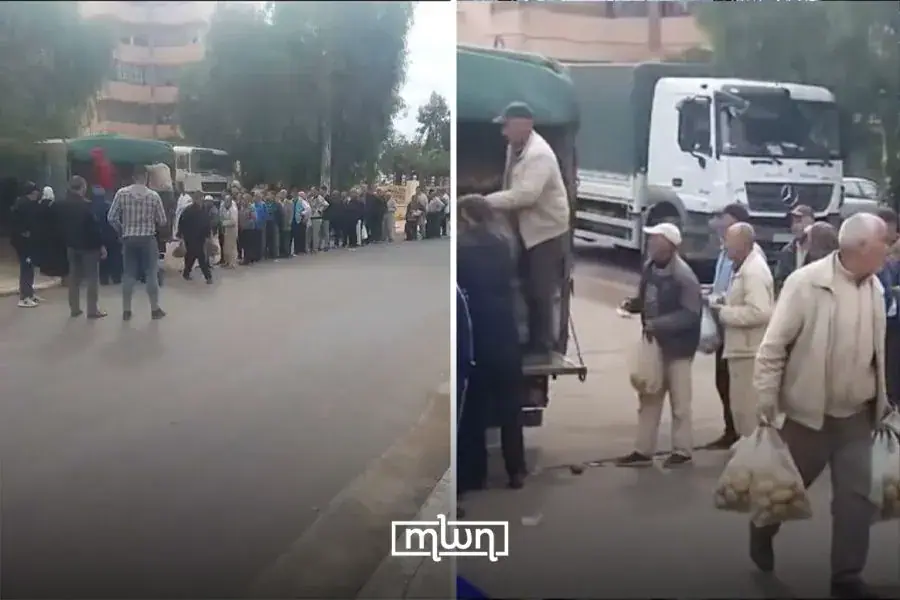
Algeria is experiencing a potato shortage, with reports of disrupted supplies in several regions and retail prices exceeding the government's ceiling. The situation varies across the country, but the political question remains: why does securing an ordinary household staple become an exercise in uncertainty? The shortage has raised concerns over food security and the government's ability to manage the economy.
Economist Brahim Guendouzi attributed the crisis to a combination of production weaknesses, logistical constraints, and multiple intermediaries. He also described a regulatory system struggling to keep pace with the market. This suggests a problem broader than the misconduct of individual traders; the organisation of the supply chain itself deserves scrutiny. Producers in the Aflou region cited low prices during the previous season, heat, and higher input costs as factors discouraging planting.
The Algerian government's response to the crisis has been to announce agricultural achievements, impose price ceilings, and promise action against speculators. However, for families looking for an affordable bag of potatoes, its credibility is measured at the market stall. The situation highlights the distance between official assurances and everyday experience. The government must address the economic and logistical challenges facing the potato supply chain.
The potato crisis has sparked concerns over the potential for social unrest. Food prices have political consequences, and frustration over necessities can crystallise a wider sense of injustice. However, a shortage does not automatically produce a revolution. Between private anger and collective action lie organisation, confidence, leadership, and the freedom to speak without fearing imprisonment. The Hirak movement demonstrated that Algerians could organise a vast, peaceful demand for political change.
The International Monetary Fund warned in its 2025 assessment that declining hydrocarbon revenues and increased expenditure had weakened Algeria's fiscal position. It recommended better management of public resources and stronger governance of state enterprises. Energy wealth provides resources; it does not remove the need to use them effectively. The government must address these economic challenges to ensure sustainable development.
Human rights organisations have documented continued restrictions on dissent, peaceful activism, and public mobilisation in Algeria. Repression has made sustaining the expectation of civic ambition and collective action more difficult. Citizens may resent shortages and distrust official explanations while remaining unwilling to expose their families to the consequences of arrest or prosecution.
The Algerian government must prioritise domestic needs, including food security, employment, and public accountability. Citizens are entitled to ask how foreign objectives are weighed against domestic needs and scrutinise expenditure, challenge priorities, and demand measurable results without being accused of disloyalty. The government's commitment to the welfare and freedom of its population is crucial to addressing the country's economic and social challenges.
Key points
- The Algerian government must address the economic and logistical challenges facing the potato supply chain to ensure food security.
- The government must prioritise domestic needs, including food security, employment, and public accountability.
- Repression has made sustaining the expectation of civic ambition and collective action more difficult in Algeria.
Reporting sources
- Read article: The Potatoes of Wrath in Algeria · Morocco World News